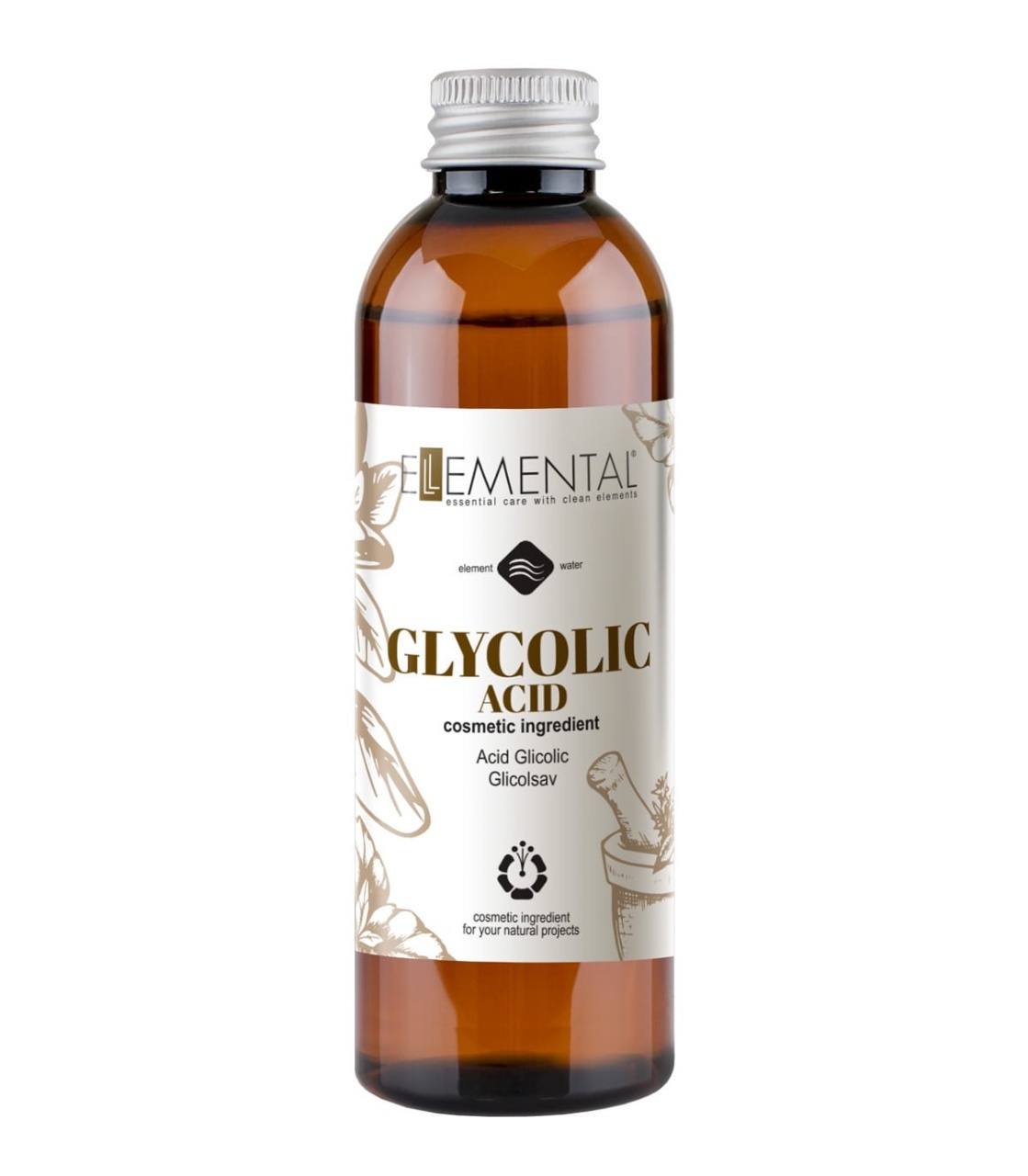





Glycolic acid
Description
Glycolic Acid – Exfoliation and Textural Renewal
Glycolic Acid is perhaps the most well-known and widely used representative of the alpha-hydroxy acid (AHA) class. Having a very small molecular weight, it has the ability to penetrate the superficial layers of the epidermis. It acts as a biological exfoliant (keratolytic), weakening the lipid bridges between dead corneocytes and facilitating their natural elimination. This process indirectly stimulates cellular renewal at the skin's surface, resulting in a visibly smoother complexion, a refined texture, a reduction in the appearance of fine lines, and improved radiance. It is ideal for formulas aimed at evening out skin tone, visually fading imperfections, and revitalizing the skin.
Ingredients (INCI): Glycolic Acid, Aqua
Technical Characteristics
- Appearance: Clear, almost colorless liquid, with a discreet odor.
- Solubility: Completely water-soluble.
- Cosmetic Function: Chemical exfoliant, pH adjuster, humectant.
- Indicative dosage: 1% - 10% for consumer products, up to 30% in professional treatments.
Information from Specialized Literature
The mechanisms of action and skin benefits of Glycolic Acid are demonstrated through a vast clinical scientific bibliography:
- Reduction of Corneocyte Cohesion: Research shows that glycolic acid interferes with ionic bonds (desmosomes) between cells of the stratum corneum. This allows for a uniform and controlled exfoliation of dead cells, preventing a stagnant, dull, or rough skin appearance.
- Plumping Effect and Elastic Densification: Histological studies have demonstrated that regular topical use of glycolic acid positively influences the dermis's extracellular matrix, leading to an increase in type I collagen mRNA expression and a stimulation of endogenous hyaluronic acid synthesis. This process translates cosmetically into firmer skin and softened surface lines.
- Improvement of Imperfections: Through its exfoliating action, glycolic acid prevents the accumulation of keratin in the openings of pilosebaceous follicles, shrinking the visibility of dilated pores and reducing the likelihood of oily blockages forming that lead to skin imperfections.
Main Properties
- High-performance exfoliant: Efficiently removes devitalized cells, leaving the skin velvety and fresh.
- Brightening, evening: Contributes to the visual fading of surface pigment spots and post-imperfection marks.
- Textural Anti-Aging: Refines the skin's micro-relief and reduces the appearance of superficial wrinkles.
- Penetration booster: By finely thinning the layer of dead cells, it facilitates the subsequent absorption of other active ingredients in the routine.
Applications
- It is a suitable cosmetic ingredient for formulating different types of cosmetic products such as exfoliants, peels, lotions, masks, cleansers, and creams.
- Exfoliating toners for daily or weekly use (Glow Toners).
- Concentrated serums for gentle nighttime cosmetic peeling.
- Anti-aging creams and lotions for restructuring skin texture.
- Facial cleansing gels with a micro-peeling action.
- Body treatments for rough, dry areas or areas prone to folliculitis (arms, elbows, heels).
Formulation Guide
Glycolic Acid is a potent active ingredient that requires attention to achieve a final product that is effective yet safe for use:
- Procedure: Add to the aqueous phase of the preparation. It is thermally stable and withstands the heating specific to emulsions, although it can also be incorporated at the end.
- pH: A pH of ≥3.5 is recommended for cosmetics intended for domestic use; a pH below 3.5 increases the risk of skin irritation, erythema, or chemical burns.
- Stabilization: Because pure Glycolic Acid has a very low pH, it is mandatory to adjust and buffer the formula with an alkaline agent (such as a sodium hydroxide solution) or by combining it with Sodium Lactate until the safe range is reached.
- Synergies:
- pH control and hydration: It pairs ideally with Sodium Lactate, which works to raise the pH of the preparation while acting as a humectant.
- Moisture compensation: Combine with Polyglutamic Acid or Hyaluronic Acid to infuse the skin, counteracting the potential feeling of dryness caused by the peeling process.
- Post-exfoliation soothing: Introduce into formulas alongside Allantoin or Organic Mallow Extract to protect the skin barrier and minimize the risk of transient redness.
Frequently Asked Questions (FAQ)
Why is it essential to measure and adjust the pH of a Glycolic Acid product?
Glycolic Acid added to water/formulas generates an extremely acidic pH, which can cause superficial burns and destruction of the skin's protective barrier. Adjusting the pH to a minimum value of 3.5 (using a base or a buffer system) ensures that the acid remains active and capable of exfoliating, but in a controlled and safe manner.
What is the difference between Glycolic Acid and Salicylic Acid in formulations?
Glycolic Acid is an AHA (water-soluble) and acts predominantly on the skin's surface, making it excellent for evening out texture, adding radiance, and treating signs of photo-aging. Salicylic Acid is a BHA (lipid-soluble), which allows it to penetrate through sebum directly inside the pore to clean it, making it more specific for skin with a strong tendency toward blackheads and oily congestion.
Safety in Use
Safety profile: As a raw material with a pronounced acidic nature, glycolic acid is classified as corrosive and irritating in its pure form, requiring protective equipment during handling and compliance with European limits in final formulations: a maximum of 10% at a pH of ≥3.5 for consumer cosmetics, and a maximum of 30% at a pH of ≥3.0 for professional-use products.
Precautions: For external cosmetic use only. Strictly avoid direct contact with eyes and mucous membranes. Do not apply to irritated, inflamed, sunburned skin, or open wounds. Keep out of reach of children.
Storage: In the original tightly closed container, in a dry, cool place, away from the direct action of light or heat.
Details
Related Recipes and Articles
You'll like these too
Reviews
Write a valid review and earn loyalty points worth €0.40