








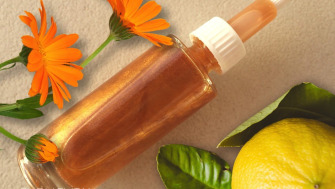
Formula: 7028 Difficulty level: beginner Shelf life: min 6 months pH optimal: - Phase Ingredients Total ~100 ml A MCT oil 65 ml A Marigold oil 33 ml A Petitgrain essential oil 10 drops A Bisabolol 30...


Bisabolol Natural – Soothing, Anti-Irritant, Skin Barrier Protector
Natural Bisabolol (also known as Alpha-Bisabolol) is used in cosmetics due to its skin-soothing properties and its ability to reduce signs of irritation. Its structure allows it to intervene in mitigating surface skin inflammatory responses, serving as a standard raw material in formulations designed for sensitive, reactive, fragile, or stressed skin.
It is an unsaturated monocyclic sesquiterpene alcohol, typically obtained through the distillation and purification of Candeia tree bark (Vanillosmopsis erythropappa) or chamomile flowers.
Ingredients (INCI): Bisabolol.
The lipophilic nature and stability of bisabolol allow for easy integration into various formulas.
What is the difference between Natural and Synthetic Bisabolol?
The main difference lies in the isomeric structure and biological efficiency of the product. Natural bisabolol is extracted directly from the plant and contains 100% of the biologically active isomer, known as alpha-bisabolol. The synthetic version (obtained via laboratory chemical reactions) is a racemic mixture of four different isomers, of which only a small fraction is the active form. Consequently, natural bisabolol demonstrates greater efficacy than synthetic bisabolol at the same concentration.
Does it have allergenic potential, given that it comes from plants?
No. Although the plants from which it is extracted may contain compounds such as sesquiterpene lactones, the isolation process of natural bisabolol ensures high purity, eliminating protein fractions and potentially sensitizing compounds. Pure bisabolol is classified as a hypoallergenic ingredient and is specifically used to counteract and reduce the irritating potential of other substances in cosmetic formulations.
Safety Profile: Evaluated as safe, non-toxic, non-sensitizing, and non-comedogenic in standard dermatological applications, showing optimal compatibility with all skin types.
Precautions: For external cosmetic use only. Avoid contact with eyes. Keep out of reach of children.
Storage: Store in a closed container, in a dry and cool place.

Write a valid review and earn loyalty points worth €0.40