


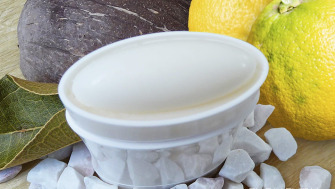
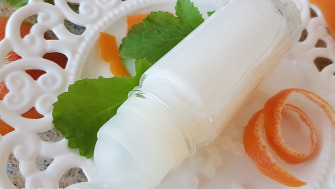
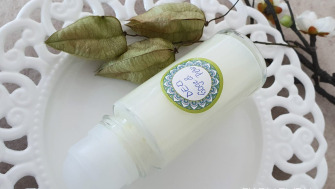
Formula: 161149 Difficulty level: medium Shelf life: min 3 months pH optimal: - Phase Ingredients Dosage % Total 50 gr A Coco-Silicone 43 21,5 gr A Zinc ricinoleate 3 1,5 gr A Stearic acid 30 15 gr A...
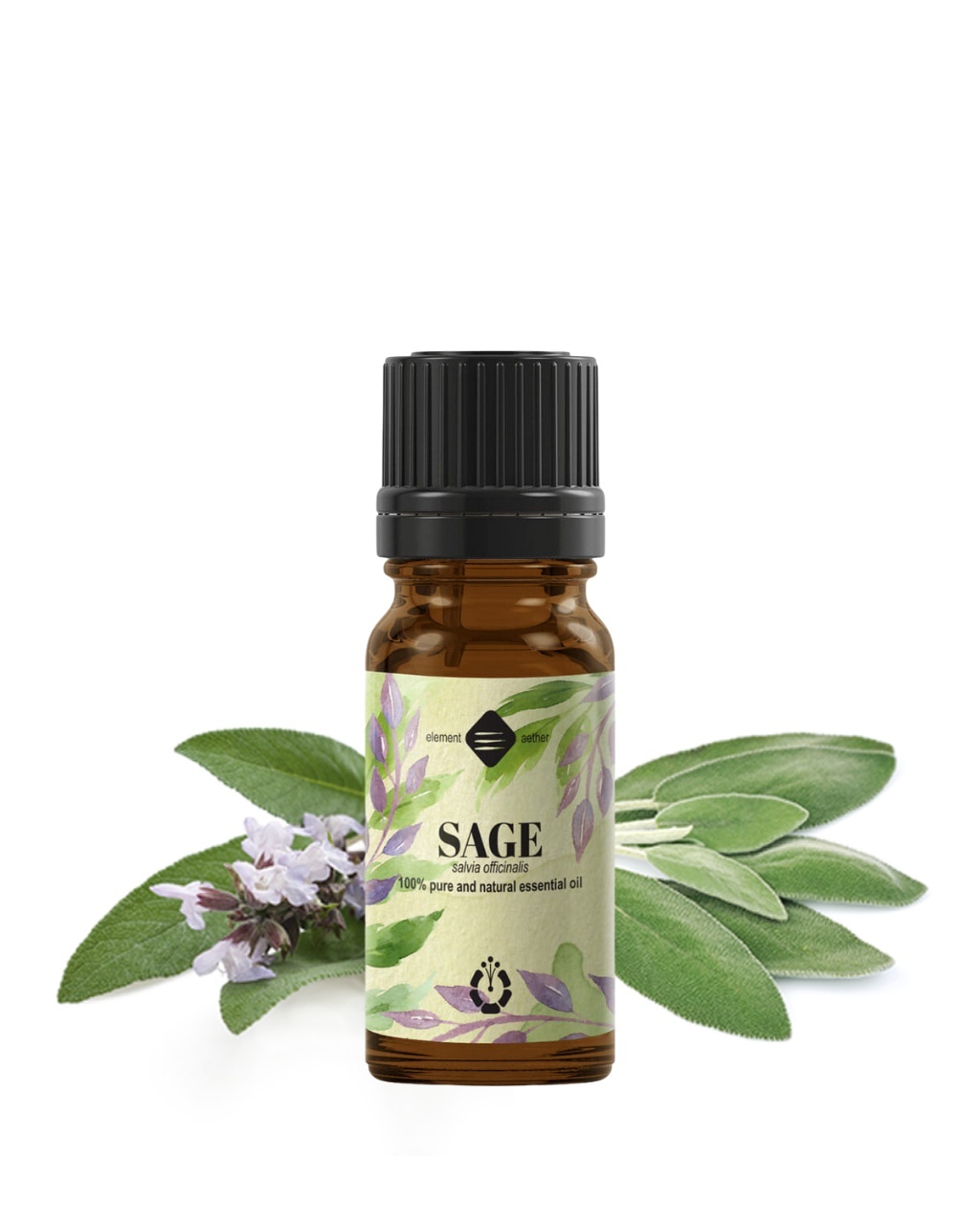
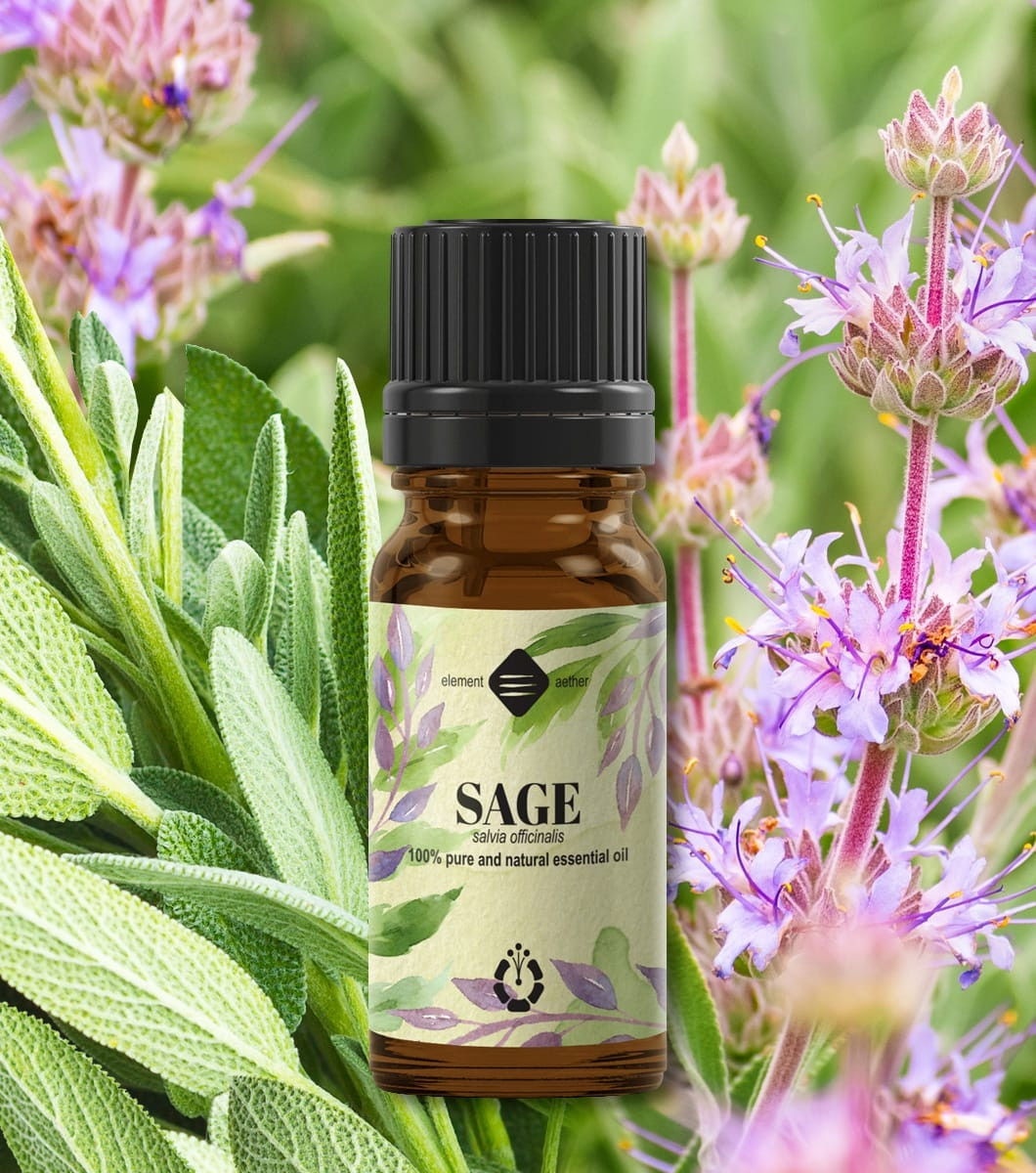
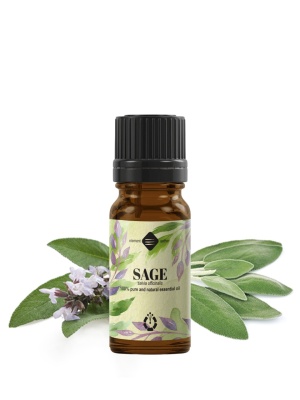
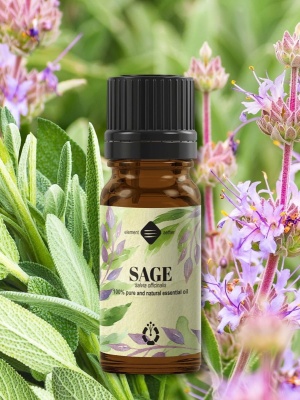
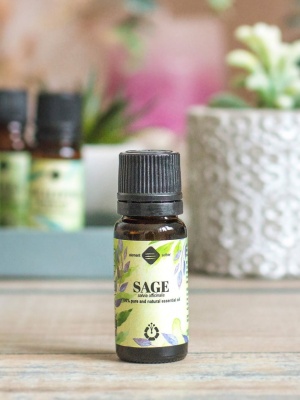
The name Sage originates from the Latin salvare, to save, to heal, and this is no exaggeration. Salvia officinalis is one of the plants with the longest and most well-documented traditions of medicinal use in the history of European phytotherapy: ancient, medieval, and modern alike. The extracted essential oil concentrates this tradition into an extremely active form, dominated by three main compounds, camphor, 1,8-cineole, and alpha-thujone, which grant it a complex biochemical profile with recognized purifying and tonic properties, but also a character that demands conscious use.
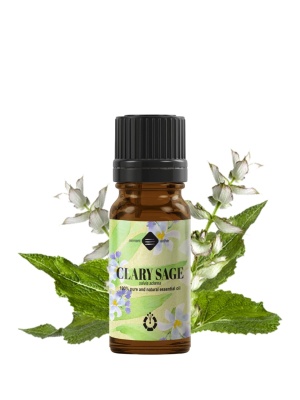
It is essential to specify: Salvia officinalis and Salvia sclarea are two completely different oils, with distinct biochemical profiles, properties, and contraindications. Sage is the powerful, camphorous oil, featuring remarkable anhidrotic action and intense purifying properties, but also clear usage restrictions due to its thujone content. The two are not interchangeable.
air Olfactory profile: Intensely herbaceous, sharp, camphorous, and medicinal, with herbal-spicy notes and a characteristic coolness. Persistent and dominant, a few drops immediately alter the profile of any formula.
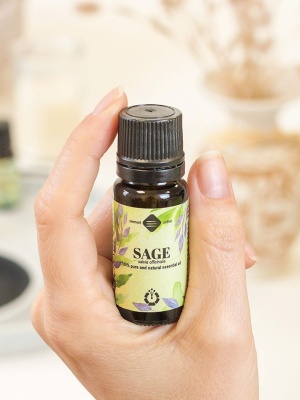
Ingredients: Sage Essential Oil (Salvia Officinalis Oil)
100% pure and natural, botanically and biochemically defined, undiluted
Obtained by steam distillation from the aerial parts of the plant
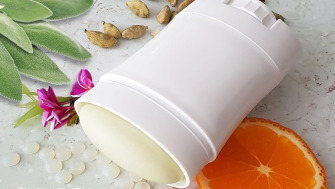
Natural deodorant: Organic Tea Tree Essential Oil, Organic Palmarosa Essential Oil, Organic Rosemary Essential Oil, Shea Butter, Murumuru Butter.
Oily and seborrheic scalp: Organic Rosemary Essential Oil, Organic Cedarwood Atlas Essential Oil, Organic Tea Tree Essential Oil, Organic Black Cumin Oil, Burdock Oil.
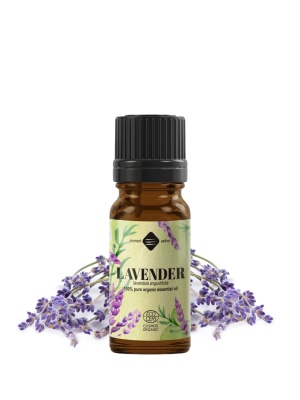
Oily skin with imperfections: Organic Tea Tree Essential Oil, Lavender Essential Oil, Green Clay, Hamamelis Floral Water, Tamanu Oil.
Natural oral hygiene: Lemon Essential Oil, Organic Peppermint Essential Oil, Coconut Oil.
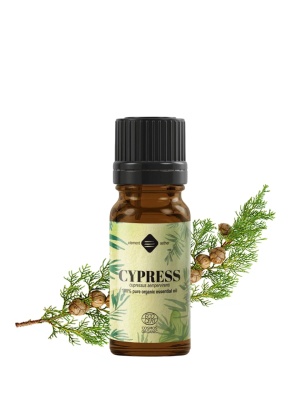
Body remodeling: Cypress Essential Oil, Organic Lemon Essential Oil, Grapefruit Essential Oil, Tamanu Oil, Centella Asiatica Oil.
Natural perfumery: Acts as an herbaceous-camphorous middle note, providing an element of contrast and freshness in fougères, herbal accords, and masculine compositions. It tames beautifully alongside Lavender, Bergamot, and Organic Cedarwood Atlas.
Sage Essential Oil is used exclusively as an ingredient in cosmetic preparations and aromatherapeutic compositions, in small concentrations and for limited periods. Do not apply undiluted to the skin. Use with prudence due to the thujone content. Do not use internally. For correct dosages, consult the IFRA certificate attached to the product on the website.
Q: What is the difference between Sage and Clary Sage?
A: They are two completely different oils, they are not interchangeable. Sage (Salvia officinalis) contains camphor, 1,8-cineole, and thujone — compounds with powerful, purifying, and anhidrotic actions, but with clear usage restrictions. Clary Sage (Salvia sclarea) has a profile dominated by linalyl acetate and linalool, featuring a floral-musky aroma, a relaxing effect, and properties associated with female hormonal balance, without containing thujone. Sage is more active and more restrictive; clary sage is gentler and more versatile in general cosmetics.
Q: Why is the usage restriction for Sage so important?
A: Thujone, the main compound of concern in sage, is a ketonic monoterpene with documented neuroactive properties in toxicological literature. At high doses or during prolonged use, it can cause adverse effects on the nervous system. At correct cosmetic doses (in compliance with the attached IFRA certificates), the oil is safe for topical use, but the limits must be strictly respected. This is precisely why the contraindications are unequivocal: pregnancy, breastfeeding, young children, epilepsy, and high blood pressure.
Q: Can Sage replace a conventional deodorant?
A: In the context of a correctly formulated DIY natural deodorant, yes, with realistically calibrated expectations. The traditional anhidrotic action of sage has been recognized for centuries, and in combination with deodorant actives (Zinc Ricinoleate, lemonester) and a suitable base, the results can be satisfying. The difference compared to antiperspirants with aluminum salts: sage does not mechanically block the pores, but acts differently, through anhidrotic properties. Efficiency varies from one person to another.
Botanical name: Salvia officinalis L.
INCI: Salvia Officinalis Oil
Botanical family: Lamiaceae
Obtaining method: steam distillation from the aerial parts
100% pure and natural, botanically and biochemically defined
Product for cosmetic and aromatic use. Do not apply undiluted to the skin. Do not use internally.
Oil containing thujone - use with caution, for limited periods. Use for short intervals, with breaks.
Store in a dry and cool place, away from direct sunlight. Keep out of reach of children.
Absolute contraindications: pregnancy and breastfeeding (documented abortifacient effect), young children, epilepsy, high blood pressure, severe kidney and liver diseases.
For dilutions in accordance with legal regulations, consult the IFRA certificate attached to the product on the website.
Sensitive individuals should perform a tolerance test; perform a skin patch test in the bend of the elbow 24 hours before use. Avoid contact with eyes and sensitive mucous membranes. In case of an accident, rinse abundantly with a vegetable oil.
For use in case of chronic diseases or for the elderly, the recommendation is to consult a doctor.
The properties and safety profile of Sage essential oil are documented in reference works and clinical studies:
Write a valid review and earn loyalty points worth €0.40