




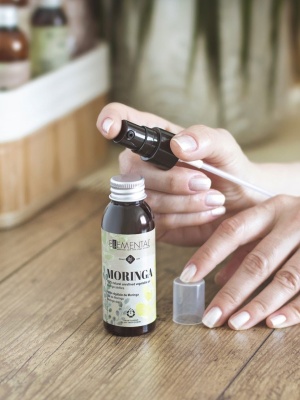
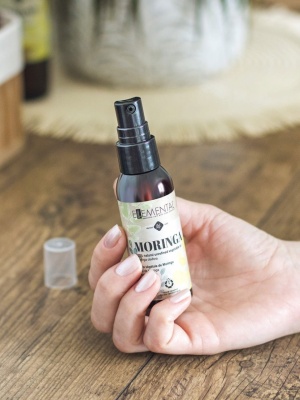


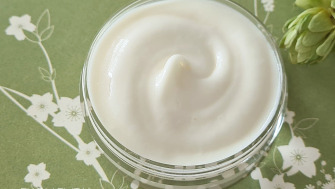
Formula: 20411 Difficulty level: experienced Shelf life: min 3 months pH optimal: 4.5 - 4.8 Phase Ingredients Dosage % Total 50 gr A Moringa Oil 15 7,5 gr A Emulsifier Emulsan 3 1,5 gr A Cetearyl...
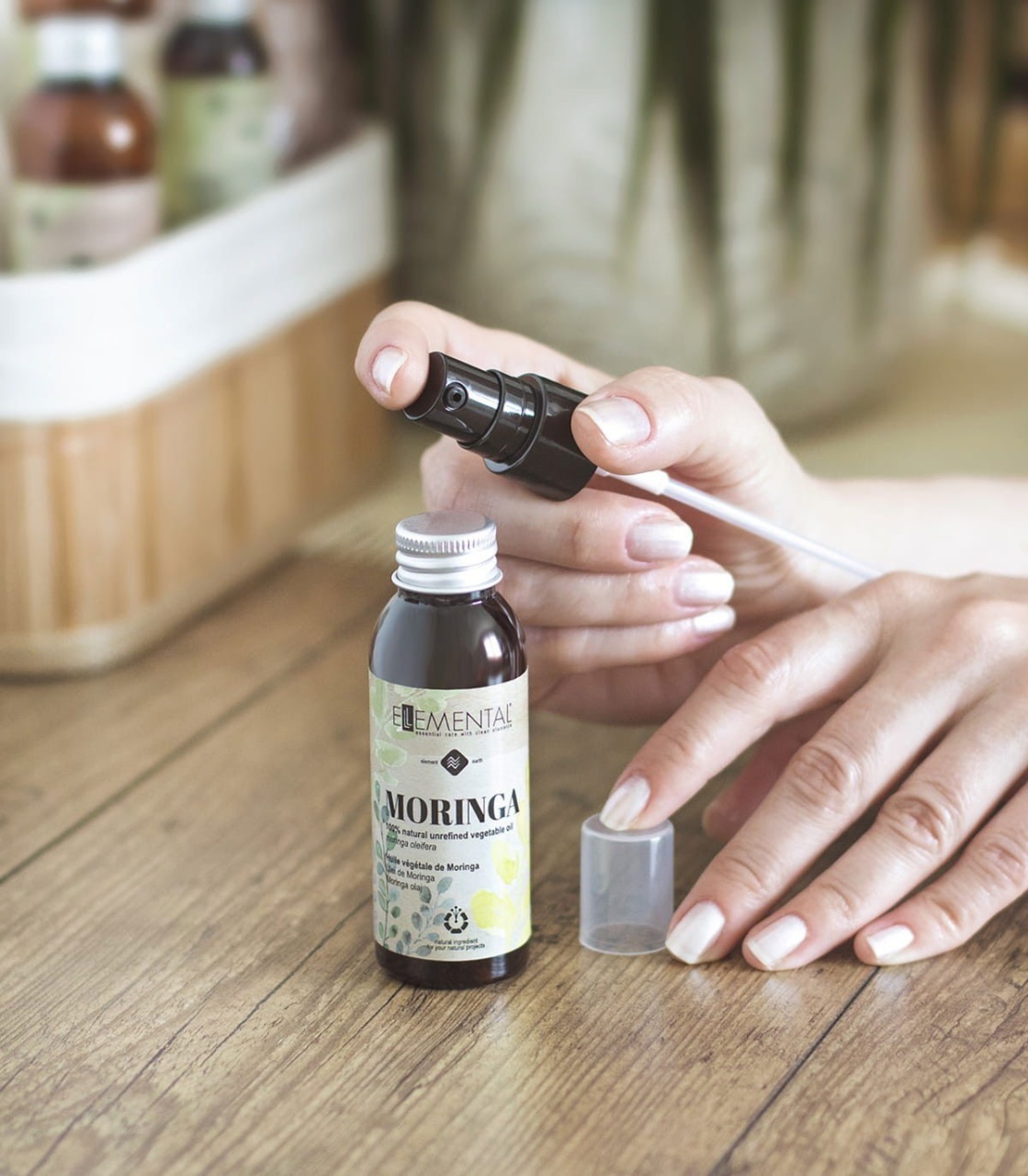
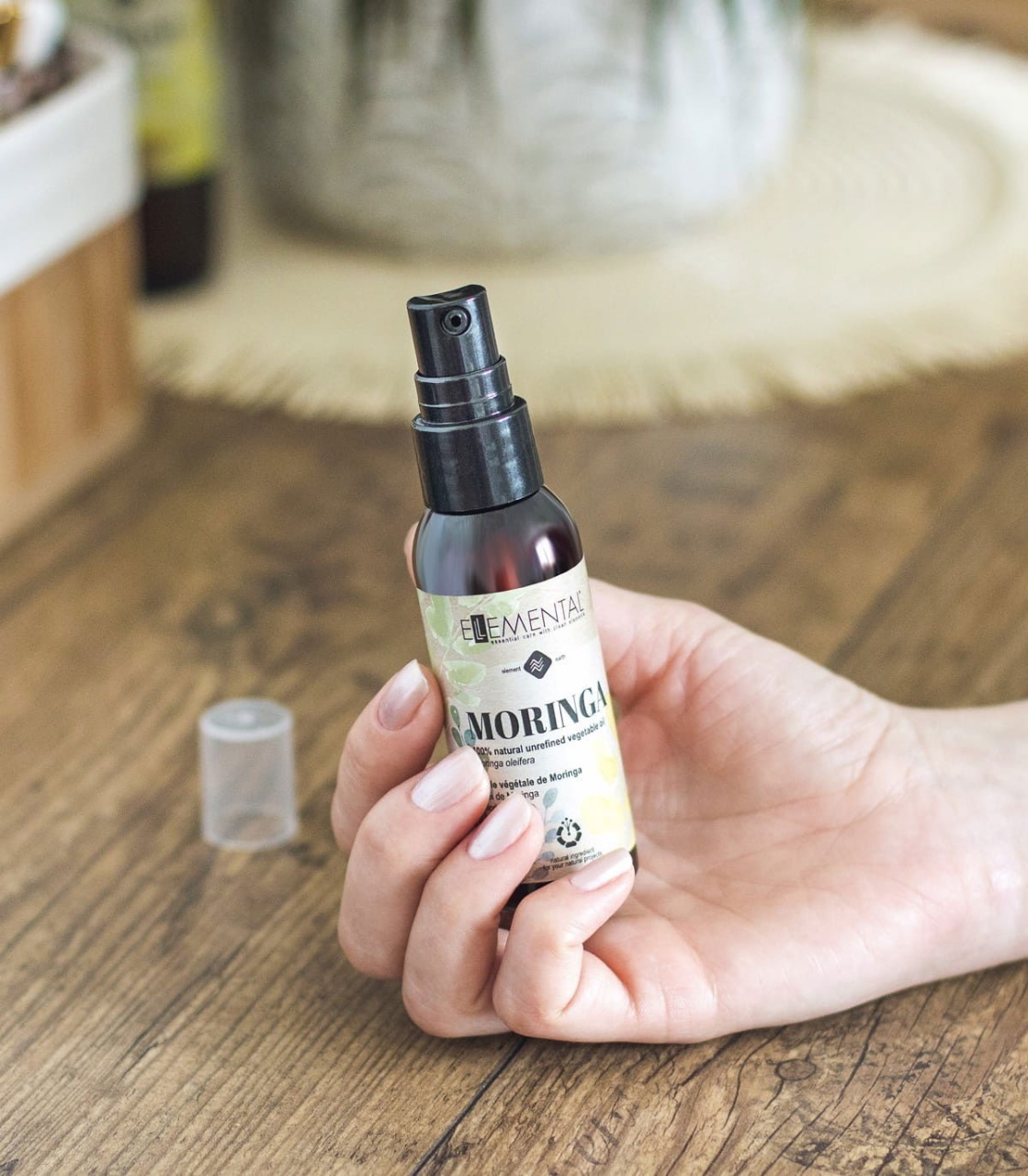
| Product size | Suitable pump | |
| 50 ml, 90 g, 100 ml |
|
|
| 200 g, 250 ml |
|
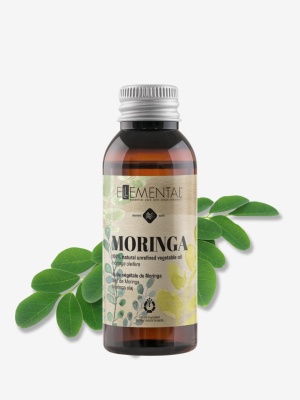
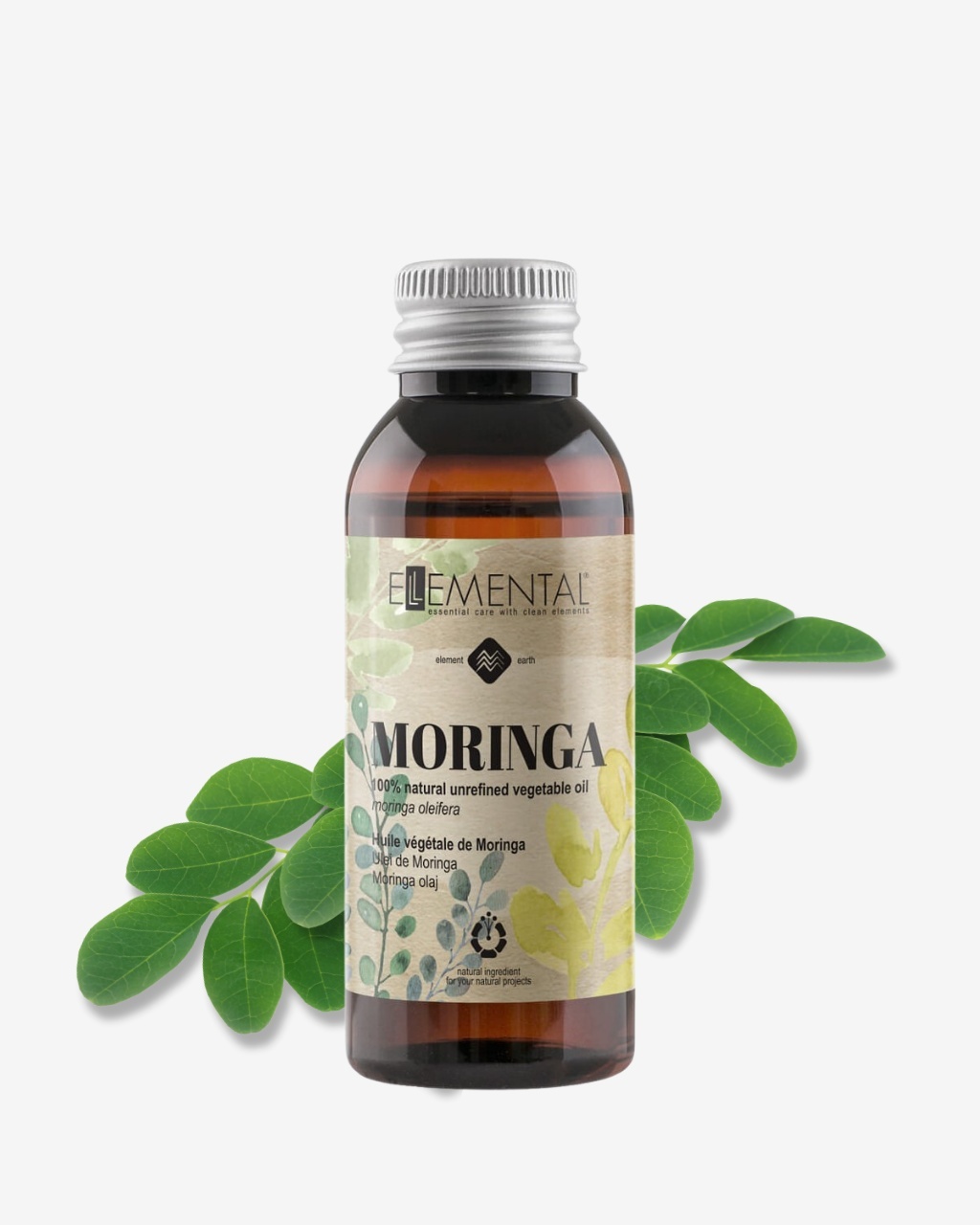
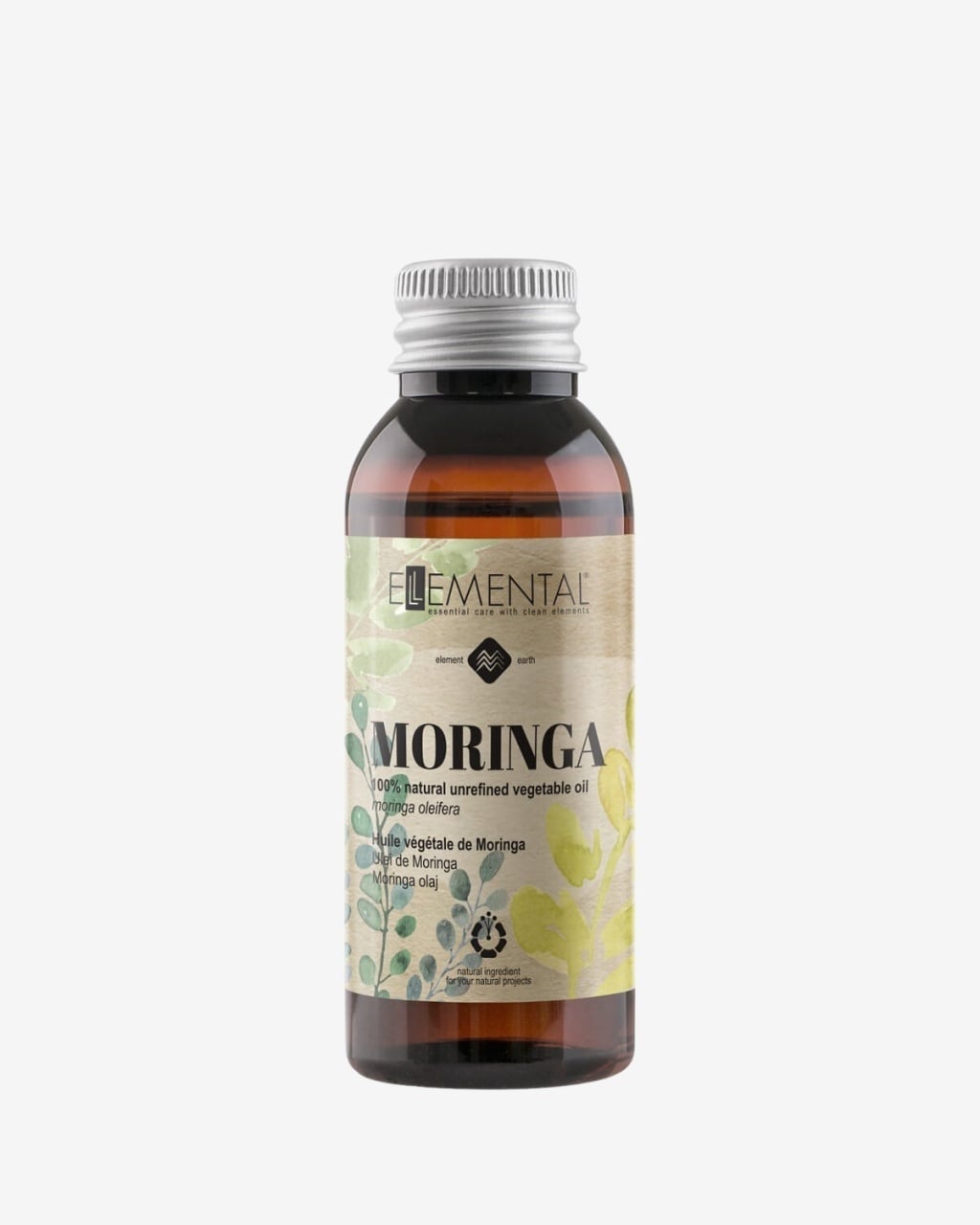
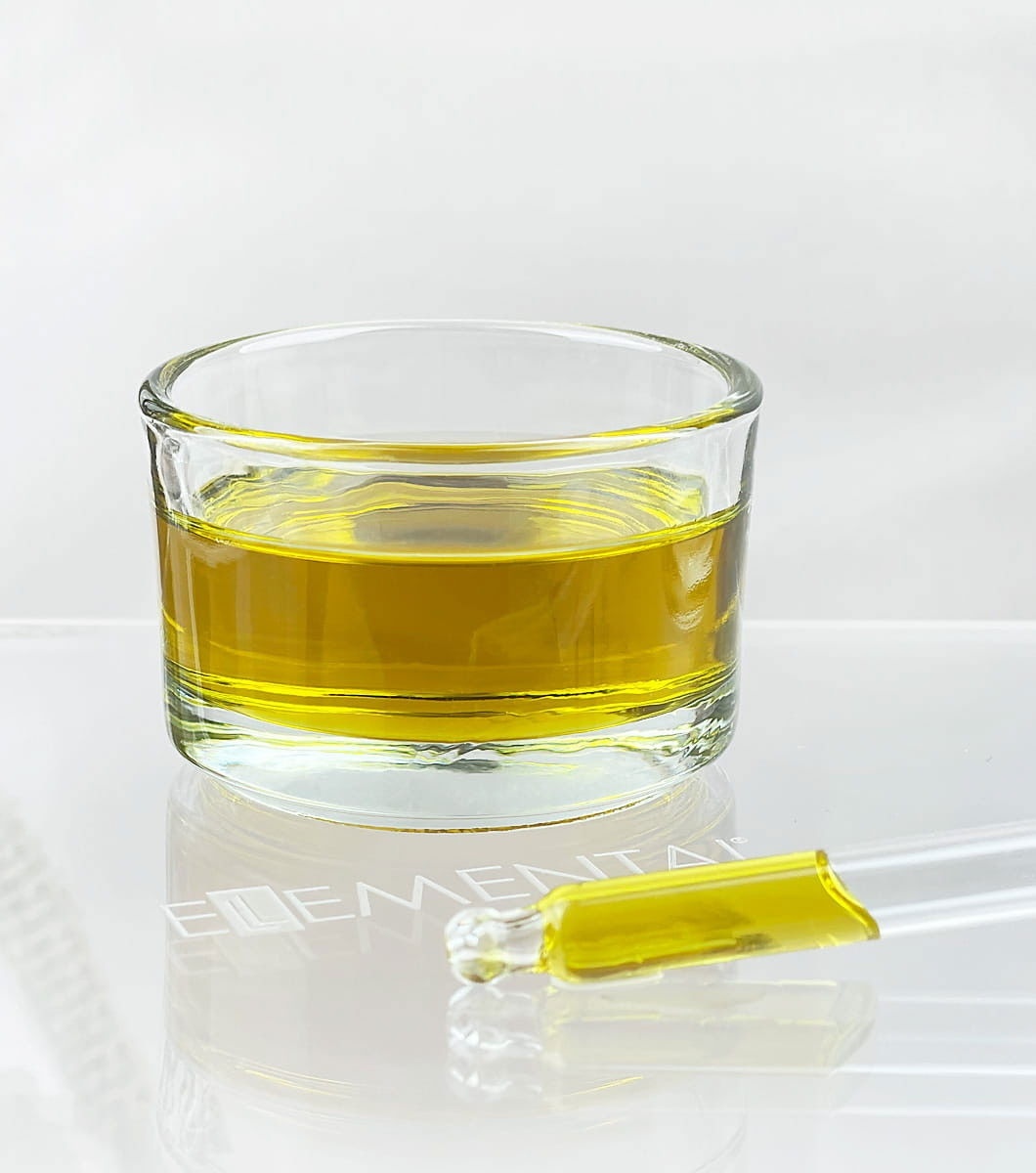
Moringa Oil (Moringa oleifera) is an interesting choice for individuals dealing with very dry, dehydrated, or rough skin. This oil penetrates gradually into the skin and creates an invisible protective layer that prevents water evaporation from tissues, ensuring a long-lasting feeling of comfort. It is ideal for use on areas prone to severe dryness and is highly valued in mature skin care rituals, as it restores skin flexibility and smooths the appearance of fine lines.
In addition to face and body care, this oil is an exceptional treatment for damaged, unruly, or color-treated hair. Applied to the lengths, it disciplines frizzy strands and restores the natural shine of the hair. Although it is a nutritionally dense oil, it has a fine texture and high spreadability on the skin, absorbing gradually without leaving a persistent or excessively greasy residue.
Ingredients: Moringa Oleifera Seed Oil
100% natural, free of preservatives, free of additives.
Moringa Oil is primarily used for the care of dry, mature skin. It is optimal in rich, nourishing formulas, in evening routine applications, as well as in urban protection products. Although it has a fairly lightweight texture compared to its nutritional density, it feels less greasy to the touch. In applications for oily or acne-prone skin, it is recommended to use it in small percentages, as an ingredient or combined with lighter oils / esters.
As a soothing oily serum for sensitive skin, it pairs well with Bisabolol and Camellia Oil for a gentle formula. On mature skin, the association with Coenzyme Q10 and Rosa Mosqueta Oil completes the anti-aging spectrum.
At the body level, it can be used for creams, balms, hand creams, and body butters.
As an ingredient in a nourishing body cream, it blends well with Cupuacu Butter, Shea Butter Nilotica, and Kokum Butter. For a body cream with a less greasy feel, it can be combined with Murumuru Butter, Caprilis Oil, Isoamyl laurate, and other esters or plant silicones.
On hair, Moringa oil is a suitable ingredient for curly, unruly, or dry hair.
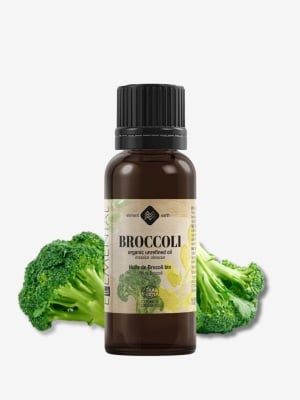
As a control and protective serum, the synergy with Phyto-Silicone and Broccoli Seed Oil offers smoothing and shine. As an ingredient in nourishing masks, the association with Amla Oil and Macadamia Oil completes the nutrition of the fiber.
What is behenic acid and why does it make Moringa oil special?
Moringa contains an unusually large amount of behenic acid, a fatty acid rarely found in other oils. This is the secret behind its performance: on the skin and hair, it works as an exceptional smoothing agent, "cementing" flaking skin cells and smoothing the hair cuticle, delivering that disciplined effect typically achieved only with synthetic products.
Is it suitable for acne-prone skin or skin prone to blackheads?
Yes, but in moderation. Although Moringa oil has a fairly light texture and absorbs quickly without leaving the face shiny, it is very rich in dense fatty acids. To avoid clogging pores, we recommend that you do not apply it pure to oily or acne-prone skin.
What is the best way to apply Moringa oil to the hair so it doesn't weigh it down?
Dosage is key. To discipline strands and smooth ends, apply only 2-3 drops to your palms, rub your hands well to warm the oil, then distribute it evenly through damp hair (freshly washed and towel-dried), focusing from the mid-lengths down.
Safety in use
Cosmetic product for external use only. Do not ingest. Avoid contact with eyes.
Storage, preservation
Keep the bottle closed, in a cool place, away from direct light.
Write a valid review and earn loyalty points worth €0.40