








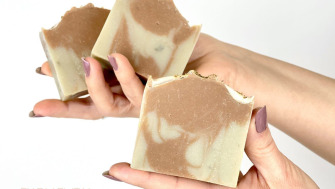
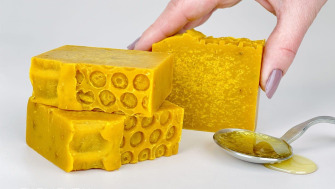
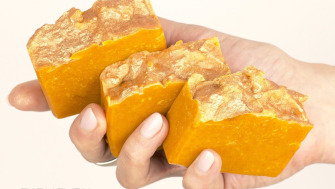
Formula: CP111 Difficulty level: medium Validity: min 12 months Superfat: 7% For details on the terms used and how to work, and for your safety, please see before COLD PROCESS SOAP MAKING GUIDE...
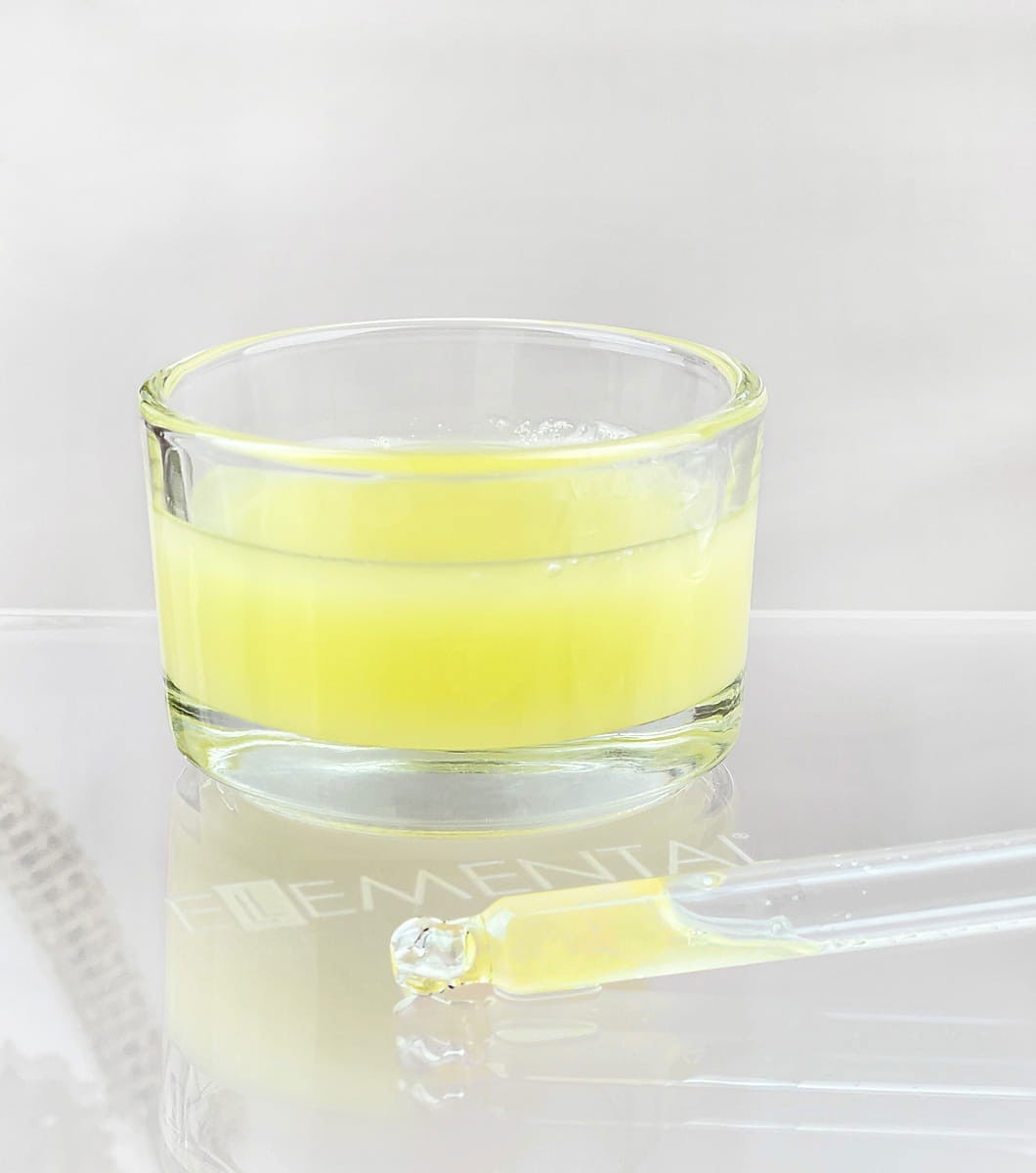
| Product size | Suitable pump | |
| 50 ml, 90 g, 100 ml |
|
|
| 200 g, 250 ml |
|
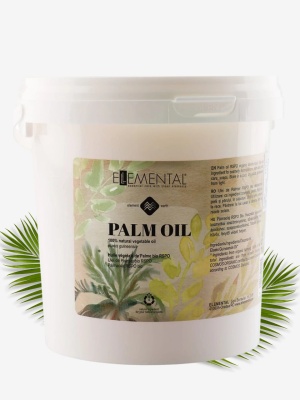
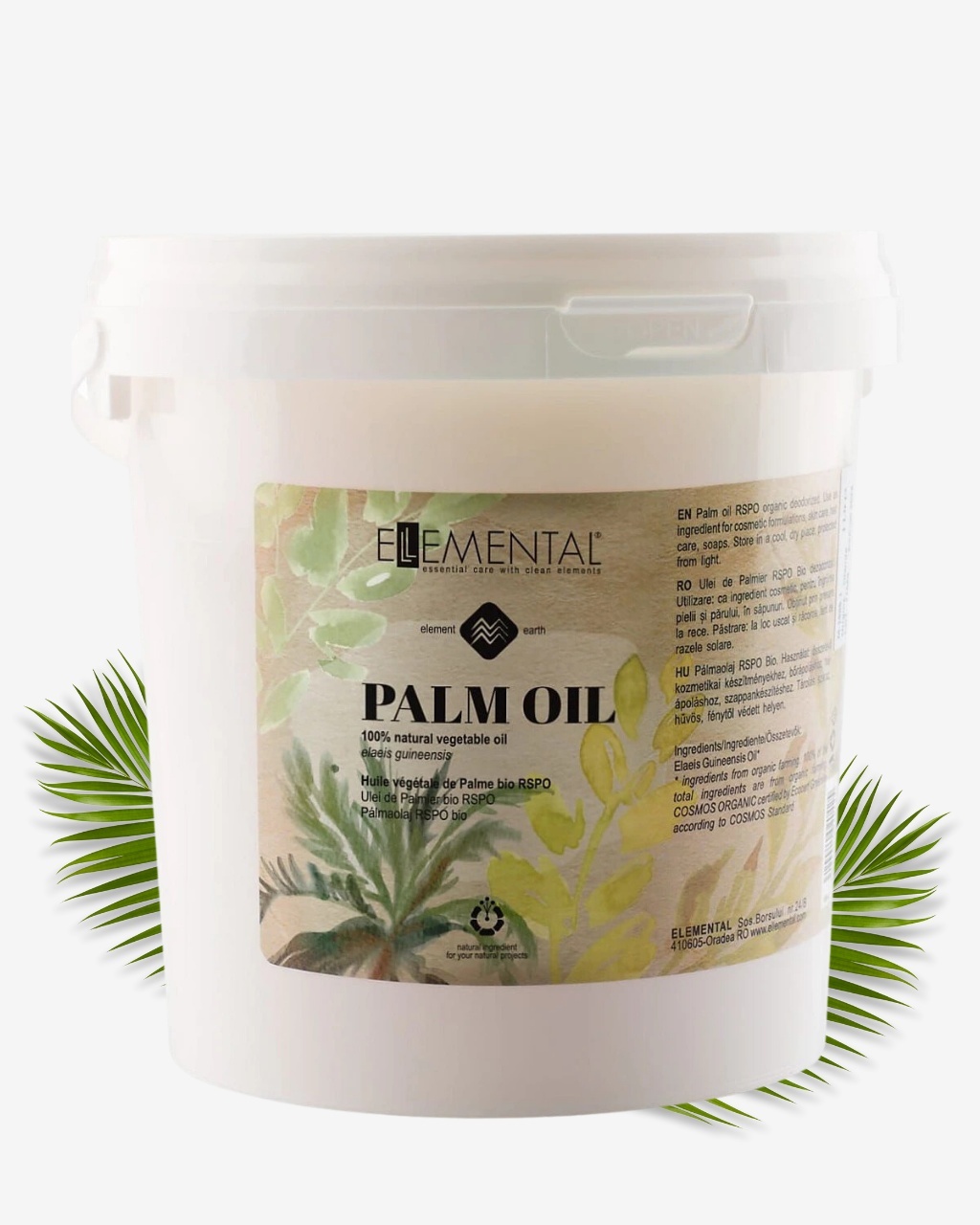
Palm Oil is obtained from the fruit pulp of the Elaeis Guineensis tree and is one of the most widely used fatty raw materials in the manufacture of solid soaps (both by the cold and hot process methods). It presents itself as a semi-solid, unctuous fatty mass, yellowish-white in color, with a neutral scent. Its remarkable stability at high temperatures and high resistance to oxidation (rancidity) make it an ideal ingredient for industrial or artisanal saponification processes.
In soap recipes, palm oil acts as a structural agent. Due to its native lipid profile, it provides consistency, hardness, and a controlled melting rate to the final product.
Ensuring Hardness: The palmitic acid in its composition provides the solid soap with a compact structure and high physical resistance, preventing the soap bar from softening rapidly when in contact with water.
Lather Quality (Creamy Lather): Unlike coconut oil (which produces a lather with large, airy bubbles), palm oil generates a dense, stable, creamy, and fine lather.
Moderate Reaction Speed (Trace): During mixing with the sodium hydroxide (NaOH) solution, refined palm oil induces a predictable "trace" that is moderate in speed, allowing soap makers to work on aesthetic details, textures, or colorful pouring techniques (swirls).
Gentle Cleansing Power: Its fatty acids effectively remove impurities without being as aggressive or stripping to the hydrolipid barrier as the lauric and myristic acids found in coconut or palm kernel oil.
Neutral Base for Customization: The yellowish-white color and the lack of a native scent allow for the faithful rendering of cosmetic colorants (oxides, micas) and the intact preservation of fragrances or essential oils added at the end of the process.
Recommended Proportion in Recipes: In the formulation of natural soaps using the cold process method (Cold Process), palm oil is typically used in a proportion of 20% up to 45% of the total fats. Exceeding the 50% threshold can result in a soap that is too hard, brittle, and prone to cracking when cut.
Write a valid review and earn loyalty points worth €0.40