






Formula: 6241 Difficulty level: beginner Shelf life: min 6 months pH optimal: - Phase Ingredients Dosage % Total 100 gr A Sesame oil 35 35 gr A Carrot herbal oil 30 30 gr A Karanja oil 20 20 gr A...
201


| Product size | Suitable pump | |
| 50 ml, 90 g, 100 ml |
|
|
| 200 g, 250 ml |
|
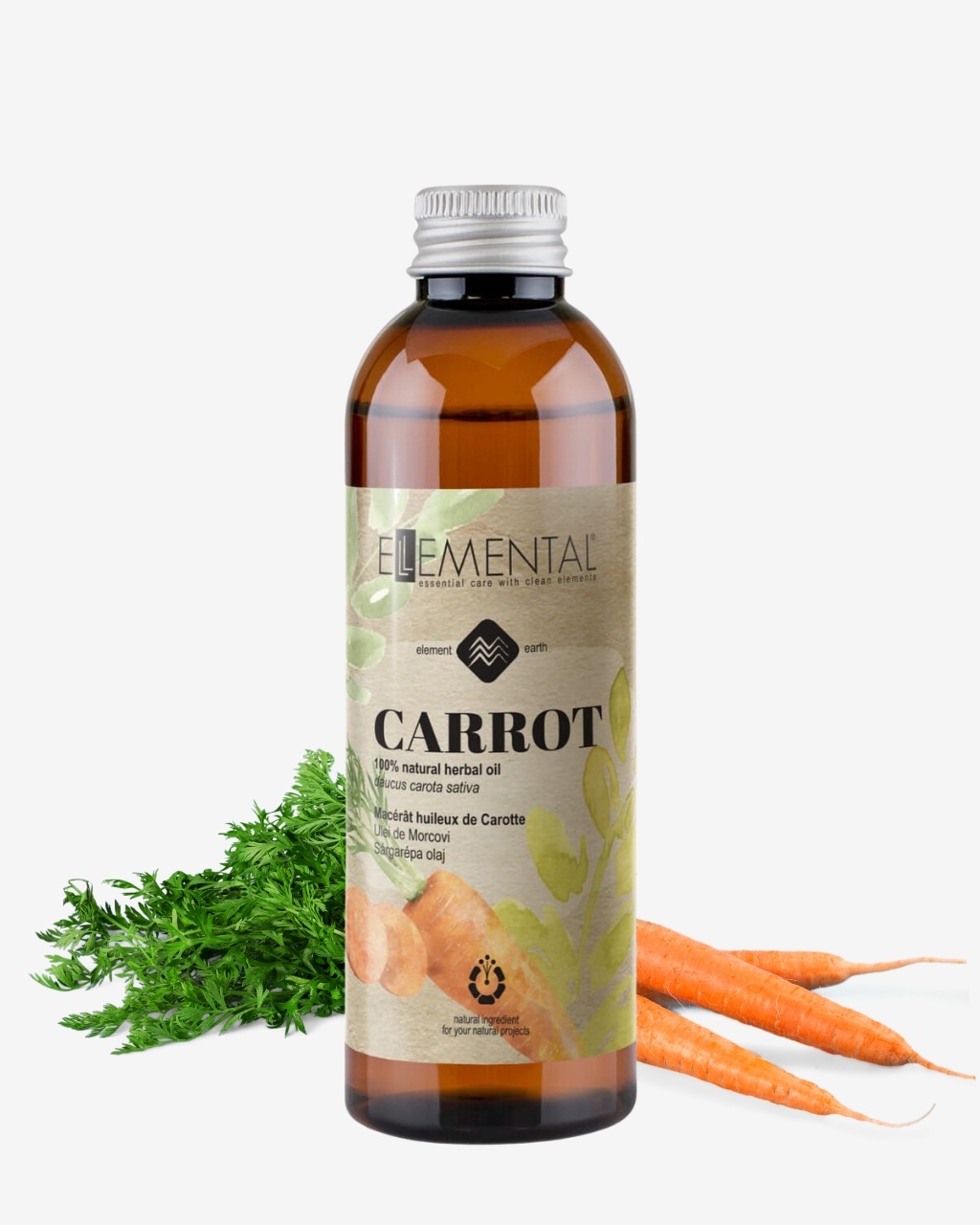
Carrot Oil (Daucus carota sativa), thanks to its carotenoid and provitamin A content, is used in cosmetic applications to accelerate and prolong tanning, provide antioxidant protection to sun-exposed skin, and revitalize dull complexions. It can be incorporated into day creams to revitalize tired skin, into after-sun emollient lotions, and into oils designed to even out skin tone. It can already be considered a classic ally for boosting skin radiance and preparing the skin for sun exposure.
Ingredients: Helianthus Annuus Seed Oil, Daucus Carota Sativa Root Extract
100% natural, free of preservatives or additives.
On the face, carrot oil is recommended for dull, devitalized-looking skin. It can be used as an ingredient in creams and serums with a "bonne mine" effect (instant glow) or as an addition to the morning routine before sun exposure.
As a radiance-boosting ingredient, the synergy with Sea Buckthorn Oil, Carrot Extract and Rosehip CO2 Extract creates a powerful antioxidant and revitalizing profile. As an ingredient in natural sunscreens, the association with Karanja Oil and Raspberry Seed Oil completes the photoprotection and nourishment profile.
At the body level, carrot oil excels in tanning oils, after-sun products, and bronzing formulas. The orange coloration of beta-carotene in high concentrations can tint formulas or the skin, an aspect to keep in mind when dosing.
As a tanning oil, it pairs harmoniously with Urucum Macerated Oil, Tomato Seed Oil and Raspberry Seed Oil. As an after-sun treatment, the association with Monoï de Tahiti Oil and Aloe Vera Oil completes the soothing and nourishing action.
On hair, carrot oil is less commonly used, but it can be included in treatments for a dry scalp or for the UV protection of color-treated hair.
As a protective ingredient in summer hair serums, the synergy with Karanja Oil and Tomato Seed Oil as a base completes the natural UV protection profile.
Can I apply it on its own for sunbathing without anything else?
Carrot oil prepares the skin, but it does not have a certified sun protection factor sufficient to prevent sunburn during intensive exposure.
Can it turn the skin orange?
At high concentrations and with repeated application, beta-carotene can give the skin a slight orange tint. At standard cosmetic ingredient dosages, the coloring effect is minimal and reversible.
Does it replace a sunscreen?
No. Beta-carotene plays a certain protective role against UV-induced oxidative damage, but it is not an approved sun filter according to EC Reg. No. 1223/2009. It should not be used alone for sun protection.
Safety in use
Cosmetic product for external use only. Do not ingest. Avoid contact with eyes.
Storage, preservation
Keep the bottle closed, in a cool place, away from direct light.
Write a valid review and earn loyalty points worth €0.40