




Formula: 6241 Difficulty level: beginner Shelf life: min 6 months pH optimal: - Phase Ingredients Dosage % Total 100 gr A Sesame oil 35 35 gr A Carrot herbal oil 30 30 gr A Karanja oil 20 20 gr A...
201
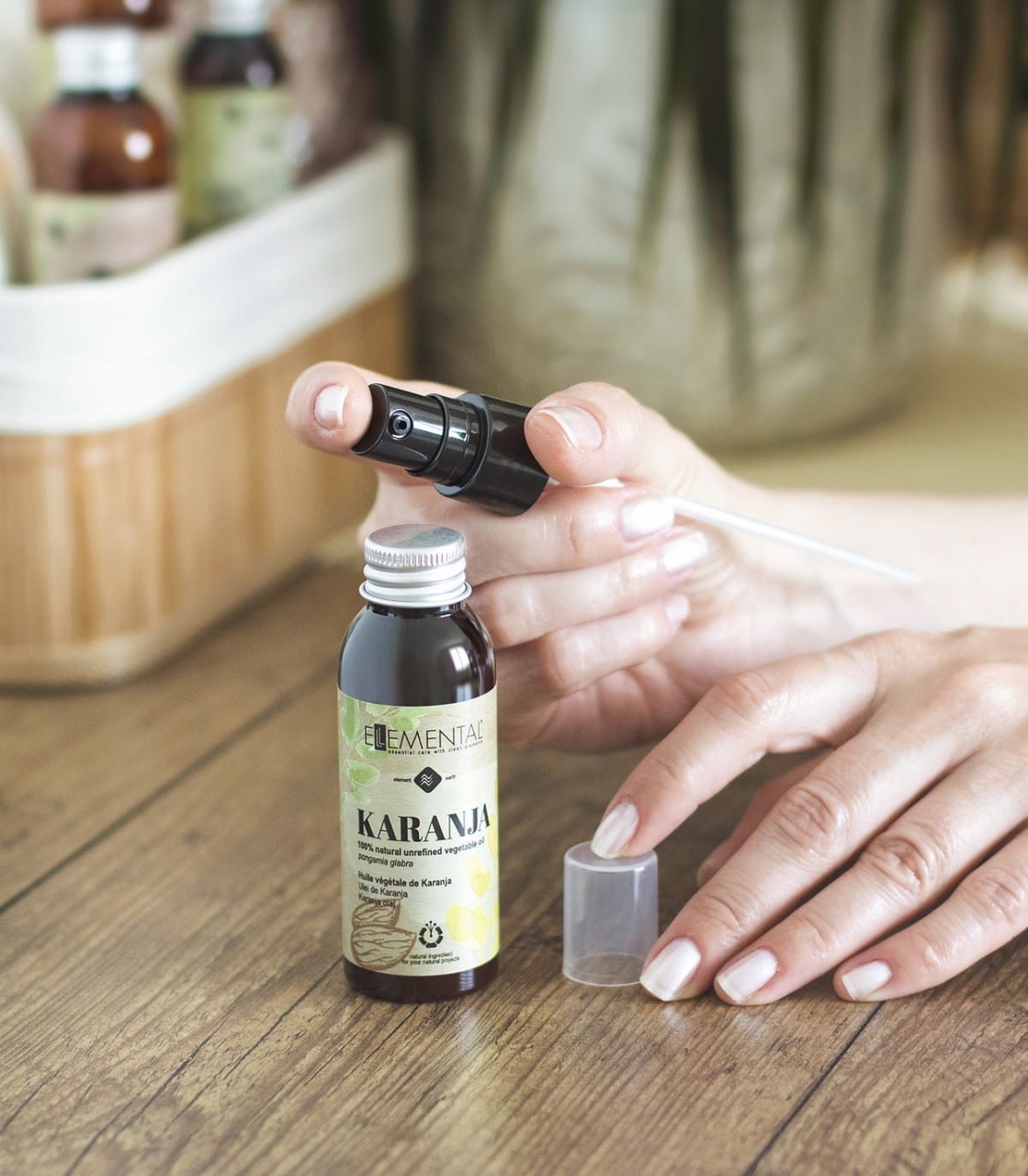
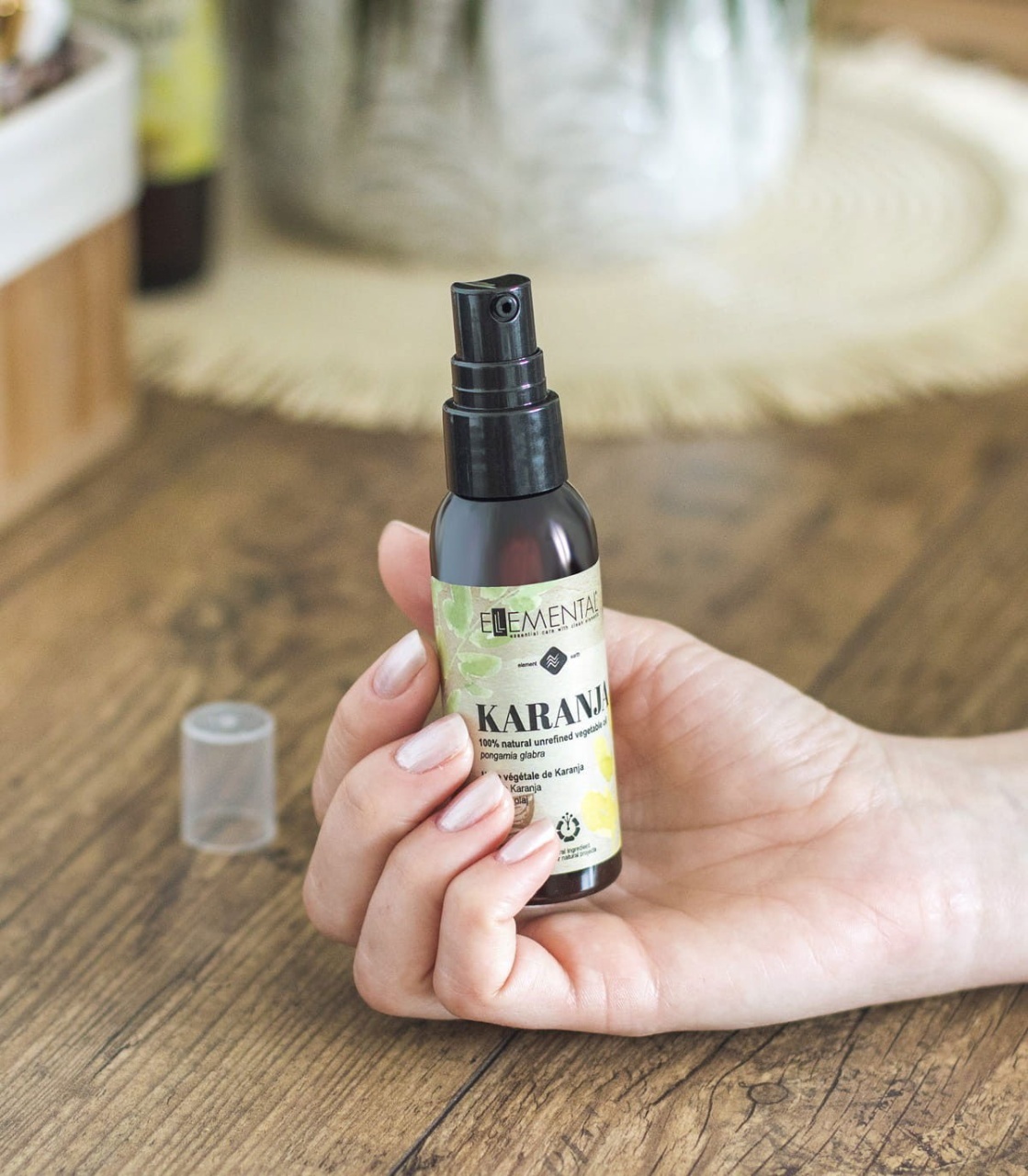
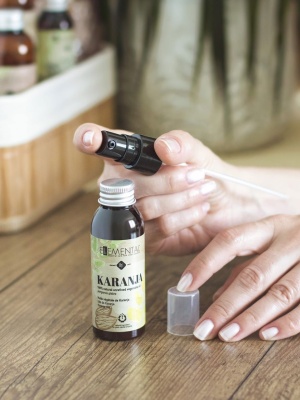
| Product size | Suitable pump | |
| 50 ml, 90 g, 100 ml |
|
|
| 200 g, 250 ml |
|
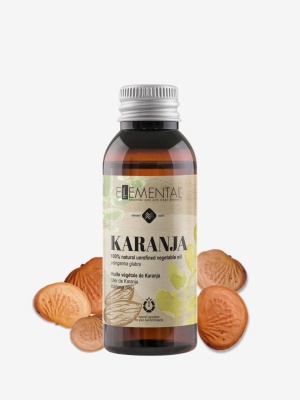
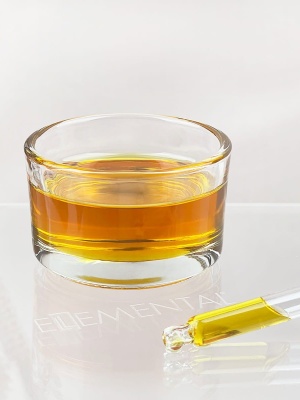
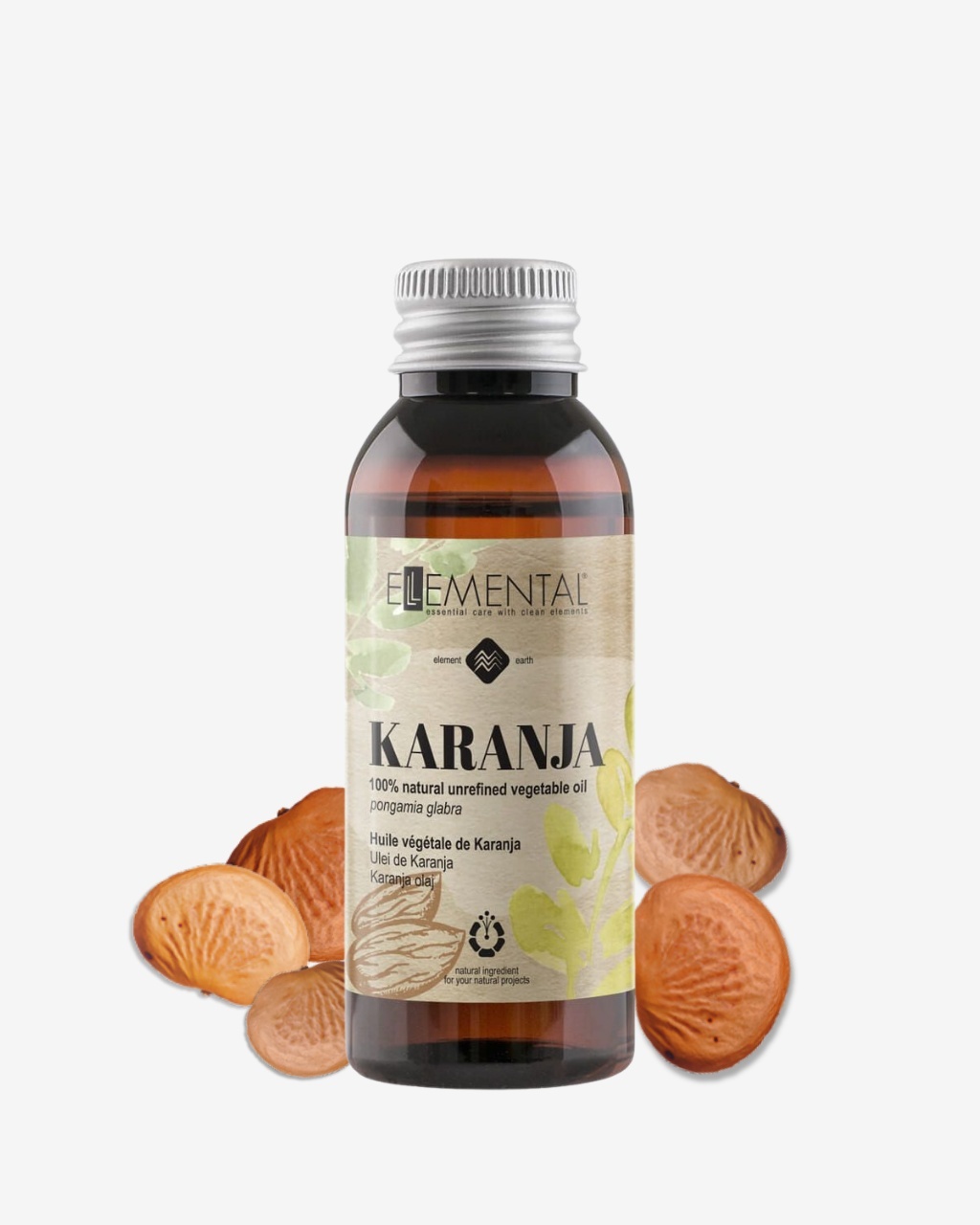
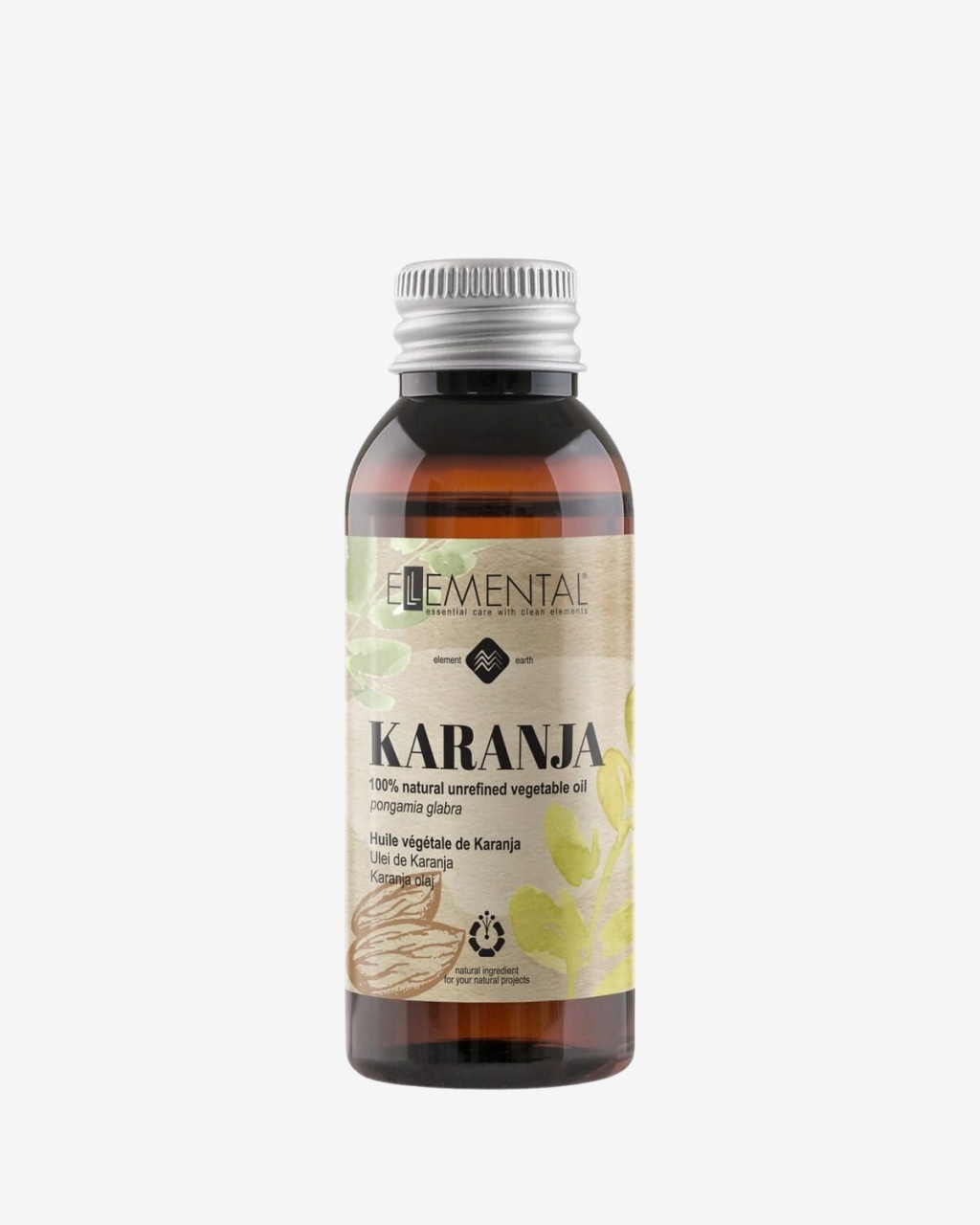
Karanja Oil (Pongamia glabra) has a unique profile in cosmetics, determined by the presence of two lipophilic flavonoids in the oil's unsaponifiable fraction, karanjin and pongamol, which are rare compounds with a documented capacity to absorb radiation. Its distinctive features compared to most vegetable oils are its antimicrobial, antifungal, and natural UV protection properties. On problematic skin, on a dandruff-affected scalp, or in natural sunscreens, it brings benefits that few other vegetable oils can offer.
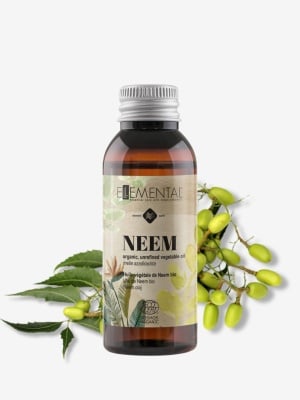
Karanja is botanically related to the neem tree, and its oil is often compared to neem oil, with which it shares many properties, minus the unpleasant odor. It is not a base oil; it is a powerful active ingredient, recommended to be diluted in other oils or incorporated into formulas at controlled concentrations. It is not indicated for use on the skin as it is; it should be used at a dosage of up to 20% in compositions applied to the body, and up to 80% in those applied to the face, hair, or smaller skin areas.
Synonyms: Millettia pinnata, Pongamia pinnata
Ingredients: Pongamia Glabra Seed Oil
100% natural, free of preservatives, free of additives.
On the face, karanja is an active ingredient for skin with acne, superficial skin mycoses, or a complexion damaged by exposure to sun rays. Do not apply pure over large areas; dilute it or incorporate it as an ingredient into formulas.
In a natural sunscreen cream, the synergy with Raspberry Seed Oil and Sea Buckthorn Oil completes the protection and skin nourishment profile. On skin affected by mycoses or eczema, the association with Andiroba Oil and Palmarosa Essential Oil supports the antifungal effect.
At the body level, karanja is useful in sun formulas, products for problematic skin, and balms with an antimicrobial profile.
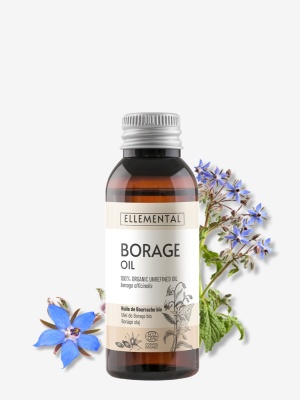
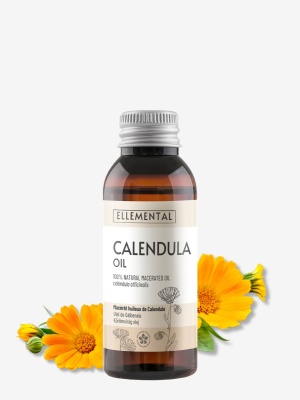
In a balm for eczema-prone skin, the synergy with Calendula Oil and Organic Borage Oil completes the soothing and rebalancing effect. In a natural sun formula, the association with Carrot Oil and Tomato Seed Oil rounds out the protection profile.
On hair, karanja is recommended in sun protection serums for color-treated hair, treatments for a scalp with dandruff or seborrheic dermatitis, and UV protection formulas for hair.
As a UV protective serum for color-treated hair, the synergy with Organic Broccoli Seed Oil and Phyto-Silicone completes the fiber and color protection. As an anti-dandruff ingredient, the association with Geranium, Citronella, or Litsea Essential Oil and Burdock Oil as a base supports the antifungal effect on the scalp.
Is it as powerful as Neem oil?
They share similar properties (antiseptic, insect repellent), but Neem is considered more powerful and aggressive. Karanja is the gentler alternative, with a much more tolerable scent, making it preferred in cosmetic products.
Can I use this oil as my sole sun protection product?
No. Karanja can complement a natural UV protection profile, but it is not an approved sun filter under Regulation (EC) No 1223/2009. Although it absorbs UV radiation, the estimated Sun Protection Factor (SPF) of the pure oil varies and is not standardized. It must be used as an enhancer alongside approved mineral filters in SPF-type formulas.
Does it have an unpleasant odor?
It has a distinct, earthy, nutty, and slightly medicinal scent, but it is not repulsive like Neem oil. It can be easily masked with essential oils or fragrance ingredients.
Safety in use
Cosmetic product for external use only. Do not ingest. A skin patch test is recommended 48 hours prior to first use. Avoid contact with eyes and mucous membranes. Not recommended for children under 3 years old. Use exclusively diluted or within formulas; do not apply pure to large areas of skin. Indicative dosage up to 80%.
Storage, preservation
Keep the bottle tightly closed, in a cool place, away from direct light. It may become cloudy at lower temperatures, a reversible phenomenon upon mild heating.

Write a valid review and earn loyalty points worth €0.40