Description
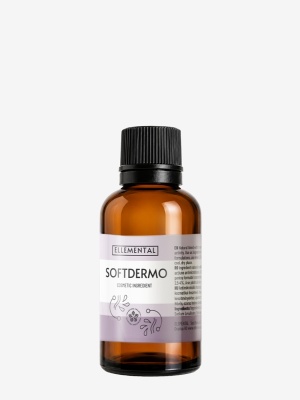
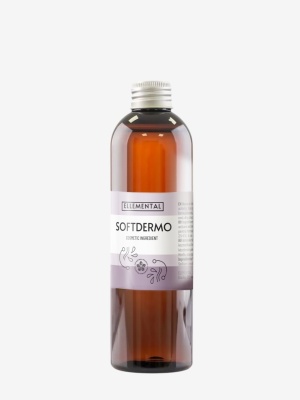
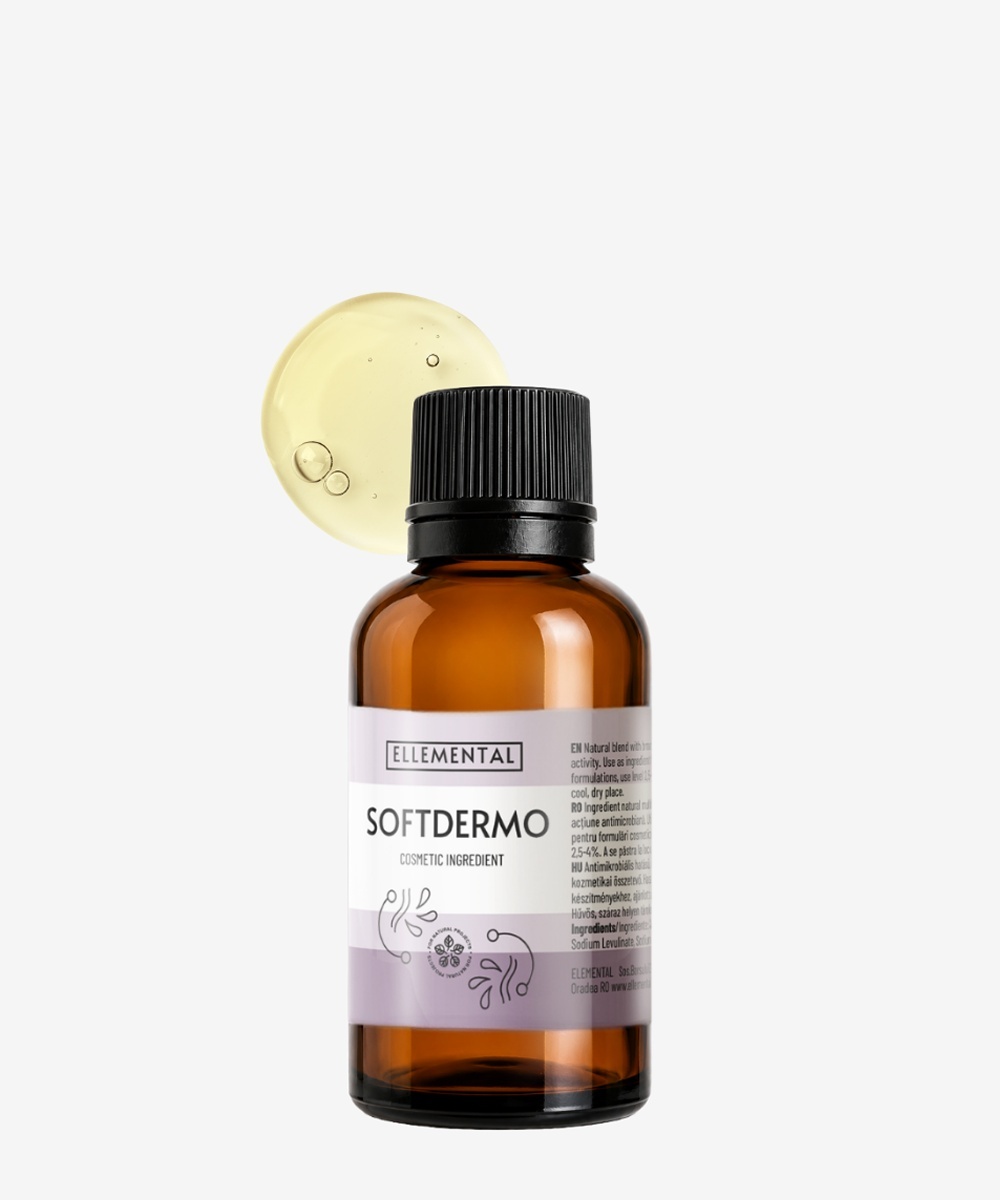
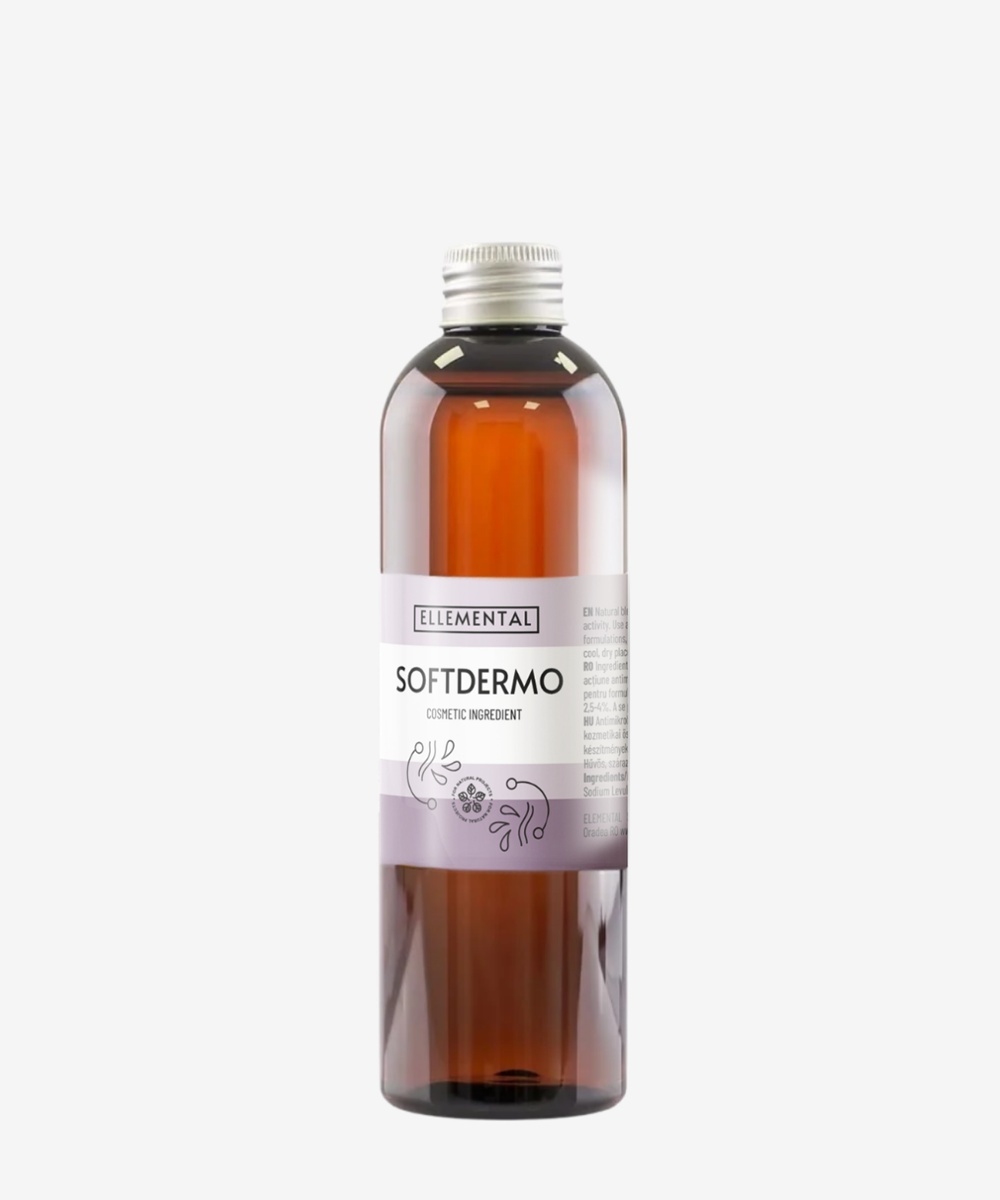
Softdermo - Multifunctional Protection for Cosmetics Without Traditional Preservatives
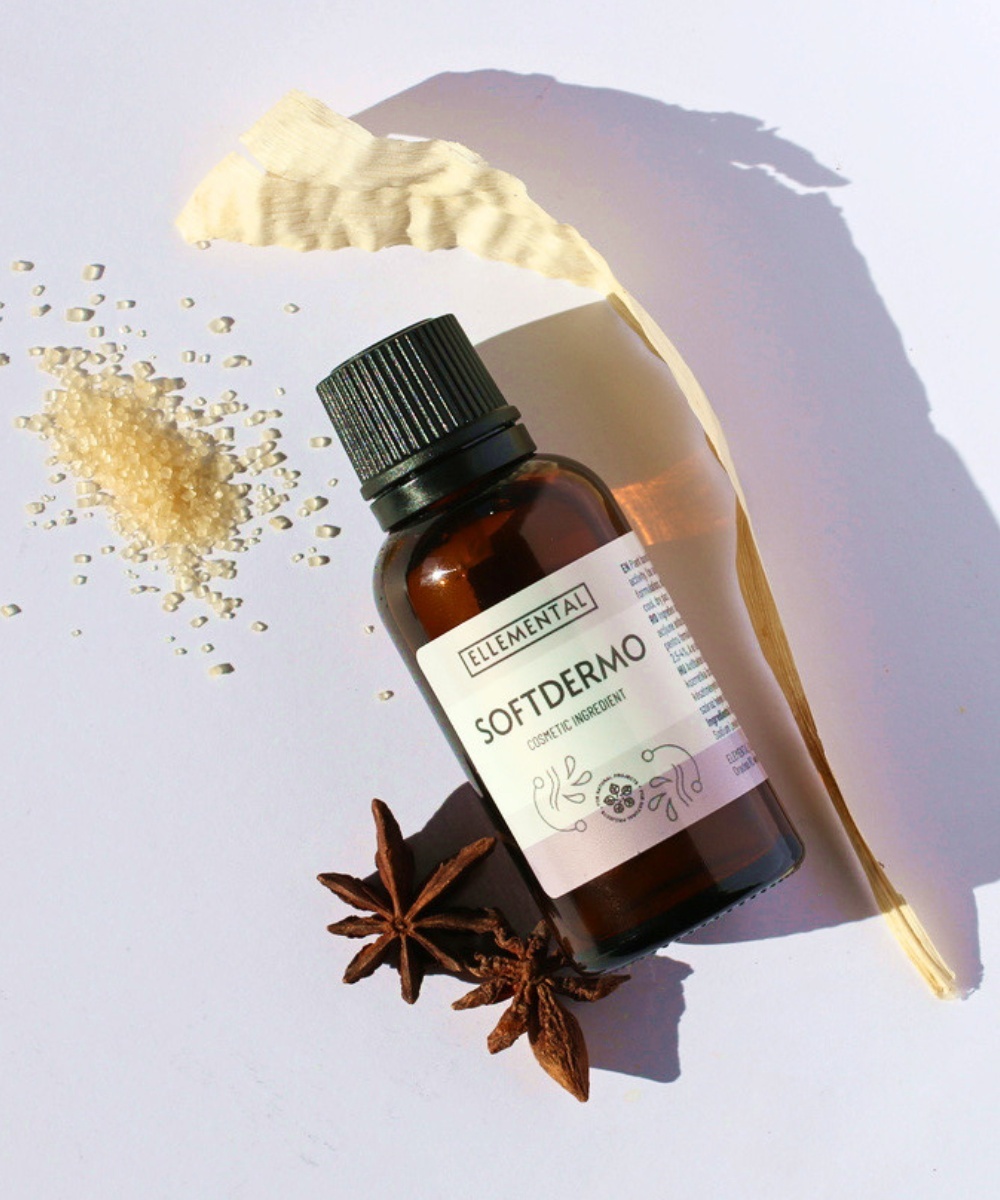
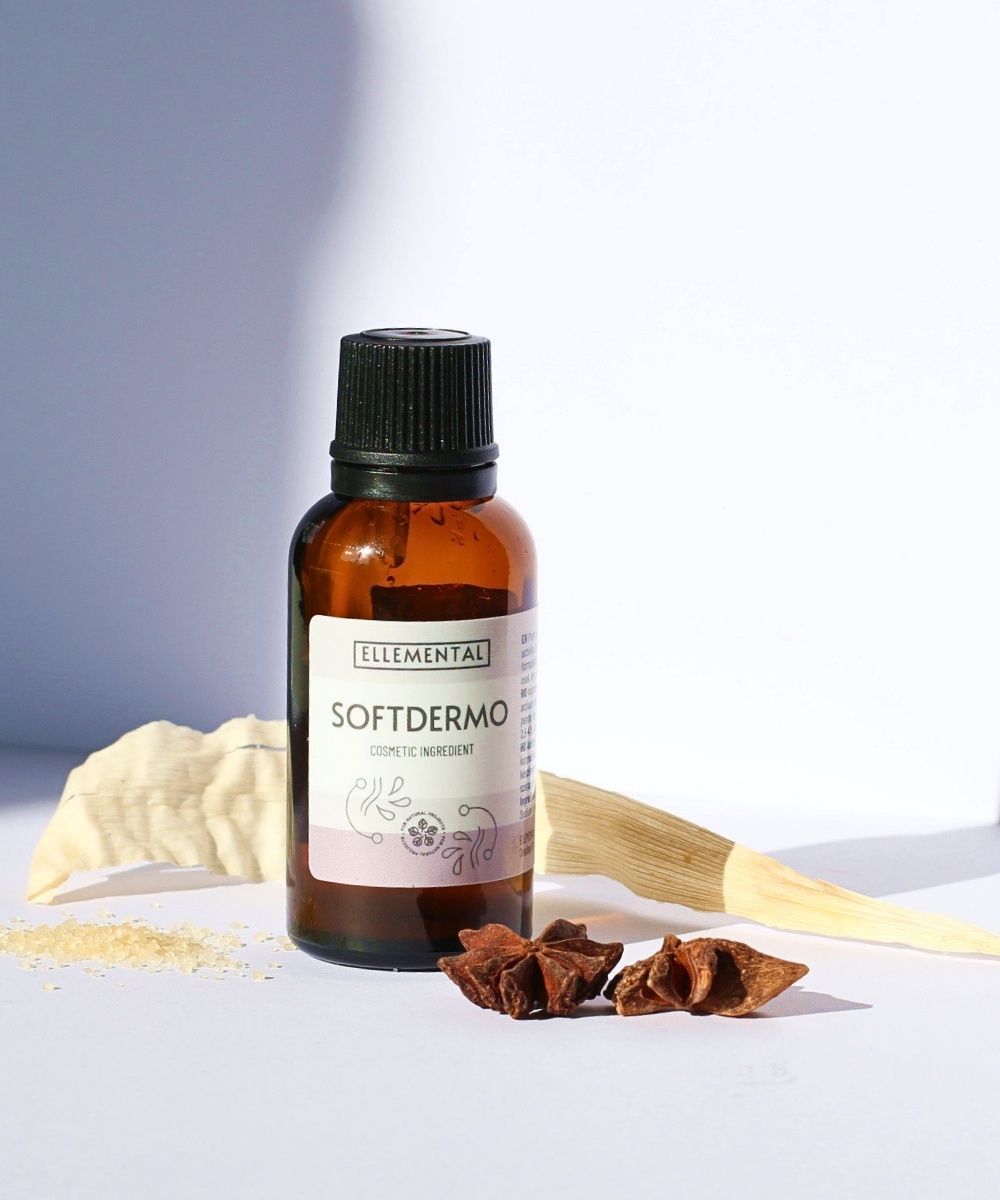
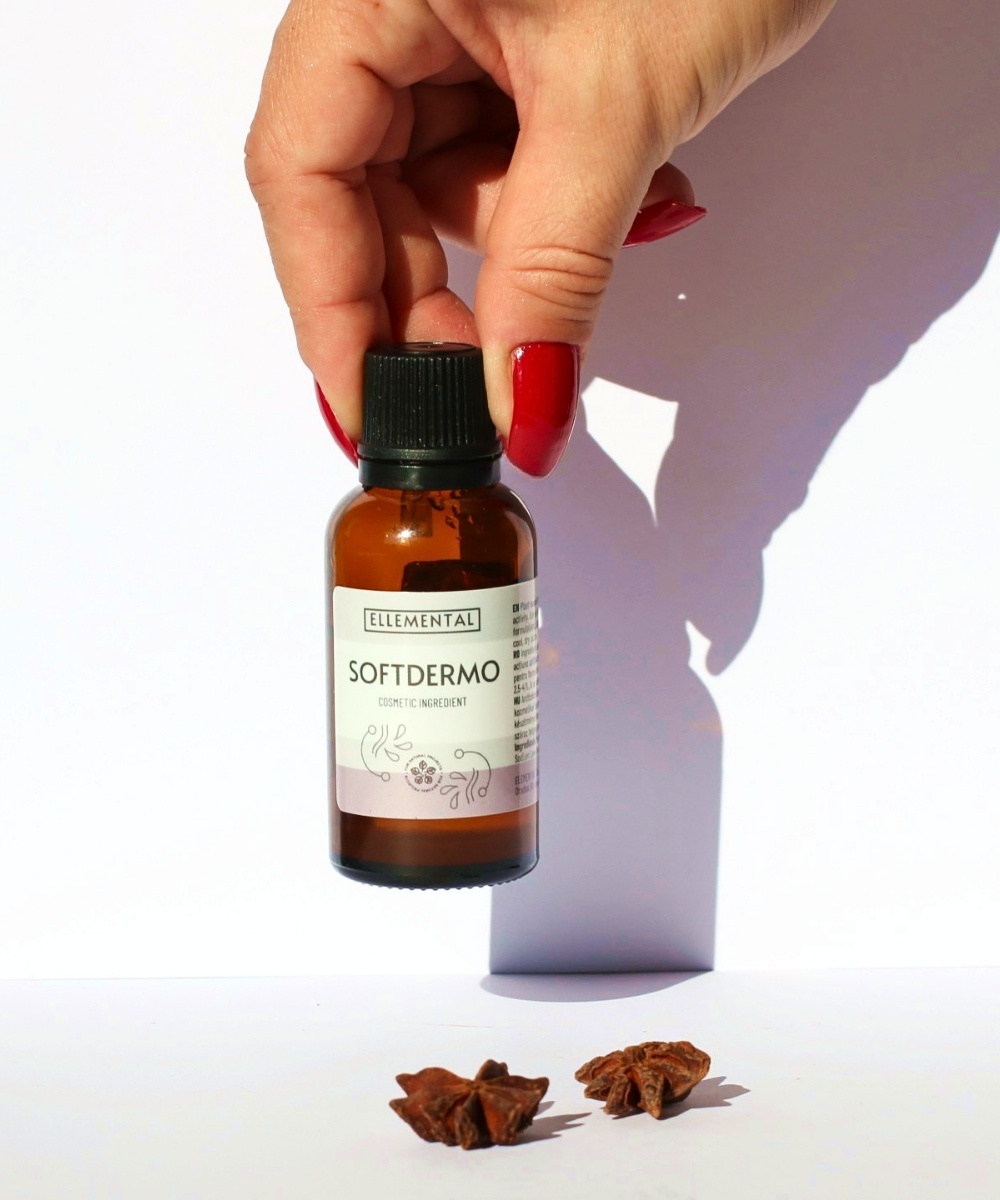
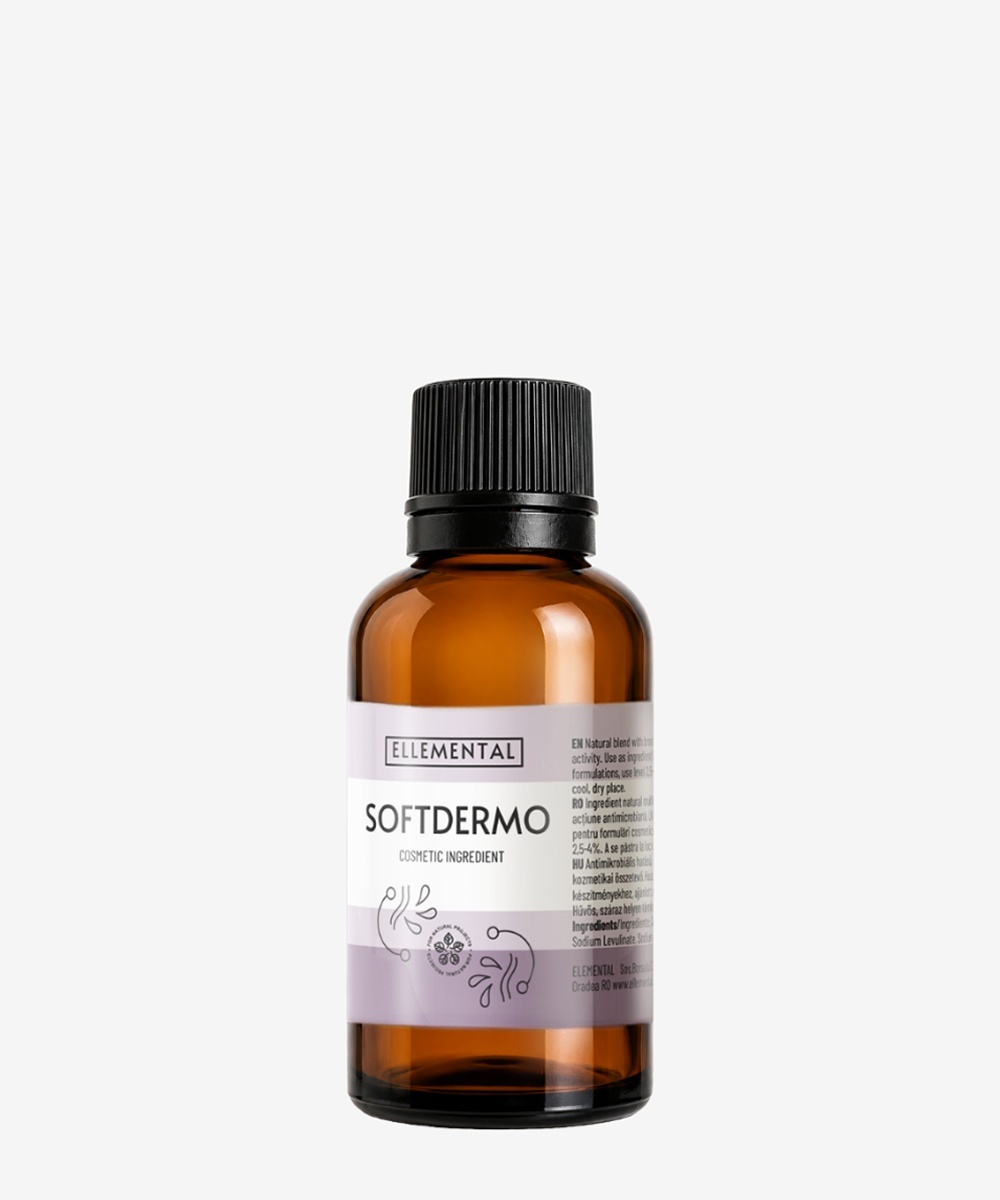
Softdermo is a naturally derived blend approved for bio cosmetics, based on plant-derived organic acids. This multifunctional complex provides excellent protection against bacteria and molds, while simultaneously offering hydrating and anti-inflammatory benefits for the skin. It is the ideal solution for "clean beauty" formulations, being extremely gentle on the skin barrier and allowing for the creation of safe products without using controversial synthetic preservatives.
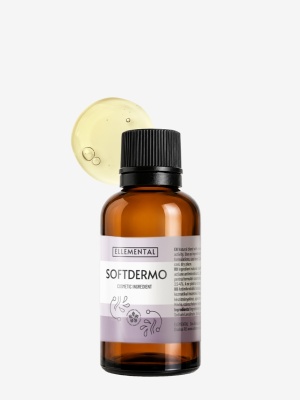
Ingredients (INCI): Glycerin, Aqua, Sodium Levulinate, Sodium Anisate.
Technical Characteristics
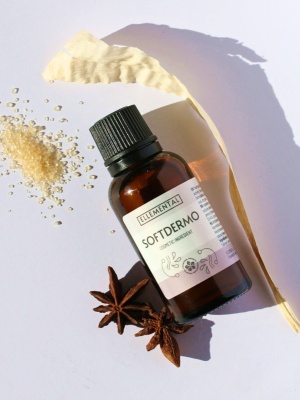
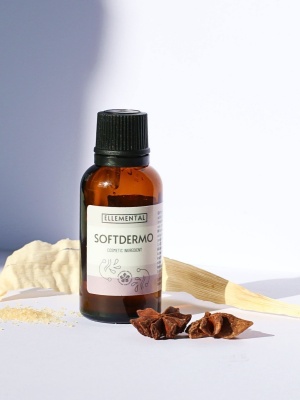
- Origin: 100% vegetable (star anise, corn, sugar cane).
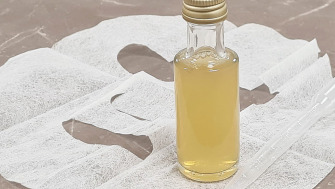
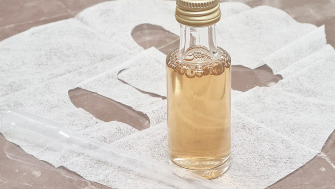
- Presentation: Light yellowish liquid with a subtle, agreeable scent.
- Solubility: Water-soluble.
- Function: Multifunctional antimicrobial, humectant, masking agent (discreet scent).
- Recommended dosage: 2.5% - 4%.
Studied Performance
Softdermo is recognized for its remarkable safety and efficacy profile:
- Broad Antimicrobial Spectrum: "Challenge test" studies demonstrate excellent activity against bacteria (gram-positive and gram-negative) and fungi, ensuring the microbiological stability of the product.
- Anti-Inflammatory Effect: Sodium Anisate is known in specialized literature for its ability to soothe irritated skin, making this mix ideal for sensitive or acne-prone skin.
- Hydration and Conditioning: The glycerin base and organic acid salts contribute to maintaining the optimal hydration level of the epidermis.
- Excellent Skin Tolerance: Does not cause sensitization or irritation, being safe even in products intended for babies.
Main Properties
- Natural Alternative: Allows products to be labeled with "preservative-free" claims.
- Easy to use: The liquid form facilitates incorporation even in cold processes.
- Olfactive Profile: Has a subtle anise scent that does not interfere with the final fragrance of the product.
- Eco-Friendly: Completely biodegradable and obtained from renewable resources.
Applications
- Applications include toners, gels, emulsions, deodorants, skin cleansers, makeup products, baby care products, hair care, oral hygiene, and sun care products.
- It is suitable for all types of emulsions and surfactant-based products, leave-on and rinse-off products, and water-based products.
- Light or rich creams, facial serums, lotions, body milks.
- Hygiene products, shampoos, shower gels, liquid soaps.
- Facial toners, micellar waters, gels, and aqueous serums.
- Cosmetics for babies and individuals with hypersensitive skin.
- Deodorants and sun care products.
Formulation Guide
- For emulsions: Add to the aqueous phase, and at the end of the process, adjust the pH to <5.5.
- For surfactant products: Mix with the surfactants and proceed as usual; adjust the pH to <5.5 at the end of the process.
- For water-based preparations: Mix only with water first, then add the rest of the ingredients from the aqueous phase and homogenize; adjust the pH to <5.5 at the end of the process.
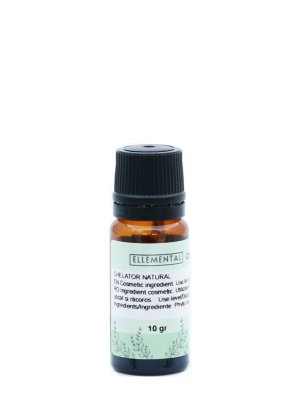
- To increase its efficacy, it can be combined with a natural Chelator.
- It presents incompatibility with electrolyte-sensitive ingredients.
- Optimal pH range of the finished product: 4.5 - 5.5
Frequently Asked Questions (FAQ)
Can I use Softdermo as the sole preservative?
Yes, in most formulations that respect a pH of 5.0 - 5.5, especially in rinse-off ones, it provides complete protection. However, in complex formulas (with many botanical extracts or clays), association with a preservation booster (such as Glyceryl Caprylate) is recommended.
Why did my facial toner become cloudy after adding Softdermo?
Softdermo can slightly increase the pH upon addition. Ensure you adjust the pH at the end with an acid (lactic or citric) to a value of 5.0 to maintain transparency and efficacy.
Safety in Use
Profile: Natural, gentle, well-tolerated ingredient.
Precautions: External cosmetic use. Observe the recommended dosage. Do not apply pure on the skin.
Storage: In a cool, dry place, away from direct light. If stored at low temperatures, it may slightly crystallize; heat gently to 40°C and shake before use.
Bibliography and Technical References
- Technical documentation from the Manufacturer.
- Journal of Cosmetic Science (2022). Evaluation of Sodium Levulinate and Sodium Anisate as skin-friendly alternatives to traditional preservatives.
- Cosmetic Ingredient Review (CIR). Safety assessment of Levulinic Acid and its salts as used in cosmetics (Updated 2023).