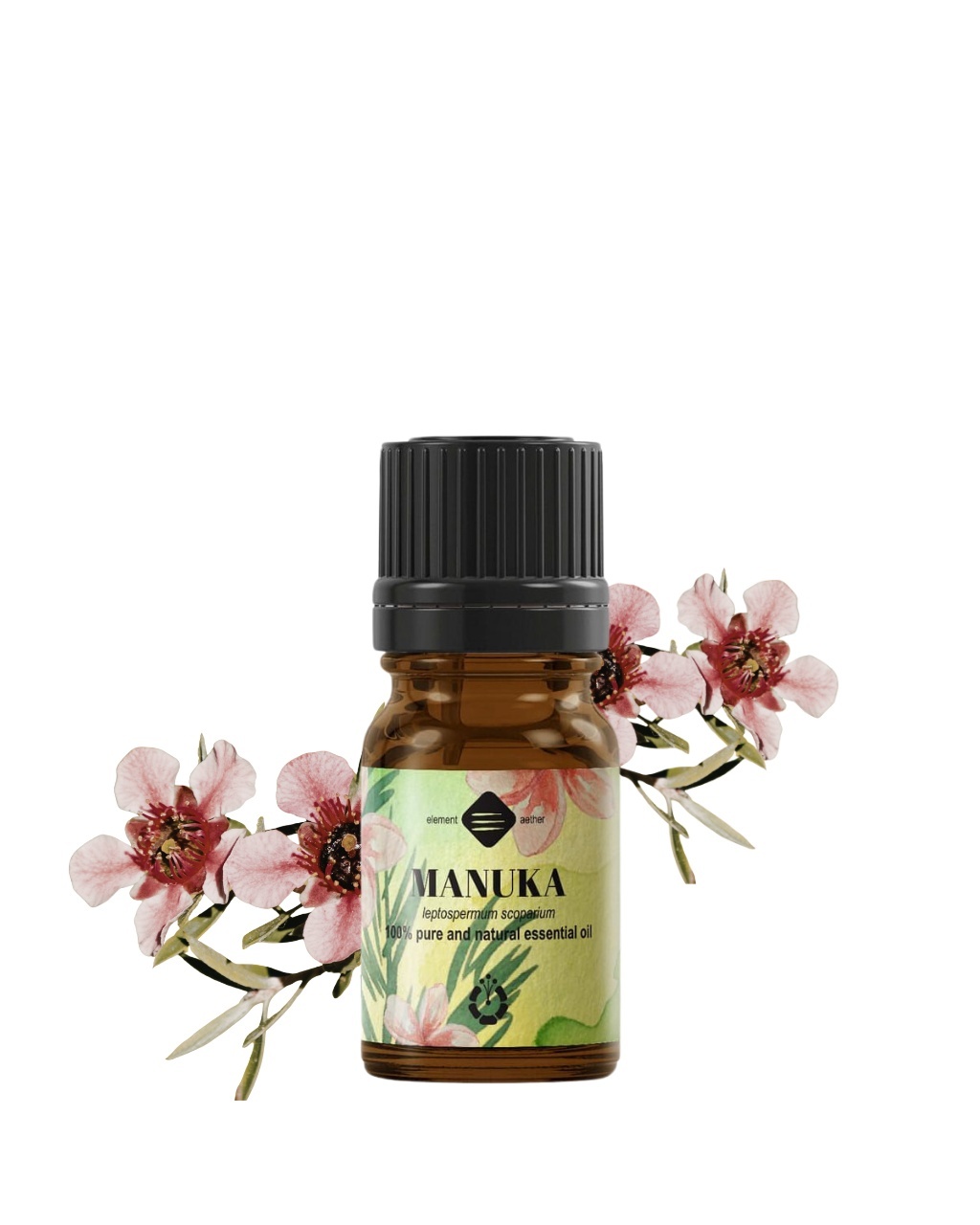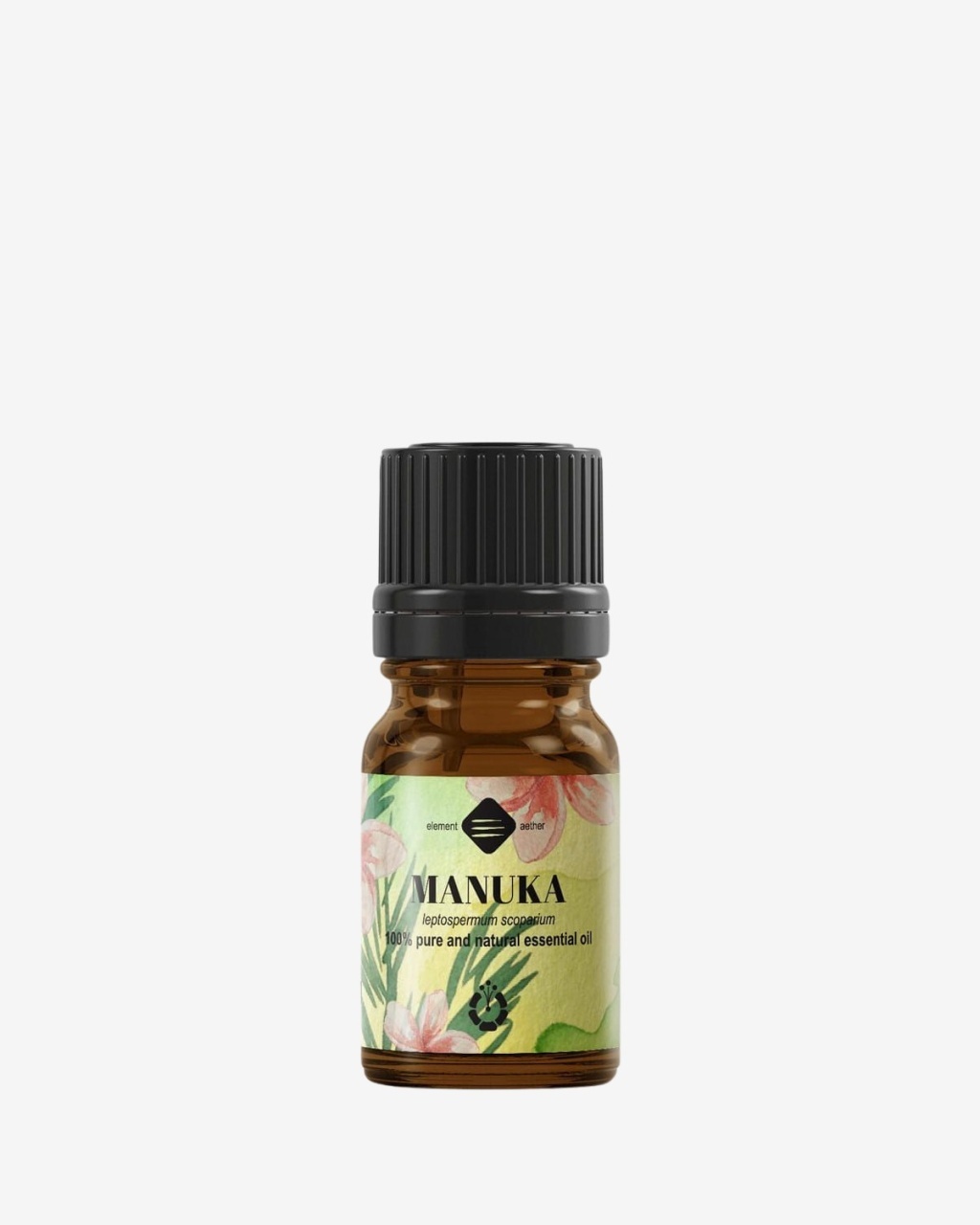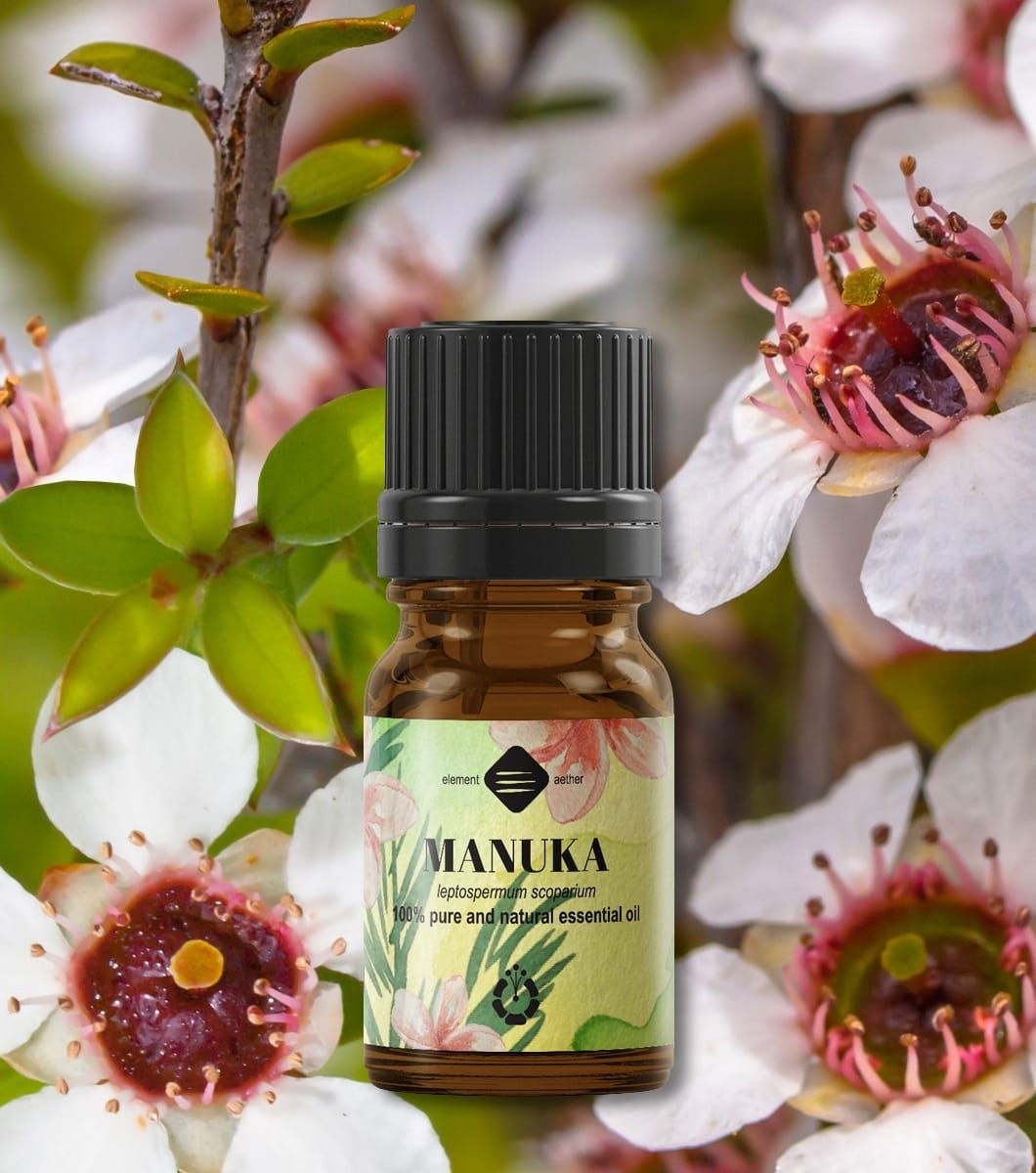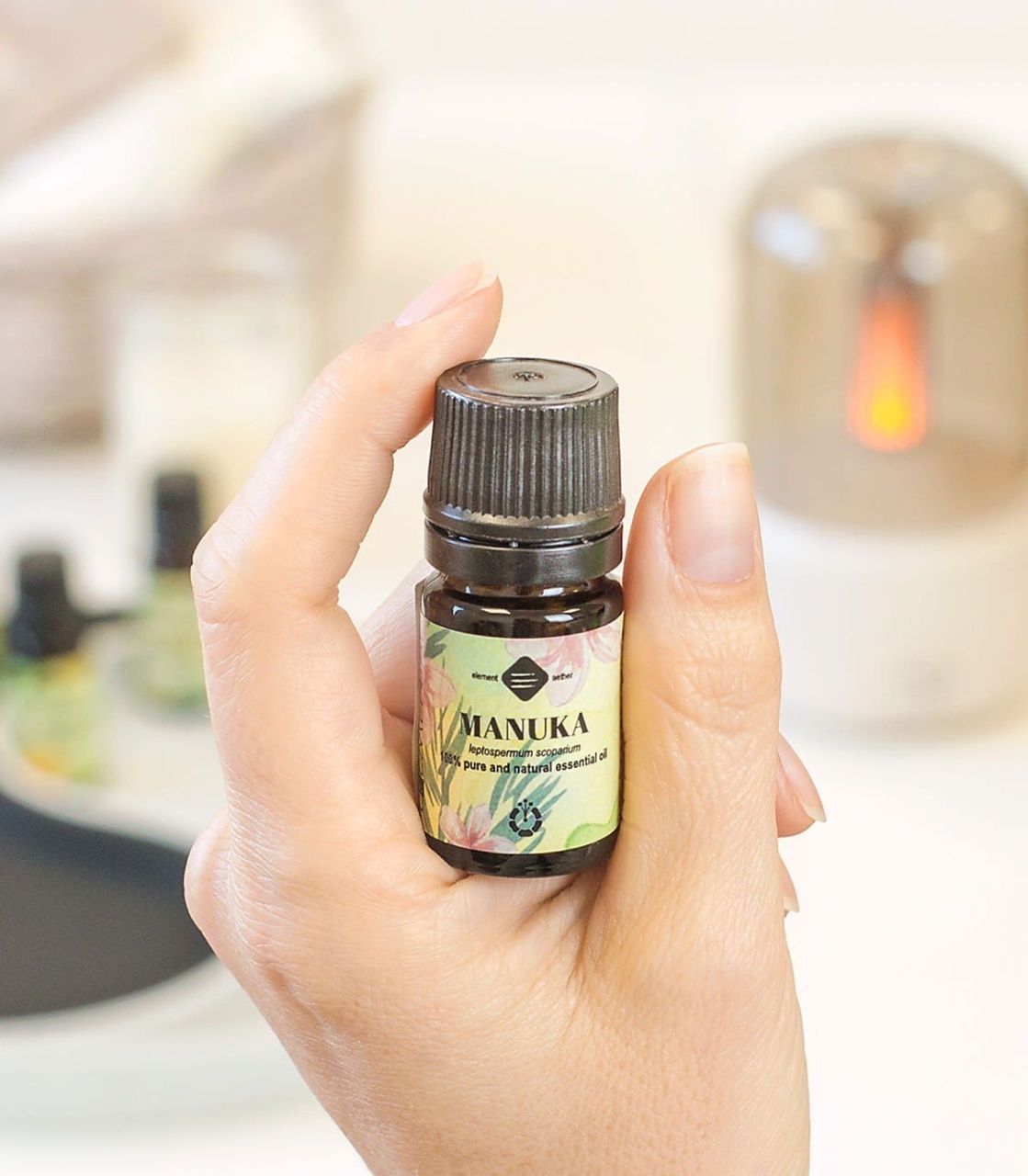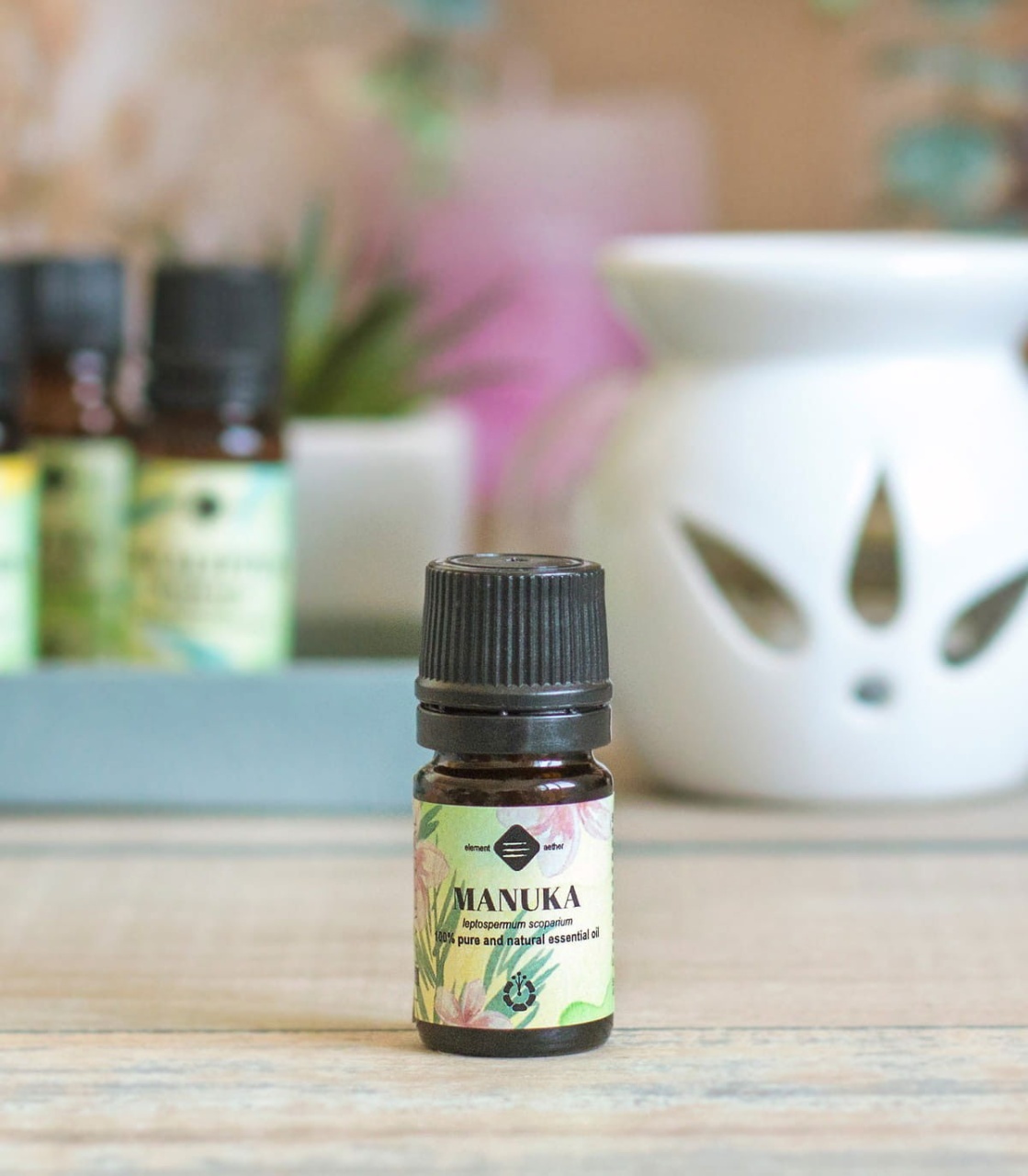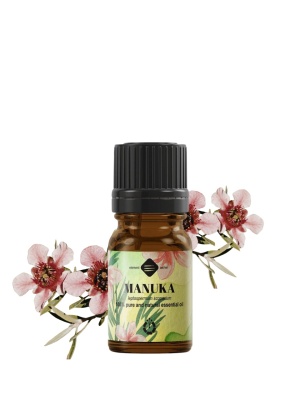
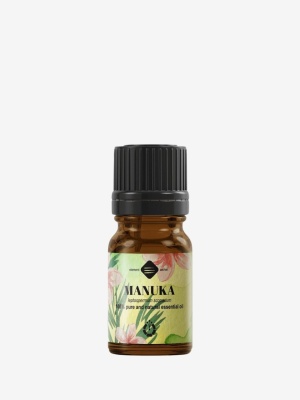
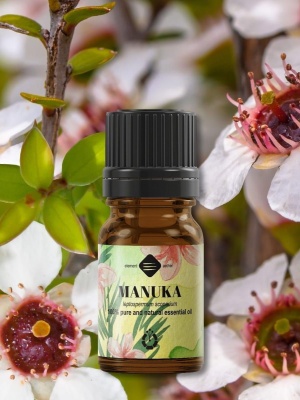
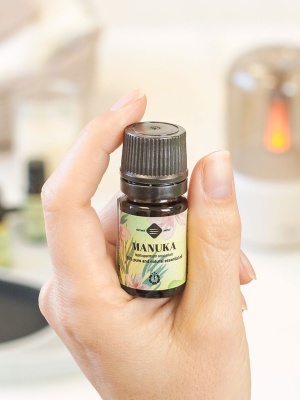
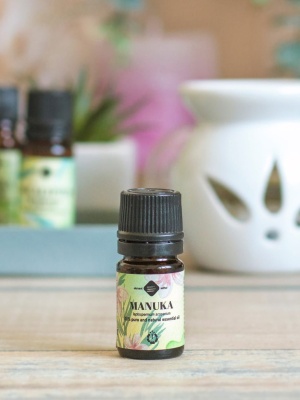
Manuka essential oil

[2]
10.97 (VAT included)
9.22 (without VAT)
_ _
Code Size Net price Total price Quantity
M-1569 5 ml
9.22
10.97
M-1569-0.09 90 g
107.57
128.01
Product reference D-1569

Description

Manuka (Leptospermum scoparium) is the essential oil from New Zealand with an outstanding antimicrobial profile, due to beta-triketones, rare compounds specific to this species, with documented activity against Gram-positive bacteria (including resistant staphylococci) and fungi. Compared to Tea Tree, it features superior skin tolerance and better stability against oxidation. Its primary applications include acne-prone skin and skin with cutaneous infections, athlete's foot and fungal nail infections, problematic scalps and natural deodorants, as well as immune support during the cold season.

Its earthy-herbaceous aroma, warmer and less harsh than Tea Tree, makes it more accessible olfactorily in cosmetic products and easier to integrate into complex blends. An important detail to remember: Manuka essential oil and Manuka honey are completely different products, differing in sources, mechanisms of action, and uses.

air Olfactory profile: Herbaceous, earthy, sweetish-woody, slightly medicinal. Warmer and milder than Tea Tree, less stinging, with a specific depth.

Ingredients: Manuka Essential Oil (Leptospermum Scoparium Branch/Leaf Oil)
100% pure and natural, E.O.B.B.D. botanically and biochemically defined, undiluted, unrectified
Obtained by steam distillation from the leaves and branches of Leptospermum scoparium

encrypted_add_circle Cosmetic Properties and Benefits

  • Purifier and tonic for acne-prone skin: Beta-triketones contribute to a clean and balanced appearance of skin prone to acne and skin infections, serving as an ingredient in spot-treatment serums, cleansers, and purifying creams. 
  • Soothing antihistamine: Contributes to an even appearance of skin experiencing allergic reactions, pruritus, and mild eczema, acting as an ingredient in soothing and anti-itch formulas.
  • Scalp tonic: Traditionally used for the appearance of a scalp with dandruff and a tendency toward infections, serving as an ingredient in shampoos and pre-wash treatments.
  • Natural deodorant: Its broad antibacterial spectrum and distinct earthy aroma recommend it for use in natural deodorants.
  • Intimate hygiene: Its antifungal properties and excellent skin tolerance make it highly suitable in intimate hygiene formulas.

air_freshener Aromatherapeutic Properties

  • Topical antibacterial and antifungal: Beta-triketones have documented activity against Gram-positive bacteria and fungi, used topically diluted for skin infections, athlete's foot, and nail infections.
  • Immunomodulator and respiratory support: Traditionally used in inhalations and diffusers to support immunity during the cold season.
  • Nervous calmer and anxiolytic: Inhalation can modulate GABA receptors, traditionally used for states of anxiety, chronic stress, and restless sleep.

hub Recommended Synergies

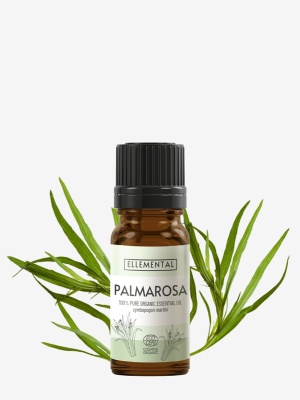
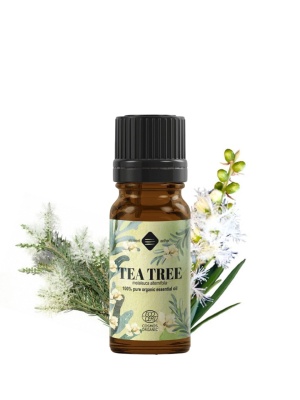
Acne-prone skin and skin infections: Organic Tea Tree Essential Oil, Lavender Essential Oil, Organic Palmarosa Essential Oil, Organic Black Cumin Oil.

Problematic scalp and dandruff: Organic Rosemary Essential Oil, Laurel Oil, Neem Oil, Castor Oil.

Fungal infections - feet and nails: Oregano Essential Oil, Organic Tea Tree Essential Oil, Tamanu Oil, Karanja Oil.

Deodorant and personal hygiene: Organic Palmarosa Essential Oil, Bergamot Essential Oil, Cypress Essential Oil.

Cold season and immune support: Ravintsara Essential Oil, Niaouli Essential Oil, Organic Eucalyptus Radiata Essential Oil.

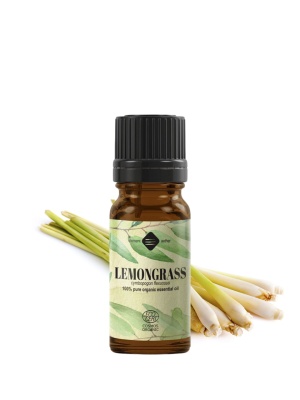
Aromatherapy and anxiety: Lemongrass Essential Oil, Rhododendron Essential Oil, Lavender Essential Oil, Star Anise Essential Oil.


Practical Applications and DIY Recipes

Manuka essential oil is used exclusively as an ingredient in cosmetic preparations and aromatherapeutic compositions. It is gentler compared to other antiseptic oils.

face Face Care

  • Acne spot-treatment: One drop of Manuka and a few of Lavender, pre-diluted in Organic Black Cumin Oil. Applied with a cotton swab onto imperfections in the evening.
  • Purifying cream for combination/oily skin: A few drops of Manuka and a few of Bergamot, incorporated into a Cream base.
  • Purifying oil: A few drops of Manuka pre-diluted in Organic Jojoba Oil. Applied in the evening with a gentle massage.

face_3 Hair Care

  • Scalp treatment: A few drops of Manuka and a few of Organic Rosemary, diluted in Neem Oil topped up with Ricin Oil. Massage into the scalp, leave on for 30 minutes, then wash with shampoo.

digital_wellbeing Body Care

  • Ointment for athlete's foot: A few drops of Manuka and a few of Oregano, diluted in Tamanu Oil and incorporated into gently melted Kokum Butter. Applied to the affected areas 2-3 times a day.
  • Cream deodorant: A few drops of Manuka and a few of Organic Palmarosa, incorporated into Shea Butter with baking soda and starch.
  • Chest balm for the cold season: A few drops of Manuka and a few of Ravintsara in Mango Butter. Applied to the chest and back.

home_and_garden Household Use

  • Anti-mold spray: A few drops of Manuka and a few of Organic Tea Tree, dissolved with a Solubilizer in distilled water with white vinegar. Sprayed on tile grout and surfaces prone to mold.

air_freshener Aromatherapy & Diffusion

  • "Grounding and Protection" Blend: Manuka + Bergamot + Organic Cedarwood Atlas in the diffuser. An earthy-citrus-woody, balancing, and stabilizing profile.
  • "Immune" Blend: Manuka + Ravintsara + Lemon. An ambient purifier during times of seasonal risk.

Questions and Answers (FAQ)

Q: Is it the same as Manuka honey or does it have the same properties?
A: No, they are completely different products. Manuka honey is produced by bees from the nectar of the flowers, is rich in methylglyoxal (MGO) and sugars, and is used as a food or topical remedy. The essential oil is distilled from the leaves and branches, contains beta-triketones, and is lipophilic, dissolving in fats, not in water. Their mechanisms of action are different; they are not interchangeable.

Q: How does it compare to Tea Tree in the Ellemental range?
A: Both are broad-spectrum antiseptices, but they possess distinct profiles. Tea Tree (Melaleuca alternifolia) is dominated by terpinen-4-ol, presenting a more general antifungal and antibacterial profile, and it is slightly more irritating when oxidized. Manuka contains specific beta-triketones, showing documented superior activity against Gram-positive bacteria, while being gentler on sensitive skin and more stable against oxidation. In practice: Tea Tree is more versatile and budget-friendly; Manuka is more powerful against resistant bacteria and better suited for reactive or sensitive skin.


Technical Data, Warnings

Product for cosmetic, aromatic, and hygiene use. Do not apply undiluted.
Store in a dark bottle in a cool place, away from light. Keep out of reach of children.

For dilutions in accordance with legal regulations, consult the IFRA certificate attached to the product on the website.
Sensitive individuals should perform a tolerance test; perform a skin patch test in the bend of the elbow 24 hours before use. Avoid contact with eyes and sensitive mucous membranes. In case of an accident, rinse abundantly with a vegetable oil.
For use during pregnancy, breastfeeding, in case of chronic diseases, for the elderly, or for young children, the recommendation is to consult a doctor.
Bibliography and Sources

  • Tisserand, R., & Young, R. - Essential Oil Safety (2nd ed.) - safety profile and usage limits for Leptospermum scoparium.
  • Porter, N. G., & Wilkins, A. L. - “Chemical, physical and antimicrobial properties of essential oils of Leptospermum scoparium” (Phytochemistry, 1999) - characterization of beta-triketones and documented antimicrobial activity.
  • Maddocks-Jennings, W. et al. - “A comparison of the therapeutic properties of Manuka and Kanuka oils” (2005).
  • Lis-Balchin, M. - Aromatherapy Science: A Guide for Healthcare Professionals - therapeutic and safety profile of Manuka.
  • Battaglia, S. - The Complete Guide to Aromatherapy (3rd ed.) - cosmetic and aromatherapeutic profile.

Details

Code
D-1569
Categories
Status
100% pure and natural, E.O.B.B.D. botanically and biochemically defined
Fragrance note
middle note, top note
Suitable for
aromatherapy, bath, cosmetics, oral hygiene
Key benefits
analgesic, anti-allergic, antibacterial, antifungal, antiseptic, antiviral, deodorant, immunostimulator, purifying, skin tonic, wound healing
Specific indications
acne, pimples, anguish, anxiety, mycoses, skin infections, sores, lesions
Skin care
Face creams, Facial Oils, Masks, Treatments
Skin type
Acne prone, Combination, Oily
Body care
Body butters, Body oils, Creams Emulsions, Lotion bars, Massage oils, Ointments
Hair care
Hair conditioners, Scalp serums, Solid shampoos, Treatments
Hygiene
Cleansers, Deodorants, Feminine care, Oral hygiene, Shampoos, Shower gels, Soaps
Solubility
in ethyl alcohol, in oil
Download
SDS  |  TDS  |  ALLERG  |  IFRA

Related Recipes and Articles

You'll like these too

Reviews

4.5 out of 5 stars
Based on 2 votes
5 stars
50%
4 stars
50%
3 stars
0%
2 stars
0%
1 star
0%
We are looking for stars! Have you used this product?
Write a Review

Write a valid review and earn loyalty points worth €0.40

A
Alice I.
05 Oct 2022
My children use it to treat acne. A few drops in avocado oil and in combination with black soap, used over time and with perseverance works wonders. RECOMMEND !
M
Mihaela S.
05 Apr 2022
A mild, pleasant oil with antiallergenic effects. It has no antibacterial effect specific to manuka honey.