



Bath balls - also called 'bath bombs' - are very popular products, they can be prepared in various shapes and colours, decorated and perfumed according to preference ... Lavender bath bomb Formula:...


Citric Acid – pH Regulator, Hygiene & Household
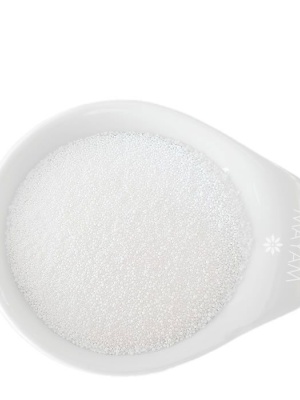
Citric Acid is a weak organic acid found naturally in high concentrations in citrus fruits, produced on an industrial scale through controlled plant fermentation processes. In cosmetics, its main role is as a pH regulator (acidifier) and buffering agent. Correct adjustment of acidity is a critical step in formulation, essential for ensuring the dermatological compatibility of products, optimizing the efficacy of preservative systems, and maintaining the rheological stability of emulsions. Additionally, it is a key ingredient for preparing effervescent bath bombs and a descaling agent for household use.
Ingredients (INCI): Citric Acid.
Citric Acid is never added as such (direct powder) into finished creams or lotions, as there is a risk of incomplete dissolution and the occurrence of localized hyper-concentrated acidity spots. Follow these instructions:
Why is Citric Acid added only at the end of emulsion preparation and not directly at the beginning?
Adding citric acid at the end allows exact control of the pH, because other ingredients can alter the acidity during mixing. Additionally, some emulsification systems need a neutral pH to form the initial stability bonds, with acidification taking place only after the emulsion structure has consolidated upon cooling.
Is it true that Citric Acid can destabilize certain cosmetic gels?
Yes. Certain polymeric viscosity modifiers (such as carbomers) strictly depend on neutralization with a base to develop their three-dimensional gel network. Too sudden a drop in pH below 5.0 by adding citric acid can break these bonds, causing immediate liquefaction of the gel.
Safety Profile: Evaluated as safe and non-toxic at current cosmetic concentrations and applications.
Handling precautions: In pure form, it is strongly irritating to the eyes and respiratory tract. Wearing a mask and protective goggles is recommended during initial weighing and dissolution. In case of contact with eyes, rinse thoroughly with clean water for several minutes. Keep out of reach of children.
Storage: In tightly closed packaging, in a dry place, away from moisture (tends to solidify in a humid environment), and at room temperature.

Write a valid review and earn loyalty points worth €0.40