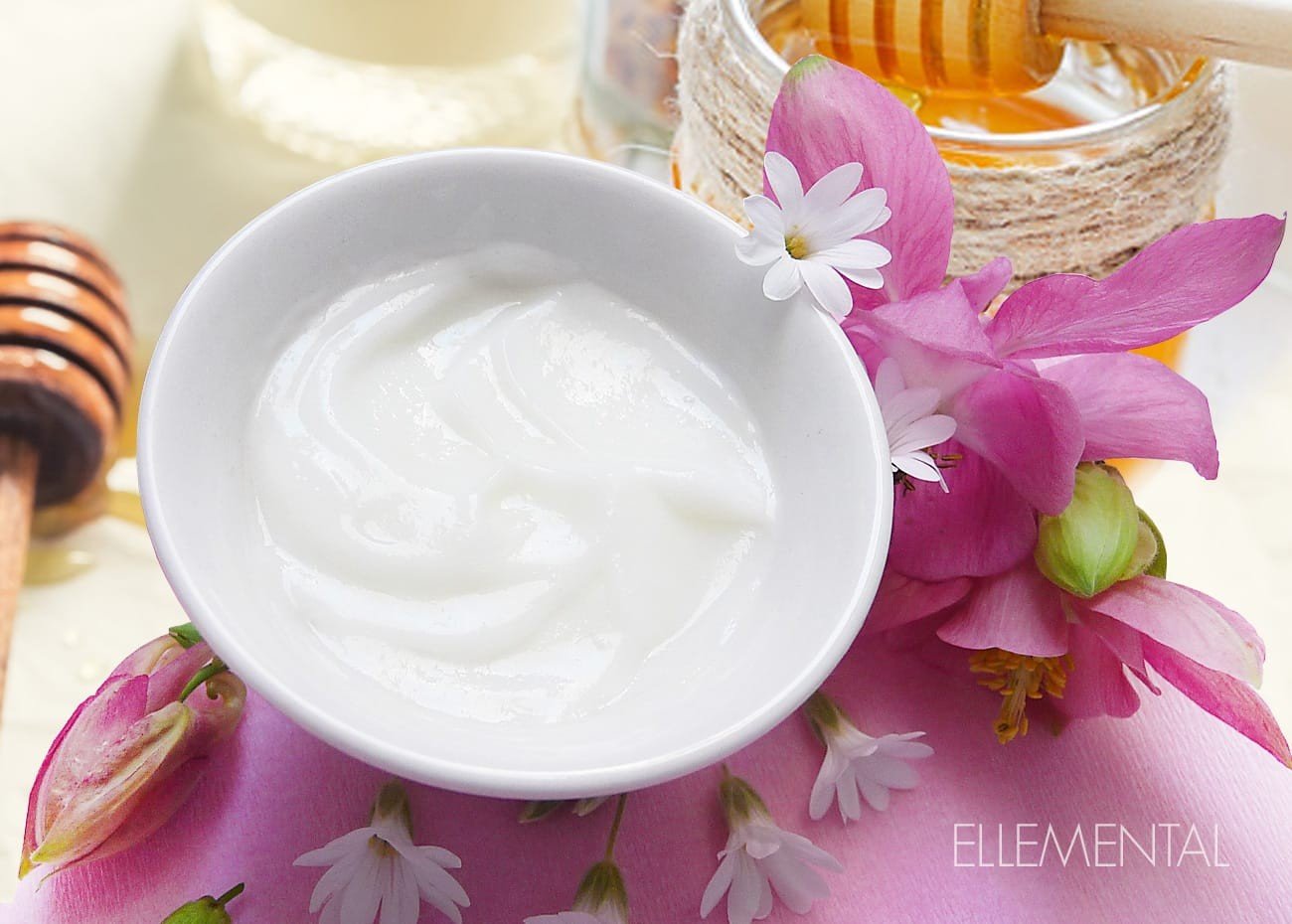
Indulgence Milk & Honey Body Cream
Formula: 54336 Difficulty level: medium Shelf life: min 3 months pH optimal: 5.5-6.0

Phase Ingredients Dosage % Total 200 gr
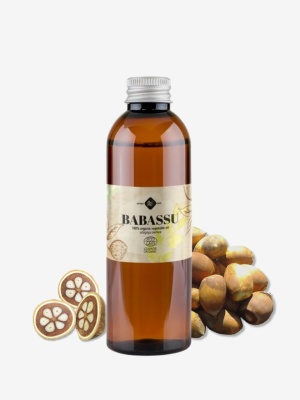
A Babassu oil 13 26 gr
A Coco-Silicone 7 14 gr
A Emulsifier Olliva 5 10 gr
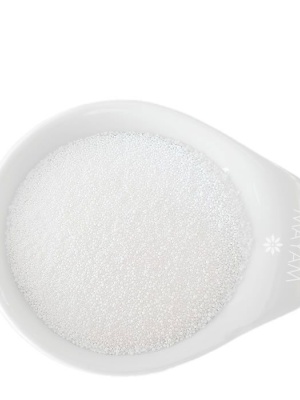
A Stearic acid 2 4 gr
B Distilled water 64 128 gr
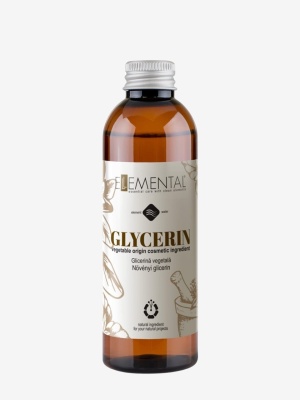
B Glycerine 5 10 gr
C Honeyquat 2 4 gr
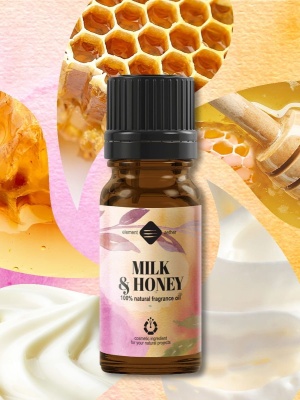
C Natural fragrance Milk & Honey 1 2 gr
C Cosgard 221 1 2 gr

1. Heat the ingredients of phases A and B separately up to 70°C in a heat-resistant beaker on a water bath. When both phases have reached the right temperature, remove from heat.

2. Add the contents of phase A to phase B with mixing, continue mixing until smooth.

3. Place the beaker in a bowl of cold water and blend until a smooth, glossy, homogeneous emulsion forms.

4. When the mixture has cooled to below 40°C, add the phase C ingredients, mix thoroughly until smooth.

5. Measure the pH value and adjust if necessary.

6. Transfer the composition to the dedicated container. Consistency will be final the next day.

A nourishing, emollient and moisturising cream that supports the skin's natural barrier. Absorbs quickly, leaving the skin feeling cared for and velvety soft.
Reviews

E
Ellemental
17 Feb 2020
Hello! Check the pH, and if it is not less than 5 then you can use cream without any problem.
D
Dana P.
16 Feb 2020
And to specify that I put coconut oil instead of babassu and coconut powder instead of buttermilk. I don't have any strips to be able to see what ph the cream has. Thank you very much.
D
Dana P.
16 Feb 2020
Good evening. I made a cream with a nice, airy texture that smells nice, but now I realize that I put LACTIC ACID instead of sodium lactate. Do you think, the cream will destabilize over time or damage the skin? Thank you.
E
Ellemental
20 Sep 2019
Hello! Yes, the proposed substitution can be made.
R
Ramona D.
19 Sep 2019
Hello, could I replace buttermilk with aloe powder? Thanks!
I
Irina T.
09 Jun 2019
Hello! I have made another attempt with this cream and even now I still failed. This time I followed exactly the recipe and the advice you gave me. Now it has not developed any more germs but after 2 weeks it was out of phase. At first it didn't have a creamy consistency like before. It was more like milk which didn't bother me. But now it is one part liquid and one part creamy. Can it still be used? What other advice can you give me? Could it be from the heat? Should it be kept in the refrigerator? Can you flavor it with natural extract? In what quantity? I want to try it one more time. Thanks!
m
maria
19 May 2019
Thanks..I made a one-pot lotion with: emulsan(2.5%), glycem (1.5%), oil (15%), butter (5%) water (68%), urea (7%), xanthan (0.1%), cosgard,(20p) vit E(3p) and it came out perfect (mixed vigorously with a spatula). Thanks again for the info ! (where possible, I prefer to work with one bowl, it's more convenient)
E
Ellemental
17 May 2019
I have just emailed you back with an answer to this question. One-pot emulsions can generally be made with the following emulsifying agents: Olliva, Emulsan, Varisoft and the co-emulsifiers Glycemul, Stabila, Cetearyl alcohol.
m
maria
16 May 2019
What other emulsifiers would lend themselves to one-pot? (I've only experimented with olive and they turned out great, but I understand there is a risk). thanks!
E
Ellemental
31 Jan 2019
Dissolve the powder beforehand, but not in water but in a small amount of cream.
I
Irina T.
30 Jan 2019
Thanks for the reply! I saw that the powder did not dissolve after destabilizing. Should I try dissolving it before with a little water?
E
Ellemental
30 Jan 2019
Hello. Combining the reverse phases probably resulted in an emulsion with reduced stability, and thus prone to microbial growth. So pay attention to the method of preparation! Royal jelly powder if not properly dispersed can also be problematic for the stability of the composition.
E
Ellemental
30 Jan 2019
With certain types of emulsifiers it is possible to work with the so called one-pot method i.e. the aqueous and oily phases are heated in the same container. We do not work with this method and we do not recommend it, in our opinion it has a higher failure rate compared to the classic method.
I
Irina T.
29 Jan 2019
Good evening! I made this cream but after a week it molded and changed consistency. It didn't fit in one container and I put it in 2. In the one with more mold appeared and in the one with less it became almost liquid. I also made a mistake and that was to put phase a on top of b. In the one that changed consistency I saw that the buttermilk was not well dissolved. It's the first time that's ever happened with a preparation. Is it possible that this happened because of the 2 mistakes?
M
Mihaela C.
28 Jan 2019
What if we don't heat on separate phases, but still in a recipinet? It's totally wrong?what would be the shortcomings of the method
E
Ellemental
27 Nov 2018
Hello! It can also be used on children, replace the cosgard with fragard and remove the fragrance.
A
Andreea C.
26 Nov 2018
Good evening! Can this cream also be used in children? Thanks!
E
Ellemental
26 Nov 2018
Hello! The proposed modifications are fine, we suggest including the red vine extract in phase B in order not to increase the risk of emulsion destabilization. Good luck!
G
Geta
25 Nov 2018
Hello. I would like to replace the sodium lactate with vegetable glycerin and adapt the formula for body with dry skin, lacking firmness and capillary fragility. Can I make the following changes to phases B and C? (B): plain water 60%, glycerin 3.4%, caffeine 2%, urea 3% (C): red vine extract 5%, cosgard 0.6% Thank you in advance!
E
Ellemental
02 Jun 2018
Hello Irina! We do not recommend as it may affect the stability of the cream.