


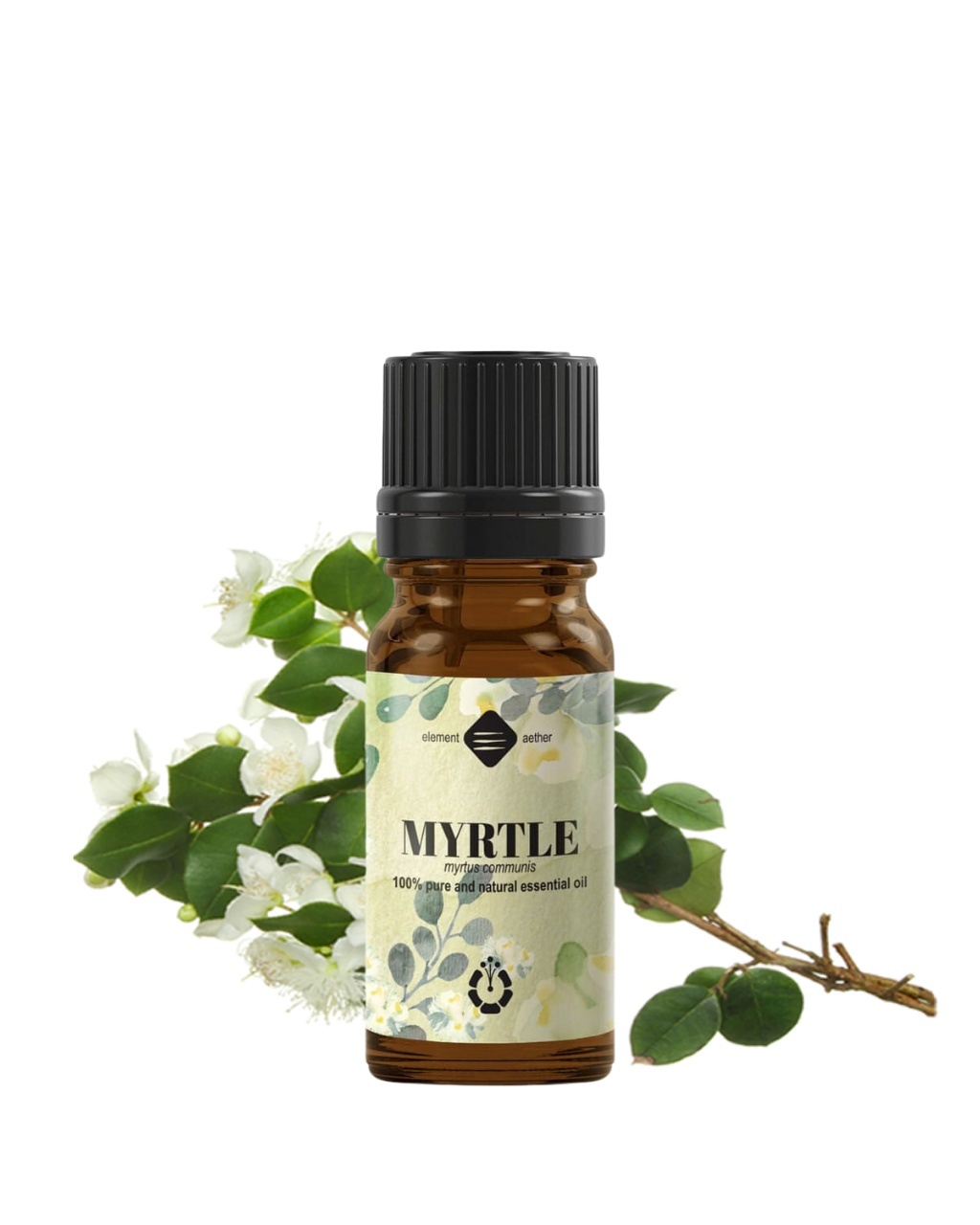
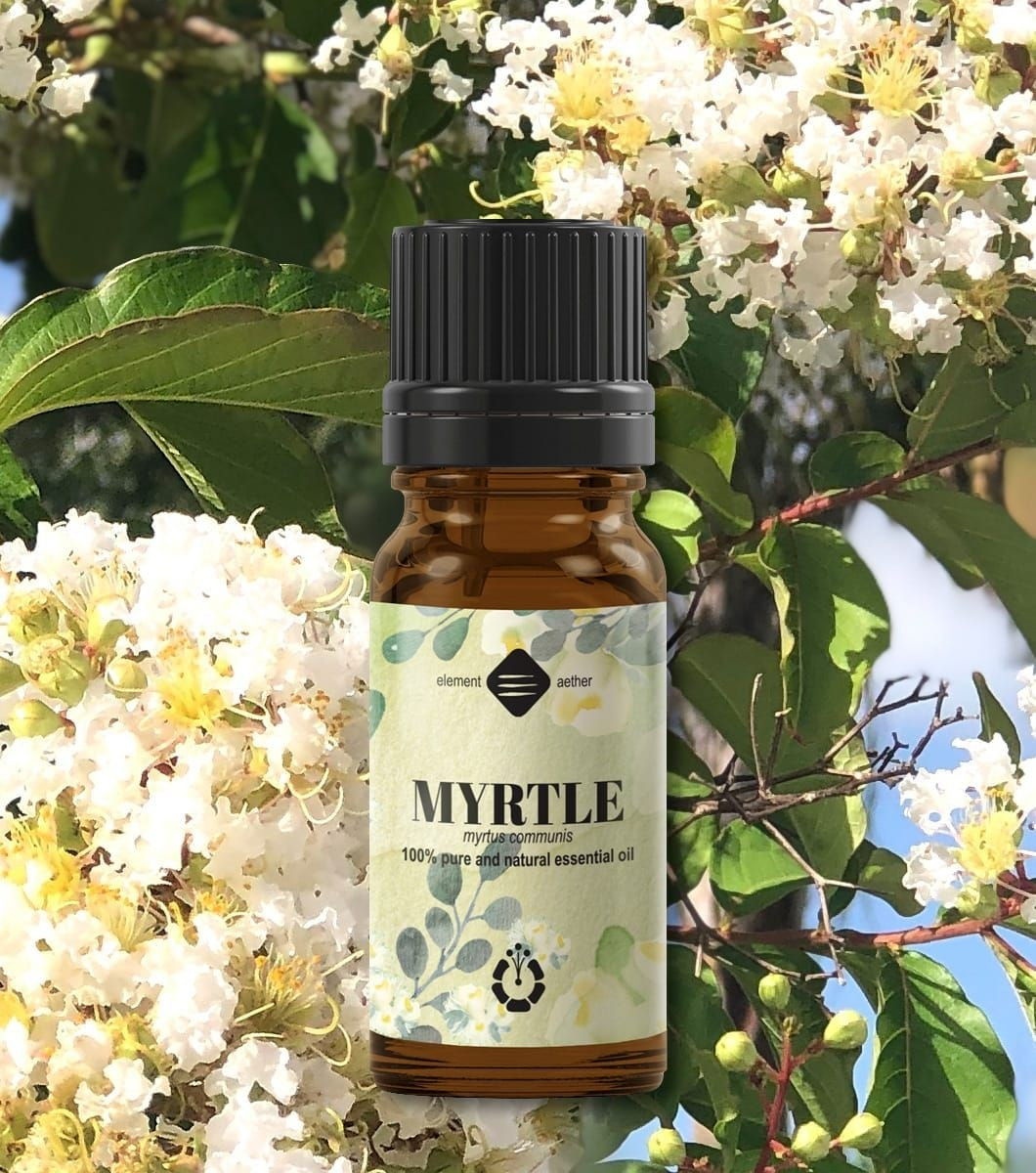
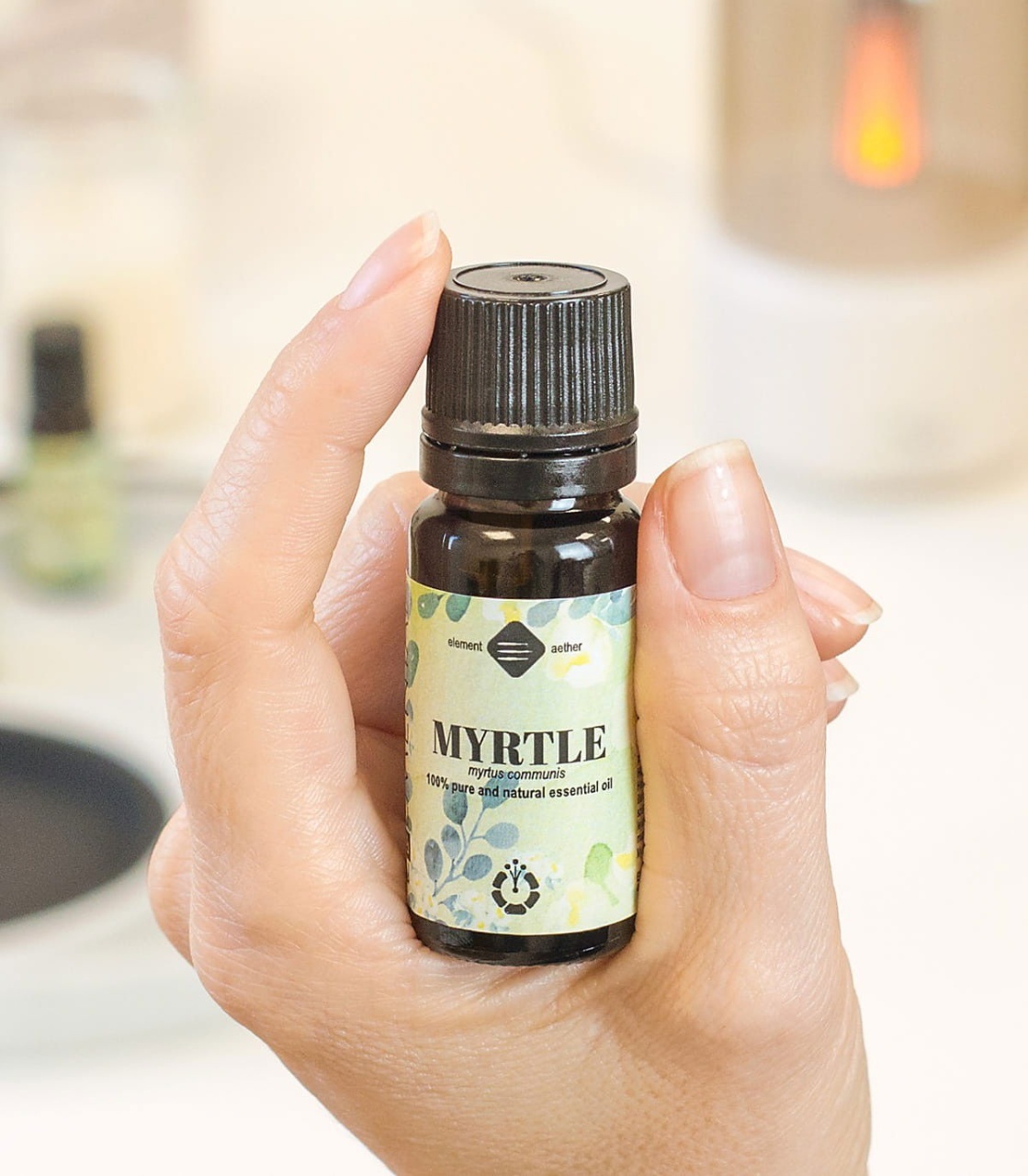
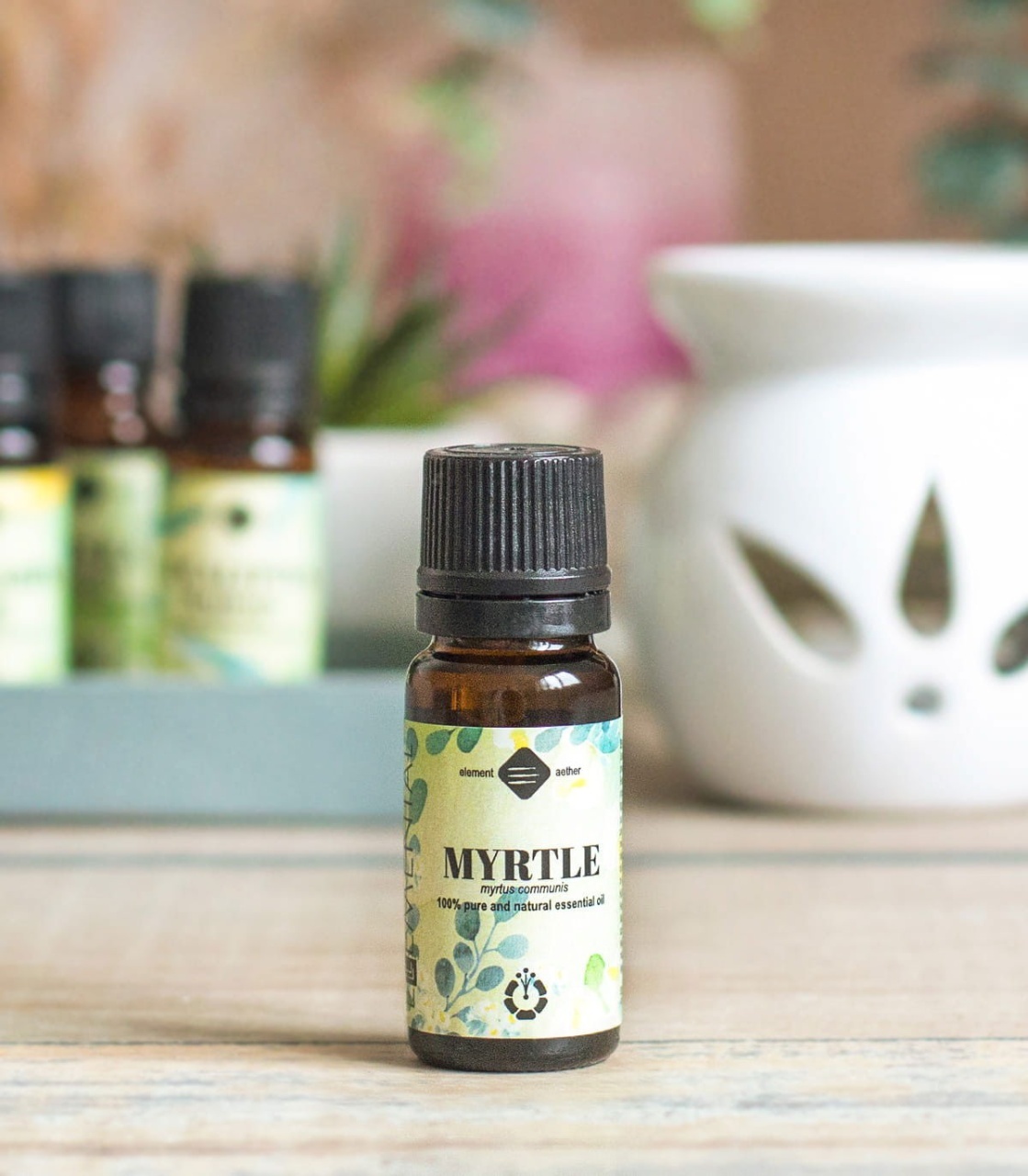
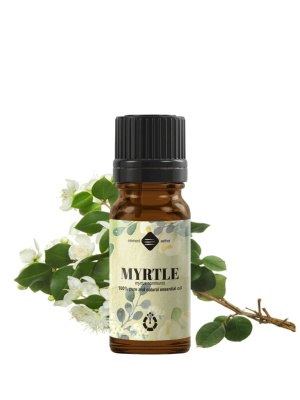
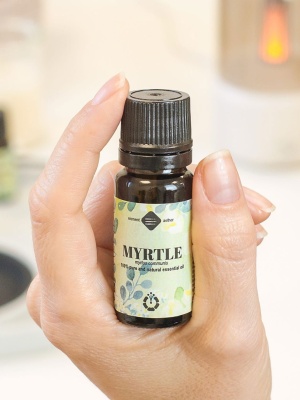
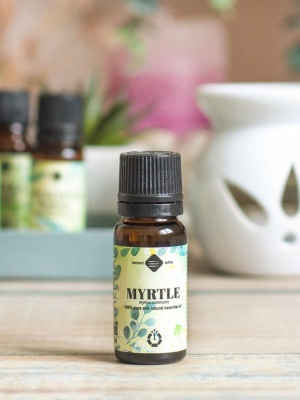
Myrtle essential oil
Description
Myrtle Essential Oil (Myrtus communis), with its purifying and rejuvenating benefits, is frequently used in skincare applications for mature, oily, imperfection-prone, or acne-prone skin, while in the field of aromatherapy, it contributes as a balancing, uplifting, and supportive ally.
Its primary applications consist of respiratory support, skin tonic and astringent actions, venous decongestion for heavy legs and varicose veins, and environmental purification. Its fresh, herbaceous-balsamic aroma is less "medicinal" and more versatile in cosmetic formulations.
What makes it distinct from eucalyptus is the presence of an ester in its composition that tempers the action of 1,8-cineole, granting it gentleness on the mucous membranes and a specific soothing effect that eucalyptus lacks.
air Olfactory profile: Fresh, herbaceous-balsamic, finely camphorous, with pine notes and a woody sweetness at the base.
Ingredients: Green Myrtle Essential Oil (Myrtus Communis Leaf Oil)
100% pure and natural, E.O.B.B.D. botanically and biochemically defined, full spectrum, unfractionated, undiluted
Obtained by steam distillation from the leaves and young branches of Myrtus communis
encrypted_add_circle Cosmetic Properties and Benefits
- Astringent, tonic: Contributes to a firm and refined appearance of skin with dilated pores, excess sebum, or a lack of tone, serving as an ideal ingredient in toners, serums, and facial oils.
- Venous tonic, lymphatic decongestant: Useful for the care of areas experiencing slow peripheral circulation, varicose veins, and heavy legs, acting as an ingredient in venotonic massage oils.
- Skin purifier: Traditionally used for the care of skin with a tendency toward infections.
air_freshener Aromatherapeutic Properties
- Expectorant, mucolytic: Traditionally used for respiratory comfort during productive coughs, bronchitis, and sinus congestion — an action similar to eucalyptus, but gentler.
- Soothing: A useful paradox compared to eucalyptus: Myrtle clears the airways and facilitates sleep simultaneously, thanks to myrtenyl acetate. Highly suitable for diffusion in the bedroom during the evening.
- Ambient purifier: Traditionally used to sanitize the air in a sick person's room and combat seasonal infections.
hub Recommended Synergies
Cold season, respiratory support: Ravintsara Essential Oil, Organic Eucalyptus Radiata Essential Oil, Pine Essential Oil, Laurel Essential Oil.
Mature skin, tonic and astringent: Cistus Essential Oil, Frankincense Essential Oil, Immortelle Essential Oil, Green Mandarin Essential Oil.
Oily and acne-prone skin: Organic Tea Tree Essential Oil, Organic Petitgrain Essential Oil, Organic Hemp seed Oil.
Heavy legs, varicose veins, drainage: Cypress Essential Oil, Immortelle Essential Oil, Lemon Essential Oil, Tamanu Oil, Comfrey Oil.
Aromatherapy: Lavender Essential Oil, Red Mandarin Essential Oil, Roman Chamomile Essential Oil.
Ambient purification: Organic Tea Tree Essential Oil, Lemon Essential Oil, Bergamot Essential Oil.
Practical Applications and DIY Recipes
Myrtle essential oil is used exclusively as an ingredient in cosmetic preparations and aromatherapeutic compositions. Do not apply undiluted to the skin. For maximum dosages, consult the IFRA certificate attached to the product.
face Face Care
- Astringent toner for oily skin: A few drops of Myrtle pre-diluted in a Solubilizer, added to Sage Water.
- Tonic facial oil for mature skin: A few drops of Myrtle and a few of Cistus, diluted in Rosa Mosqeta Oil.
- Spot-treatment for acne: One drop of Myrtle diluted with a little Organic Hemp seed Oil, applied with a cotton swab onto imperfections.
digital_wellbeing Body Care
- Chest balm for the cold season: A few drops of Myrtle, a few of Ravintsara, and a few of Scots Pine incorporated into Mango Butter. Applied to the chest and back.
- Venotonic oil for heavy legs: A few drops of Myrtle and a few of Cypress, diluted in Tamanu Oil. Massage upward on the calves.
air_freshener Aromatherapy & Diffusion
- "Clear Sleep" Blend: Myrtle + Lavender + Red Mandarin in the diffuser.
- "Purification" Blend: Myrtle + Lemon + Organic Tea Tree. An environmental antiseptic with a fresh aroma.
home_and_garden Household Use
- Purifying spray: A few drops of Myrtle and a few of Bergamot, dissolved in Cosmetic Alcohol and topped with distilled water.
Questions and Answers (FAQ)
Q: What is the difference compared to Red Myrtle?
A: They are chemotypes of the same species with distinct biochemical profiles. Myrtle is rich in 1,8-cineole and alpha-pinene, lending a respiratory, astringent, and purifying profile accompanied by mild sedation. Red Myrtle is instead rich in myrtenyl acetate, making its profile more antispasmodic and venotonic, with a more resinous aroma.
Q: Why is it recommended for the evening if it contains cineole, which usually energizes?
A: It is precisely the myrtenyl acetate, the specific ester found in Myrtle, that tempers the stimulating effect of cineole and adds a soothing dimension absent in Eucalyptus. It clears the respiratory tract without activating the sympathetic nervous system, making it incredibly useful in the evening when you want to sleep but have trouble breathing. Combining it with Lavender and Red Mandarin amplifies this effect.
Technical Data, Warnings
Product for cosmetic, aromatic, and natural hygiene use. Do not apply undiluted to the skin.
Store in a dry and cool place, away from direct sunlight. Keep out of reach of children.
For dilutions in accordance with legal regulations, consult the IFRA certificate attached to the product on the website.
Sensitive individuals should perform a tolerance test; perform a skin patch test in the bend of the elbow 24 hours before use. Avoid contact with eyes and sensitive mucous membranes. In case of an accident, rinse abundantly with a vegetable oil.
For use during pregnancy, breastfeeding, in case of chronic diseases, for the elderly, or for young children, the recommendation is to consult a doctor.
Bibliography and Sources
- Tisserand, R., & Young, R. - Essential Oil Safety (2nd ed.) - safety profile and usage limits for Myrtus communis.
- Franchomme, P., & Pénoël, D. - L'Aromathérapie Exactement - profile of Myrtle chemotypes and clinical applications of the cineole CT in respiratory and venotonic aromatherapy.
- Castillo-Vera, A. et al. - “Antimicrobial and Antifungal Activity of Myrtus communis Essential Oil” (Journal of Ethnopharmacology, 2015).
- European Medicines Agency (EMA), HMPC - Assessment report on Myrtus communis L. - official European evaluation of documented traditional uses.
- Battaglia, S. - The Complete Guide to Aromatherapy (3rd ed.) - aromatherapeutic and cosmetic profile of Green Myrtle.
Details
You'll like these too
Reviews
Write a valid review and earn loyalty points worth €0.40