






Formula: 58110 Difficulty level: beginner Shelf life: min 6 months pH optimal: - Phase Ingredients Dosage % Total 100 gr A Sweet Almond Oil 67 67 gr A Arnica oil 30 30 gr A Copaiba essential oil 1,5...
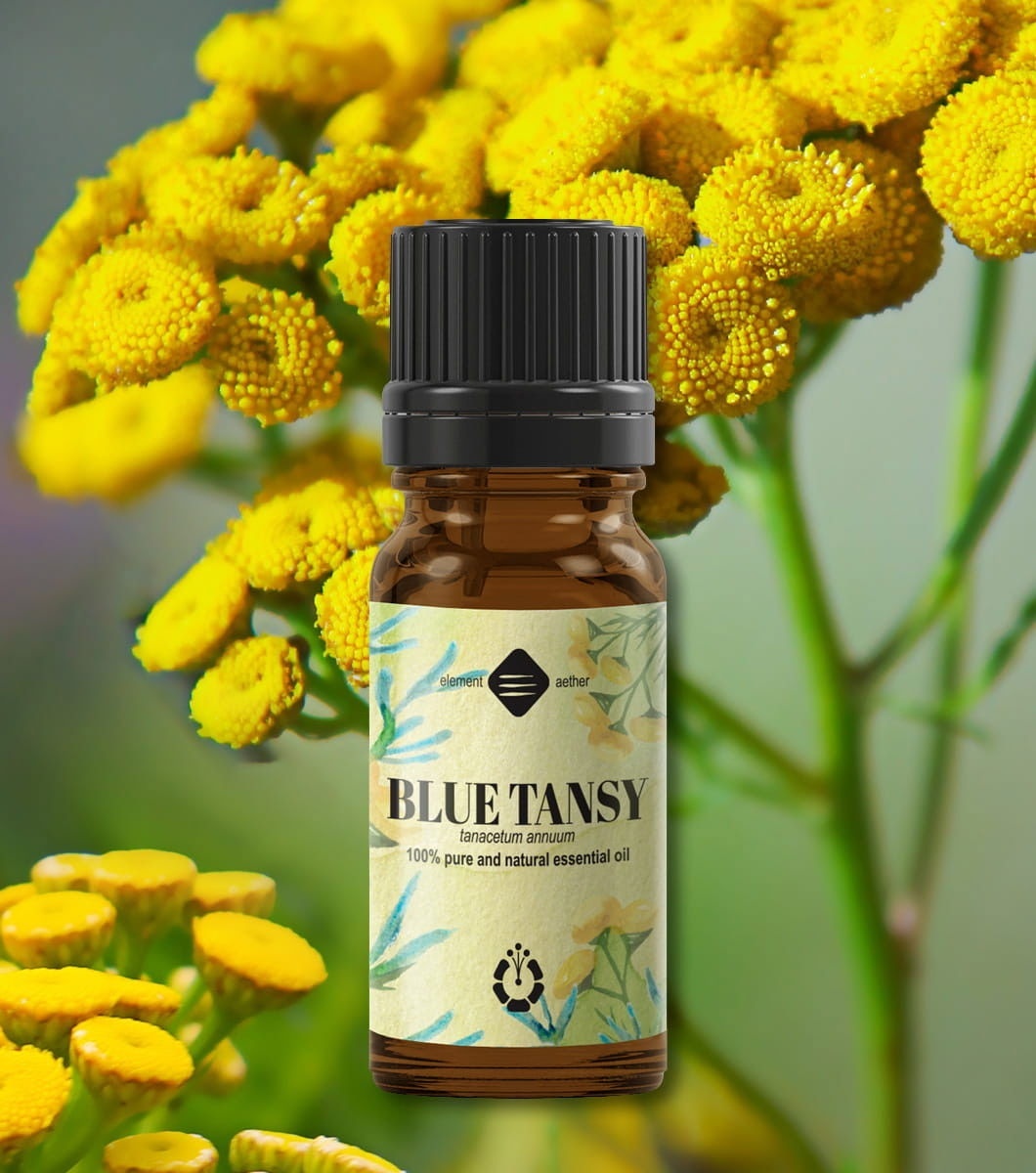
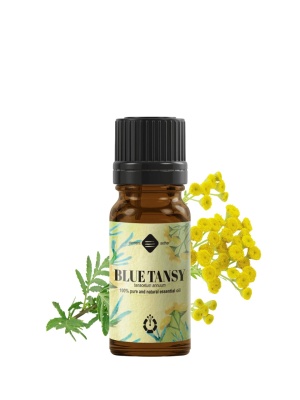
Blue Tansy (Tanacetum annuum) is one of the most distinctive essential oils in natural cosmetics, and not just for its cobalt blue color. Chamazulene, responsible for this color, is also the compound that provides the soothing and anti-inflammatory properties for which it is valued, making it suitable for the care of reactive skin with chronic redness or pruritus, rosacea, mild eczema, and skin allergic reactions.
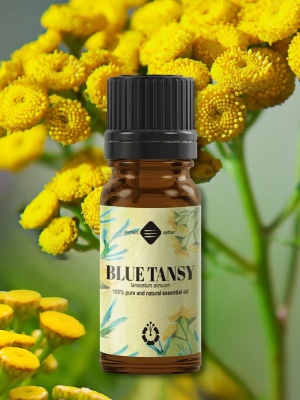
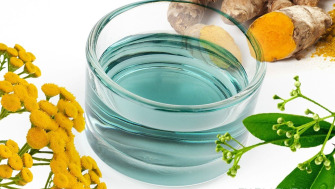
The flower of Tanacetum annuum is yellow. The blue color appears exclusively during the steam distillation process, when a colorless precursor (matricin) is thermally transformed into cobalt-blue chamazulene.
air Olfactory profile: Sweet floral-fruity, with herbaceous notes and a slightly camphorous-balsamic undertone. Intense and persistent, sweeter than German Chamomile, with which it is sometimes confused.
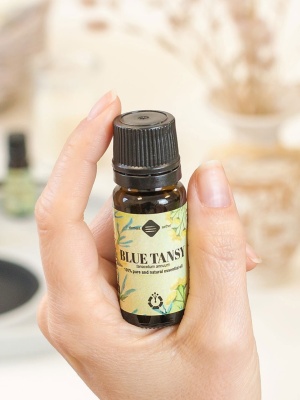
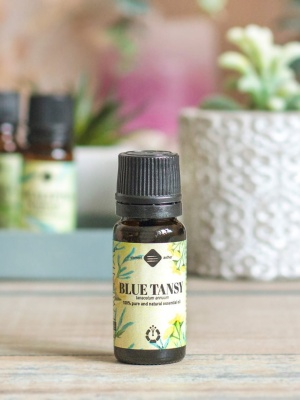
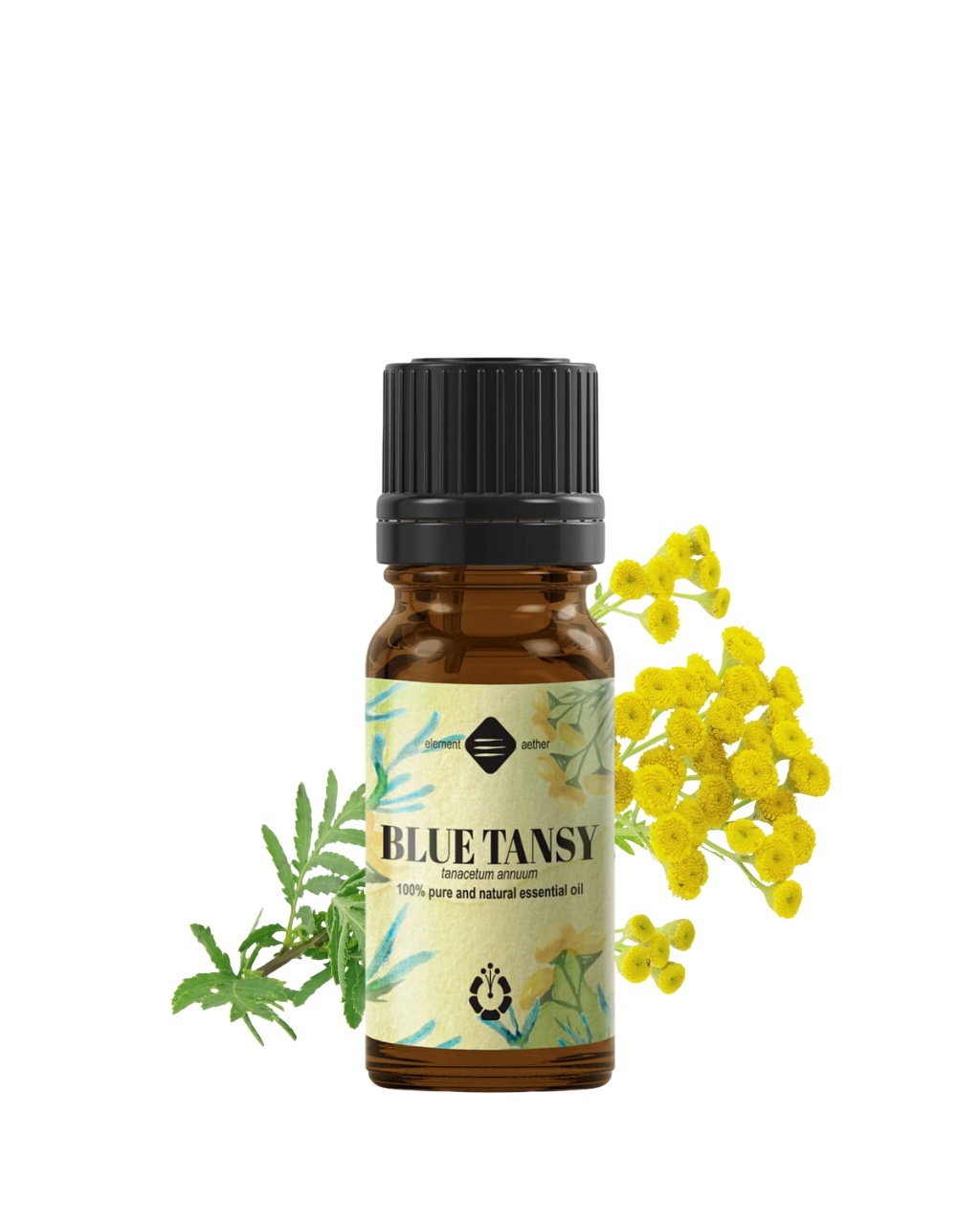
Ingredients: Blue Tansy Essential Oil (Tanacetum Annuum Flower Oil)
100% pure and natural, E.O.B.B.D. botanically and biochemically defined, full spectrum, undenatured, undiluted
Obtained by steam distillation from the flowers of Tanacetum annuum
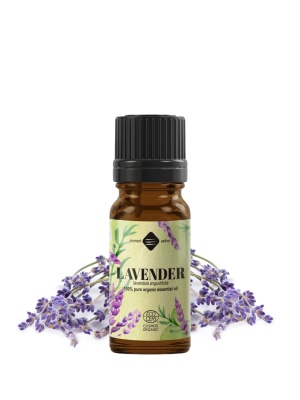
Sensitive, couperose, with signs of inflammation: Roman Chamomile Essential Oil, Lavender Essential Oil, Calendula Oil, Tamanu Oil, Chamomile Floral Water, Squalane.
Skin with eczema, pruritus: Frankincense Essential Oil, Roman Chamomile Essential Oil, Borago Oil, Calendula Oil, Shea Butter.
Skin irritated by external factors: Lavender Essential Oil, Immortelle Essential Oil, Camellia Oil, Raspberry seed Oil, Linden Water.
Anti-inflammatory massage, joint comfort: Copaiba Essential Oil, Lemon Eucalyptus Essential Oil, Comfrey Oil, Arnica Oil.
Aromatherapy: Lavender Essential Oil, Sandalwood Essential Oil, Bergamot Essential Oil, Petitgrain Essential Oil.
Perfumery: Geranium Bourbon Essential Oil, Bergamot Essential Oil, Rose Absolute, Sandalwood Essential Oil, Patchouli Essential Oil.
Blue Tansy essential oil is used exclusively as an ingredient in cosmetic preparations and aromatherapeutic compositions. Do not apply undiluted to the skin. For maximum dosages, consult the IFRA certificate attached to the product.
Q: Why is it blue if the plant's flower is yellow?
A: The blue color appears exclusively during the steam distillation process. The living plant contains a colorless precursor called matricin. Under the action of heat during the distillation process, matricin is chemically transformed into chamazulene - which is an intense cobalt blue. The more careful and complete the distillation, the purer the resulting color. It is a fascinating chemical transformation that gives each batch of Blue Tansy a visual footprint of its production.
Q: Does it stain the skin or clothes?
A: The skin: not permanently - chamazulene is absorbed and disappears quickly, at most leaving a slight temporary greenish tint. Cosmetic formulas become blue or greenish-blue, which is visually appealing in clear products. Textiles can be temporarily stained - caution is recommended upon contact with light-colored materials before the product is completely absorbed.
Q: What is the difference compared to German Chamomile?
A: Both contain chamazulene and are blue, but they are completely different species with distinct profiles. German Chamomile (Matricaria chamomilla) is dominated by alpha-bisabolol and bisabolol oxides, with a focus on sensitive skin, dermatitis, and irritation. Blue Tansy (Tanacetum annuum) has a more complex profile with broader applications: antihistaminic, antispasmodic, circulatory. The aroma of Blue Tansy is sweeter-fruity; German Chamomile is more herbaceous-medicinal. They are not interchangeable, although they complement each other excellently in formulas.
Product for cosmetic, aromatic, and perfumery use. Do not apply undiluted to the skin.
Store in a dry and cool place, away from direct sunlight. Keep out of reach of children.
For dilutions in accordance with legal regulations, consult the IFRA certificate attached to the product on the website.
Sensitive individuals should perform a tolerance test; perform a skin patch test in the bend of the elbow 24 hours before use. Avoid contact with eyes and sensitive mucous membranes. In case of an accident, rinse abundantly with a vegetable oil.
For use during pregnancy, breastfeeding, in case of chronic diseases, for young children, or for the elderly, the recommendation is to consult a doctor.
Write a valid review and earn loyalty points worth €0.40