




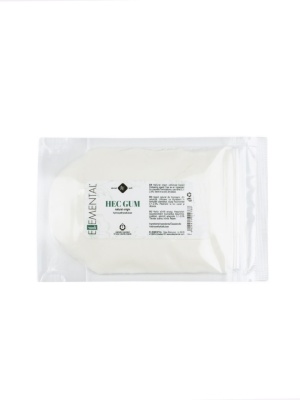
Hydroxyethylcellulose (HEC Gum)

4.24 (VAT included)
3.56 (without VAT)
_ _
Code Size Net price Total price Quantity
M-1723 25 g
3.56
4.24
M-1723-0.25 250 g
18.34
21.82
M-1723-1 1 kg
57.11
67.96
Product reference D-1723

Description

Hydroxyethylcellulose (HEC Gum) – Natural Gelling Agent, Stabilizer

HEC Gum is a purified hydroxyethylcellulose, naturally derived from sustainably sourced cellulose. It functions as a thickening agent, rheology modifier, binder, and phase stabilizer. It provides crystal-clear solutions of varying viscosities, functions across a wide pH range, demonstrates high tolerance to salts, and offers broad compatibility with surfactants.

It has a high molecular weight that ensures superior viscosity at low concentrations, allowing full dispersion of the powder in water before the dissolution process begins, preventing clumping and lump formation during the production phase.


Ingredients (INCI): Hydroxyethylcellulose.


Technical Characteristics

  • Polymer Type: Sustainable cellulose derivative, non-ionic character.
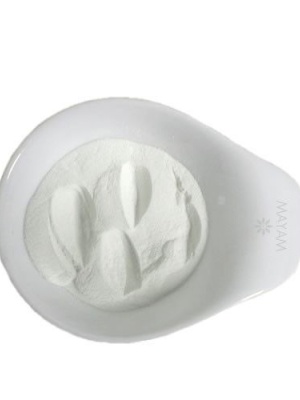
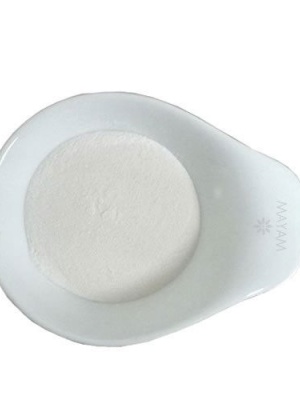
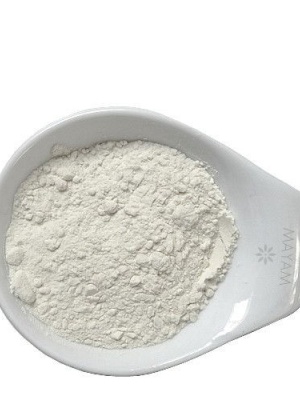
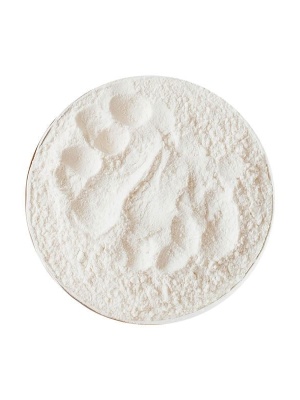
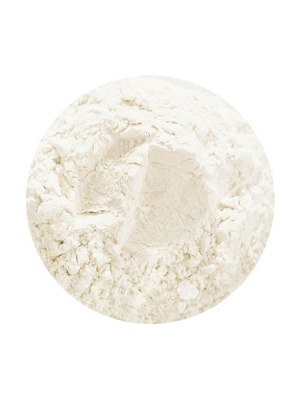
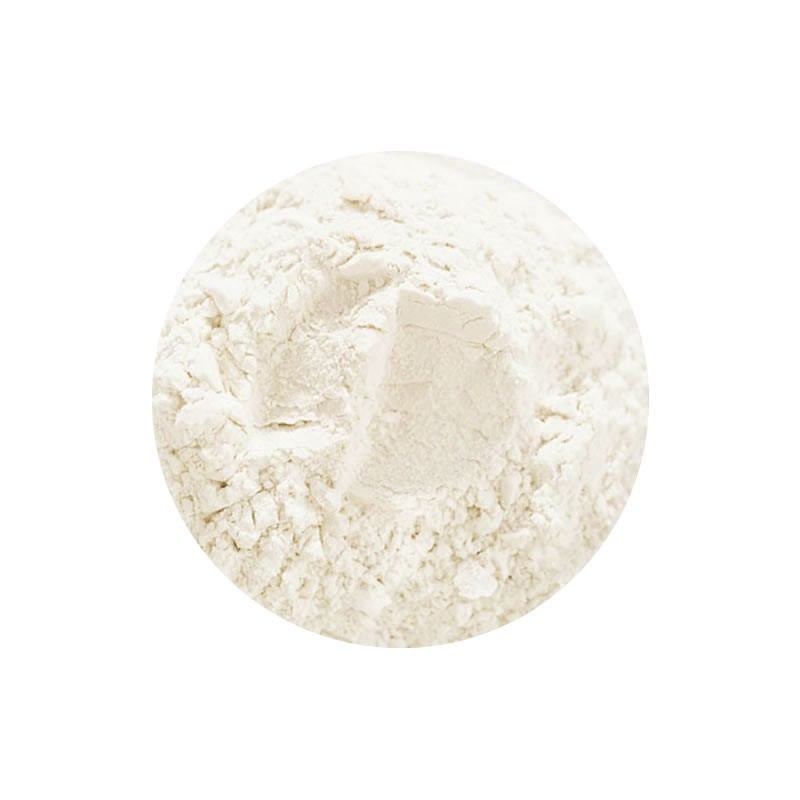
  • Appearance: Fine granular powder, off-white to cream color, odorless.
  • Solubility: Fully soluble in cold or hot water. 
  • Cosmetic Function: Aqueous phase thickener, emulsion stabilizer, film-forming agent, texturizer.
  • Indicative Dosage: 0.1% - 3.0% 
  • pH Stability: High stability across an extended pH range, between 3.0 and 10.0.

Main Properties

  • Thickening Without Ionic Sensitivity: Allows viscosity build-up in aqueous fluids containing high percentages of salts, saline actives, or acids, where other polymers liquefy.
  • O/W Emulsion Stabilizer: Increases the viscosity of the external (water) phase in creams and lotions, reducing oil droplet mobility and preventing separation (coalescence) over time.
  • Clarity and Transparency: Forms clear gels with a smooth, glossy texture, suitable for transparent products.
  • Surfactant Compatibility: Does not interfere with foaming or surfactant activity, making it ideal for adjusting consistency in cleansing products.

Applications

  • Facial cleansing gels, shower gels and shampoos, liquid soaps.
  • Moisturizing or exfoliating serums containing electrolytes or high percentages of active ingredients.
  • Eye contour lotions, serums, and gels.
  • Creams, fluid emulsions, and body milks.
  • Lubricating gels, conductive gels, hand sanitizer gels.
  • Hair styling formulations (hair gels, setting lotions), hair conditioners.

Formulation Guide

When added to water, it does not dissolve instantly and does not form lumps. The duration of gel formation depends on temperature, pH, and stirring. 
Usual dosages start from 0.1%. Between 0.1% - 0.5% it is generally used for stabilization and texture adjustment in emulsions, while above 0.5% it is used to obtain dense aqueous gels.

  • Cold Process: Sprinkle the powder into the distilled water or hydrosol in the recipe while stirring continuously. Due to delayed hydration, the powder will disperse completely without thickening immediately. Allow the mixture to rest for up to 45 minutes. To accelerate dissolution and trigger gelling, sustained stirring or a temporary increase in pH can be applied.
  • Hot Process: Viscosity development can be significantly accelerated by heating the water phase to 55-60°C after the powder has been uniformly dispersed in cold water.

Frequently Asked Questions (FAQ)

Why did the HEC powder settle to the bottom of the vessel without forming a gel?
This is normal behavior for this variant of hydroxyethylcellulose. The surface treatment applied to the granules delays dissolution to give the formulator time to disperse the powder homogeneously, avoiding clumping. Particles remain temporarily suspended or settle if left without stirring, but the gelling process will begin automatically after approximately 20 minutes as the protective layer dissolves and allows water to hydrate the cellulose core.

Can HEC Gum be used in completely anhydrous (waterless) formulations, such as oils or butters?
No. Hydroxyethylcellulose is a strictly hydrophilic polymer that requires the presence of free water to unfold, hydrate the polymer chains, and develop a rheological gel structure. In a medium composed exclusively of oils or esters, HEC powder will remain insoluble.


Safety in Use and Storage

Safety Profile: Inert polymeric ingredient of plant origin, evaluated as safe, non-toxic, non-irritating, and non-comedogenic, exhibiting high dermatological compatibility on all skin types.
Precautions: For external cosmetic use only. Avoid direct inhalation of powder during the weighing phase. Keep out of reach of children.
Storage: In the original tightly closed container, in dry, cool spaces, strictly protected from ambient humidity.

Details

Code
D-1723
Categories
Other names
Natrosol™ 250 HHR
Suitable for
bath, cosmetics, hair care, make-up, oral hygiene, soaps, sun protection
Charge
non-ionic
Use level
0.1 - 3 %
Storage
in a cool dry place away from direct sunlight

Related Recipes and Articles

  • Aloe-3 Cleansing Cream
    Aloe-3 Cleansing Cream
    Formula: 44012 Difficulty Level: intermediate Shelf life: min. 3 months Optimal pH: 5.5-6.0 Phase Ingredients Dosage % Total 100 g A Pure / Distilled Water 73 73 g A Lauryl Surfactant 7 7 g A HEC Gum...
You'll like these too

Reviews

We are looking for stars! Have you used this product?
Write a Review

Write a valid review and earn loyalty points worth €0.40