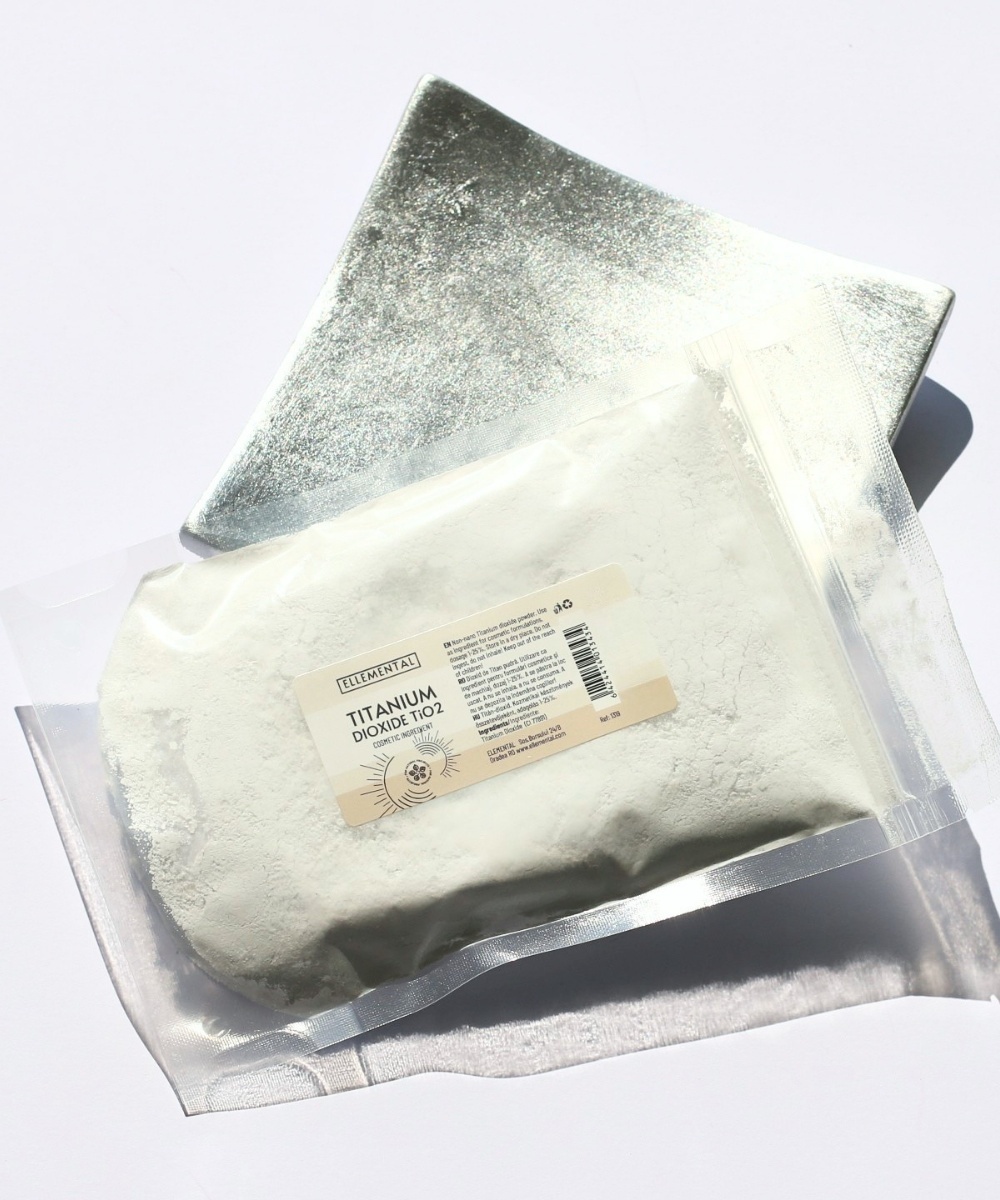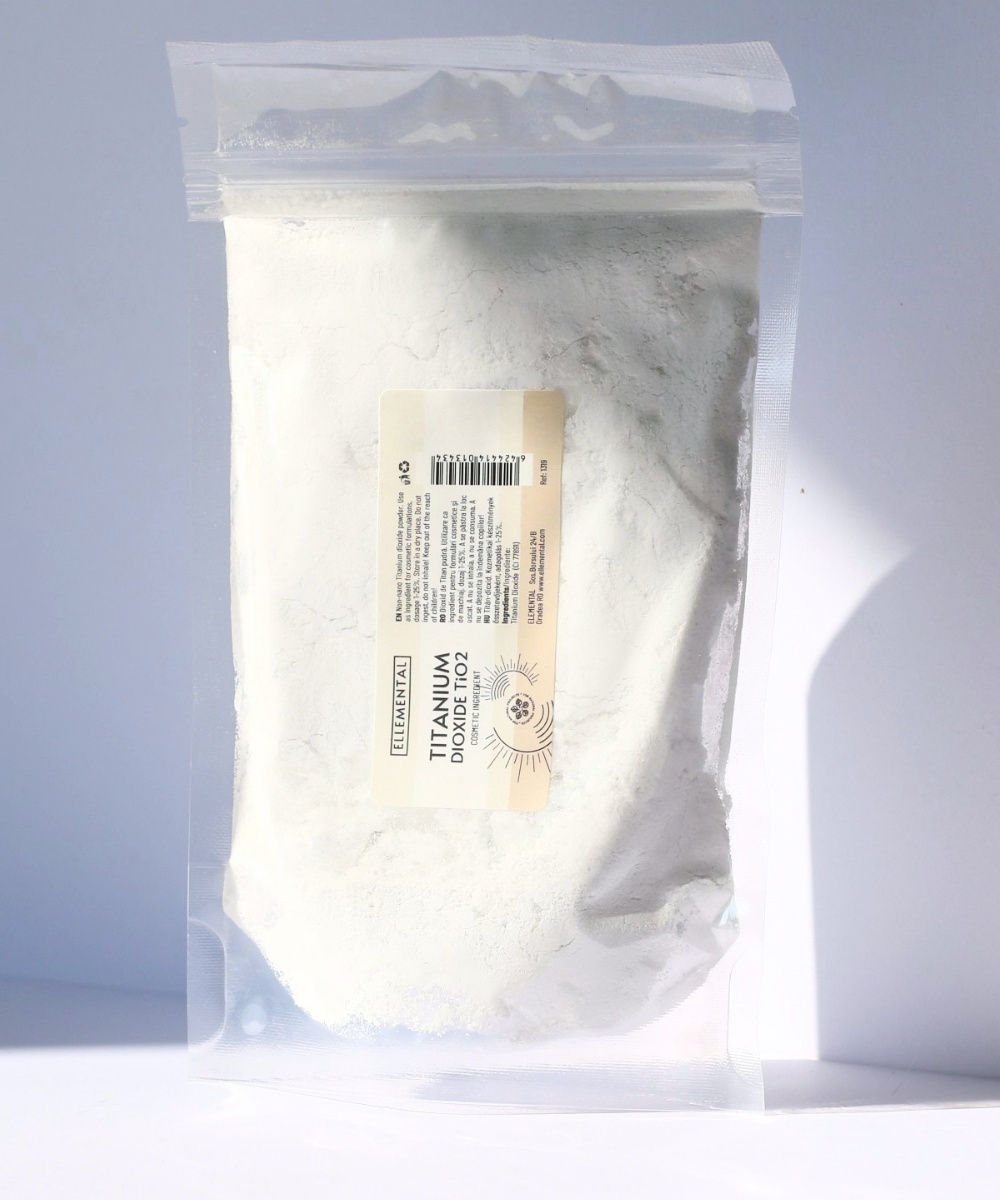





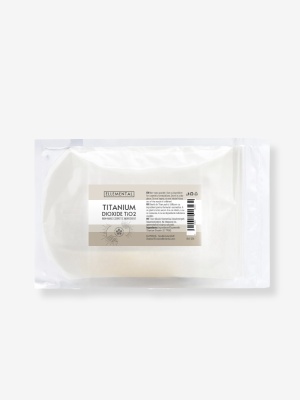
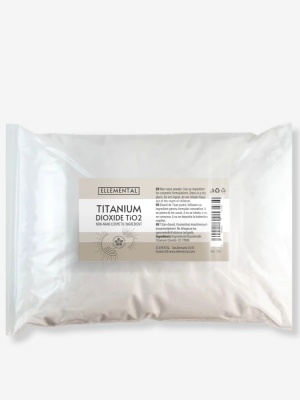
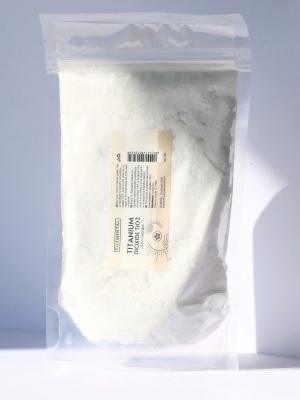
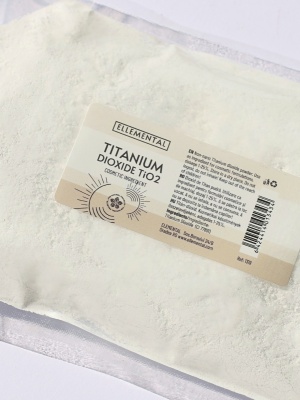
Titanium dioxide
Description
Titanium Dioxide – Pure Mineral Pigment, Opacifier, NON-Nano UV Filter
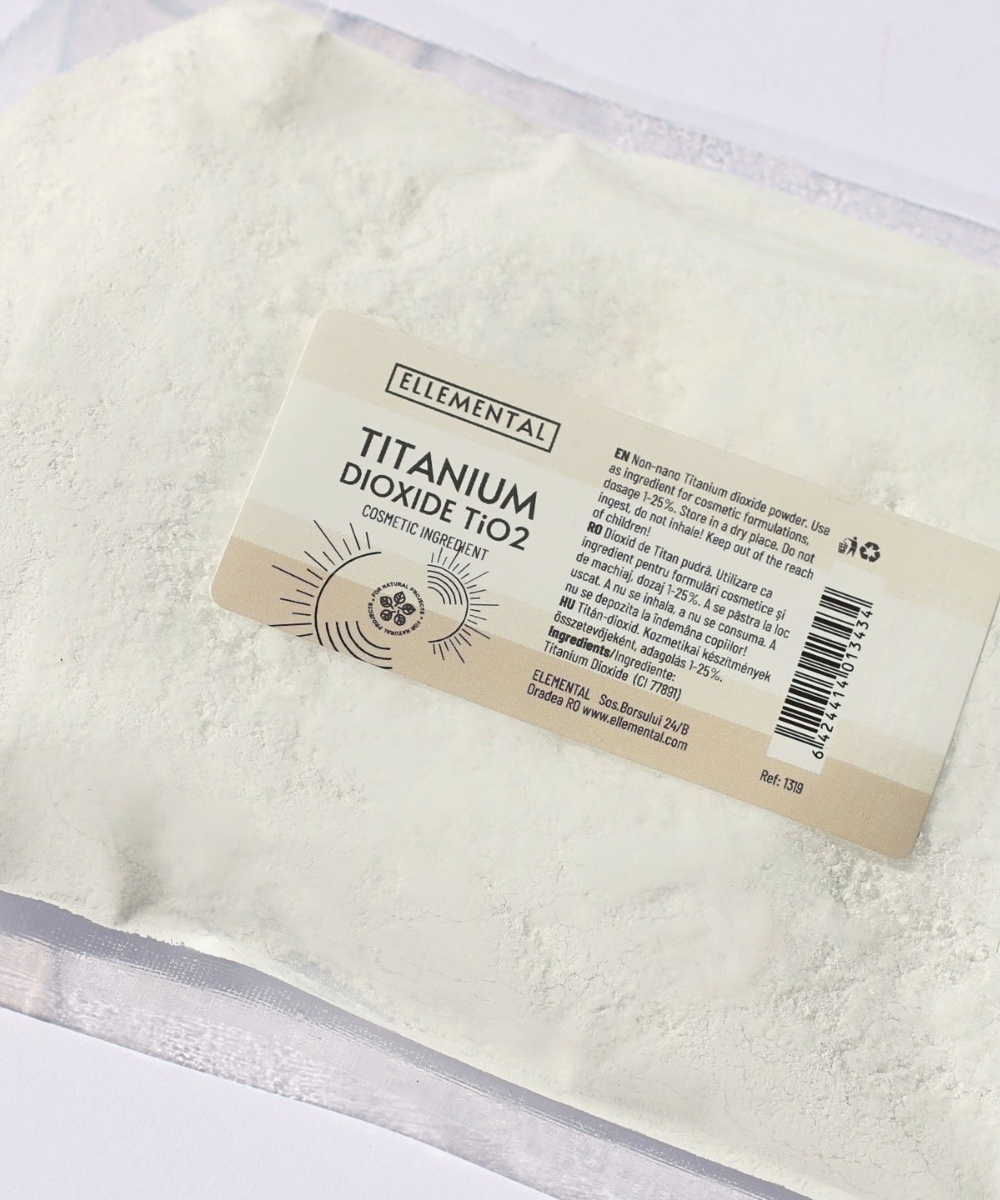
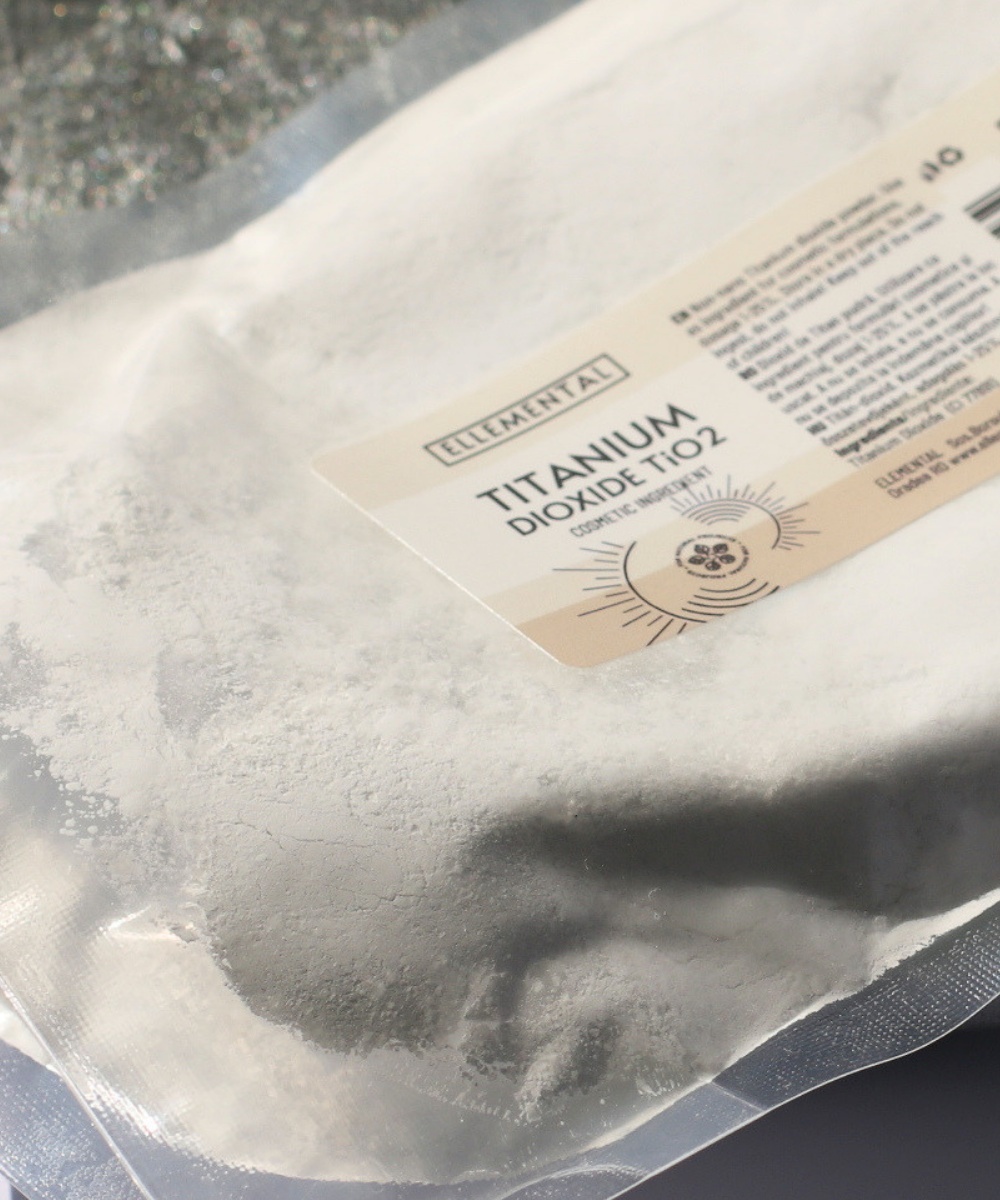
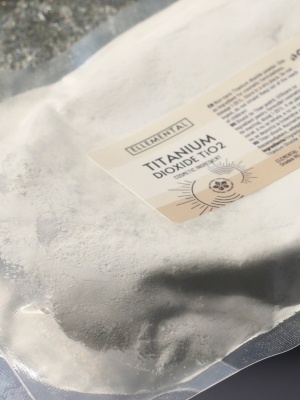
Titanium Dioxide is a natural mineral compound in the form of a fine, purified, surface-untreated powder structurally classified as NON-nano. In cosmetic formulating, this multifunctional ingredient acts as a base white pigment, structural opacifier, and physical sunblock (mineral UV filter). Its optical properties, characterized by a high refractive index, allow it to effectively reflect and scatter ultraviolet radiation while providing excellent coverage and whitening capability in makeup and personal care products without penetrating the skin barrier.
Ingredients (INCI): Titanium Dioxide (CI 77891).
Technical Characteristics
- Appearance: Fine, amorphous, pure white, odorless powder.
- Surface Treatment: Untreated, without coatings.
- Particle Size: NON-nano; average primary particle size exceeds the 100 nm threshold, excluding it from nanomaterial classification under EC Regulation No. 1223/2009.
- Solubility: Completely insoluble in water and oils. Forms stable suspensions through mechanical dispersion in oily or viscous aqueous media.
- Cosmetic Function: Base white pigment, opacifying agent, coverage modifier, physical sun filter.
- General Dosage: 1% - 25%.
Main Properties
- Opacifying, Coverage: Provides a dense white base capable of masking skin imperfections in makeup products or imparting an opaque appearance to gel bases and transparent soaps.
- Physical (Mineral) UV Filter: Creates a protective mechanical barrier on the skin surface, reflecting and scattering UVB and UVA radiation, thus preventing cutaneous photo-aging.
- Chemically Inert: As a stable mineral oxide, it does not react with oxygen, light, or other active ingredients in the formula, ensuring the chromatic stability of the finished product.
- Skin Safety: Due to its large particle size, the powder does not penetrate the living layers of the skin, remaining strictly on the surface.
Applications
- Mineral makeup products: creamy, compact, or loose powder foundations, concealers, blushes, and eyeshadows.
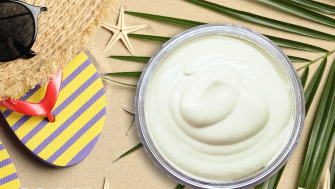
- Day creams with sun protection effects or tinting creams (BB Creams, CC Creams).
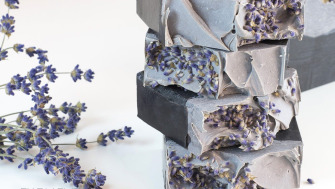
- Solid soaps (Melt & Pour or Cold Process) for obtaining an opaque white mass or pasteling other pigments.
Formulation Guide
- Procedure: In emulsions (creams), the powder is preferably dispersed in the oil phase before heating or post-emulsification, with thorough mixing. In anhydrous makeup products or powders, it is homogenized through fine grinding alongside other pigments (iron oxides). In soaps, pre-dispersing the powder in a small amount of warm water, glycerin, or fluid oil prior to adding it to the mass is recommended.
- Recommended Usage Dosage: Depending on application: 0.5% - 2% for soap opacification; 2% - 10% in creams; 5% - 25% in creamy foundations or mineral makeup powders.
Frequently Asked Questions (FAQ)
What does it mean that titanium dioxide is NON-nano and why is it preferred?
The NON-nano classification guarantees that individual particle size exceeds 100 nanometers. Nano particles pose a risk of passing through the skin's natural barrier or being inhaled deep into the lungs, carrying potential cellular toxicity. The NON-nano variant remains exclusively on the epidermal surface, providing mechanical protection and reflecting UV rays without risk of absorption.
What is the advantage of using surface-untreated titanium dioxide powder in formulation?
Untreated titanium dioxide represents the pure mineral without added coatings such as synthetic silicones. This ensures compatibility in "clean-beauty" formulas.
Safety in Use and Storage
Safety Profile: Inert raw material with good dermatological tolerance.
Precautions: For external cosmetic use only. Avoid inhalation during handling and weighing; the use of a protective mask is advised. Keep out of reach of children.
Storage: Keep tightly sealed, in a dry and cool place.
Details
Related Recipes and Articles
You'll like these too
Reviews
Write a valid review and earn loyalty points worth €0.40